


Senegal's Energy Transition: More Solar Needed, But Better Integrated
Translated from French, summarized and contextualized by DistantNews.
TLDR
- Senegal's rapid solar and wind energy expansion, while presented as a success in its energy transition, is facing challenges.
- Poor integration of solar power is straining the grid, and households are not seeing reduced electricity bills due to unmanaged intermittency, lack of storage, high losses, and continued reliance on costly thermal power.
- Experts argue that Senegal needs to rethink solar integration rather than simply adding more capacity.
Senegal has been actively promoting its energy transition, often highlighting the rapid growth of solar and wind power as key indicators of progress. The nation has indeed increased the share of renewables in its energy mix, driven by the ambition to lessen dependence on heavy fuel oil and modernize an aging electrical system. This narrative of a dynamic shift towards cleaner energy sources has been a cornerstone of the country's development discourse.
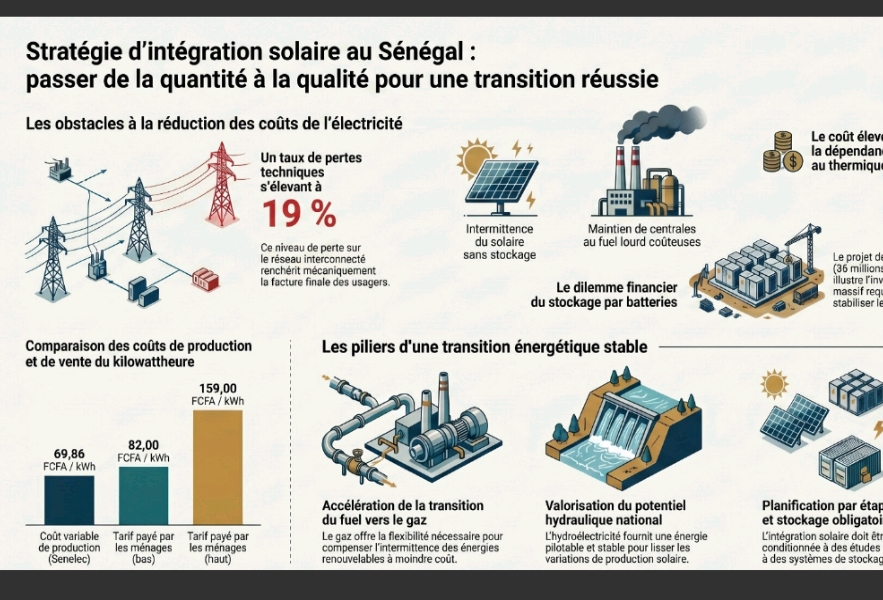
Le solaire est intermittent, et le réseau sénégalais n’est pas dimensionné pour l’absorber sans recourir en permanence aux centrales thermiques au fuel, dont le coût reste très élevé.
However, a closer examination reveals a more complex reality, particularly in areas already connected to the national grid. The integration of solar power, while substantial, has not been seamless. When not properly managed, this new capacity can actually destabilize the existing grid. The core issue lies in the intermittency of solar energy, which the Senegalese grid is not yet fully equipped to handle without significant drawbacks.
Le coût variable du kWh reste à 69,86 FCFA. Les ménages paient entre 82 et 159 FCFA/kWh, car les tarifs intègrent non seulement le coût de production, mais aussi les pertes, la distribution et les taxes.
Despite the increased solar capacity, households are not experiencing the anticipated reduction in electricity costs. This is largely attributed to the unmanaged intermittency of solar power, which necessitates the continued operation of expensive thermal power plants to balance the grid. Furthermore, technical losses within the electricity distribution system remain high, estimated at around 19%, directly contributing to increased costs for consumers. The variable cost per kilowatt-hour remains substantial, and household tariffs reflect not only production costs but also these losses, distribution expenses, and taxes.
Les pertes techniques sont très élevées : près de 19 % de l’électricité produite est perdue, ce qui renchérit mécaniquement les factures.
The path forward, as suggested by energy analysts, involves a strategic shift. The immediate priority is not simply to add more solar megawatts, but to fundamentally rethink how solar energy is integrated into the national grid. This includes a critical need for energy storage solutions, which are currently costly but essential for stabilizing the grid and maximizing the benefits of renewables. A project in Diass, involving a battery energy storage system (BESS), exemplifies the scale of investment required, costing approximately 36 million euros (around 24 billion FCFA) for storage alone. Without such investments, the current approach risks amplifying, rather than alleviating, the financial burden on the system and consumers.
Le solaire nécessite désormais du stockage, indispensable pour stabiliser le réseau. Or le stockage est très coûteux : le projet de Diass à lui seul a coûté 36 millions d’euros (≈ 24 milliards FCFA) pour un système BESS.
DistantNews Editorial
Originally published by Le Soleil in French. Translated, summarized, and contextualized by our editorial team with added local perspective. Read our editorial standards.
More Stories


From Our Blog

What Gets Lost (and Found) When News Is Translated

The Critical Role of Diaspora Media in Global News

What Travellers Should Know About Countries with Restricted Press

A Digital Nomad's Guide to Following Local News

How the Same Story Looks Different in Different Countries
