


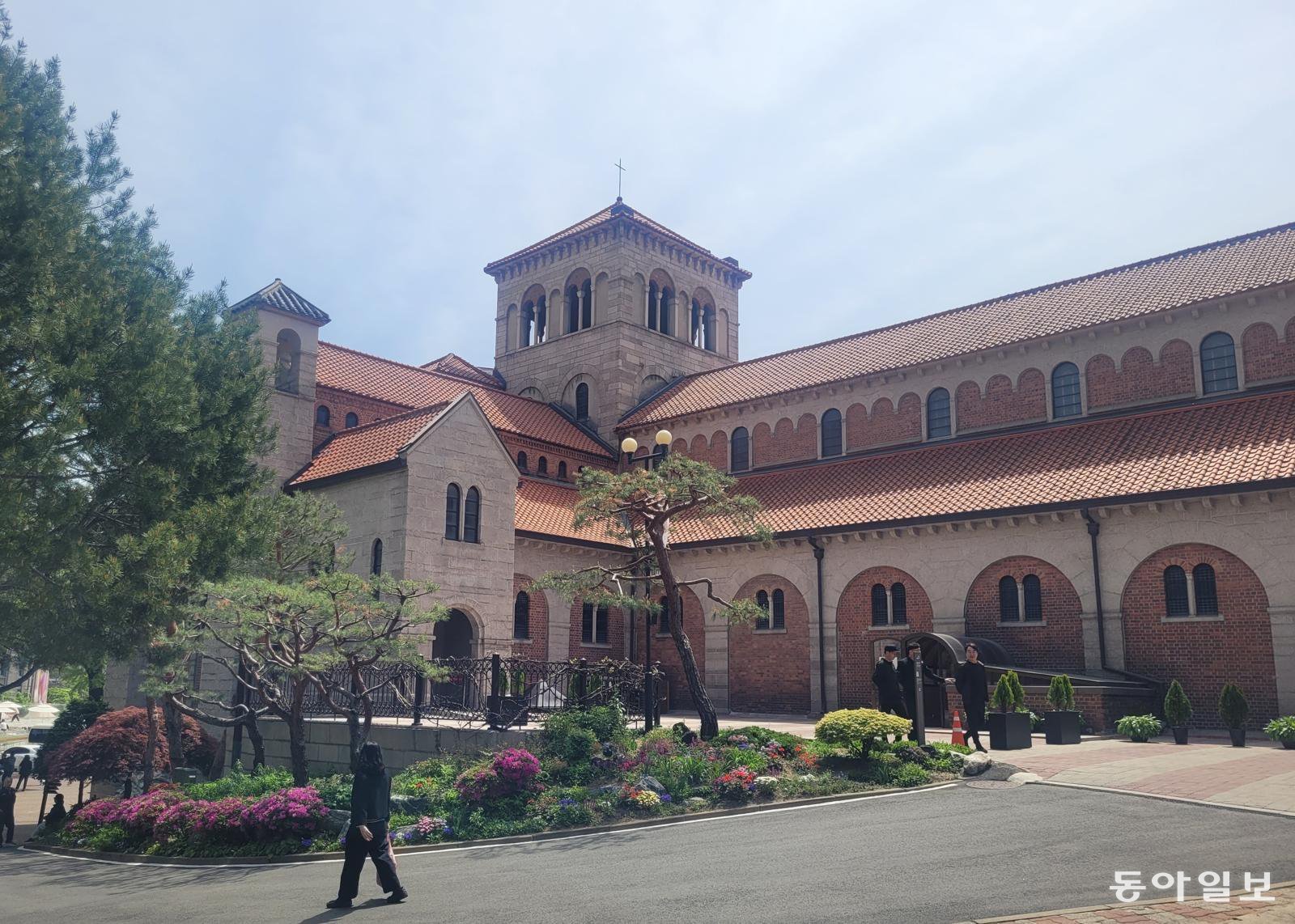
Seoul Anglican Cathedral Marks 100 Years: A Sanctuary of Faith and a Cradle of Democracy
Translated from Korean, summarized and contextualized by DistantNews.
TLDR
- Seoul Anglican Cathedral celebrates its 100th anniversary of consecration, marking a century of architectural beauty and historical significance.
- Designed by Arthur S. Dixon, the cathedral's Neo-Romanesque exterior and modernized Byzantine interior have made it a notable landmark, though its full potential was obscured for decades by a neighboring government building.
- Beyond its aesthetic appeal, the cathedral served as a crucial site for the 1987 June Democratic Uprising, symbolizing the people's struggle for democracy.
The Seoul Anglican Cathedral stands not only as a testament to architectural brilliance but as a living monument to Korea's journey through a century of change. Its 100th anniversary of consecration is a moment of profound reflection for us at Dong-A Ilbo, celebrating a structure that has witnessed and, in crucial moments, shaped our nation's history.
It's not just architecturally outstanding, but it's also the birthplace of the democratization movement that began with the June Uprising in 1987.
Designed by Arthur S. Dixon, the cathedral's Neo-Romanesque facade and striking red roof are a familiar sight, yet its true significance extends far beyond its visual appeal. For decades, its grandeur was partially hidden, a symbol of the challenges Korea faced during periods of occupation and rapid development. The eventual removal of the obstructing building in 2015 finally allowed the cathedral to be fully appreciated, much like how Korea itself has emerged from historical shadows into the light.
What resonates most deeply, however, is the cathedral's role as the birthplace of the 1987 June Democratic Uprising. The ringing of its bells, a defiant signal against authoritarian rule, echoed the aspirations of a people yearning for freedom and democracy. This historical resonance is something that international observers might miss, focusing solely on the architectural or religious aspects. For Koreans, the cathedral is a sacred space not just for worship, but for remembrance of the sacrifices made for the democratic freedoms we cherish today.
The Seoul Anglican Cathedral has always been with the people through many hardships over the past 100 years, including the Japanese colonial era, the Korean War, the democratization movement, and the IMF financial crisis.
As we celebrate this centenary, we at Dong-A Ilbo recognize the Seoul Anglican Cathedral as more than just a building. It is a symbol of resilience, a beacon of hope, and a powerful reminder of the enduring spirit of the Korean people. Its story is interwoven with our own, a narrative of beauty, struggle, and ultimate triumph.
We hope it can be a resting place for everyone's hearts, beyond its architectural beauty.
DistantNews Editorial
Originally published by Dong-A Ilbo in Korean. Translated, summarized, and contextualized by our editorial team with added local perspective. Read our editorial standards.
More Stories


From Our Blog

What Gets Lost (and Found) When News Is Translated

The Critical Role of Diaspora Media in Global News

What Travellers Should Know About Countries with Restricted Press

A Digital Nomad's Guide to Following Local News

How the Same Story Looks Different in Different Countries
