


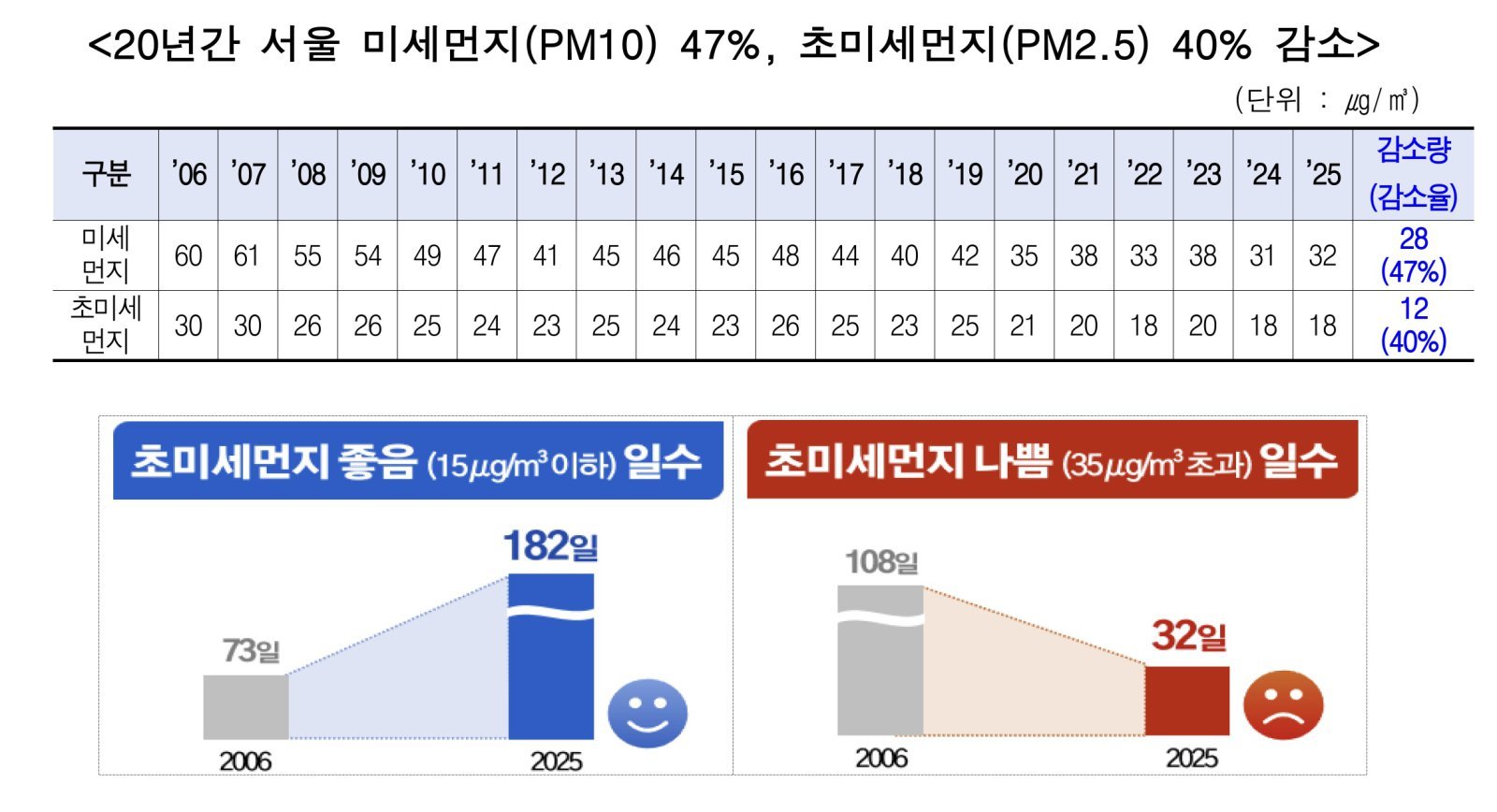
Seoul's Fine Dust Levels Drop 40% in 20 Years; Ozone Management Strengthened
Translated from Korean, summarized and contextualized by DistantNews.
TLDR
- Seoul's fine dust (PM2.5) levels have decreased by approximately 40% over the past 20 years.
- The city attributes the improvement to measures like transitioning to electric buses and managing older vehicles.
- Seoul is also strengthening its ozone management strategies during the summer months.
Seoul has achieved a significant reduction in fine dust levels, with average annual concentrations of PM2.5 decreasing by about 40% over the last two decades. This environmental success story, reported by Dong-A Ilbo, highlights the effectiveness of the city's proactive measures. The transition away from diesel buses to eco-friendly alternatives like compressed natural gas (CNG) and electric buses, alongside stricter regulations on older, polluting vehicles, has played a crucial role. From a South Korean perspective, this is a welcome development, demonstrating a commitment to improving public health and environmental quality. The data shows not only a decrease in the number of 'bad' air quality days but also a substantial increase in 'good' air quality days, a tangible improvement for residents. Beyond particulate matter, Seoul is also focusing on managing ozone levels, particularly during the summer when they tend to rise. This comprehensive approach underscores the city's dedication to creating a healthier living environment. The article details ongoing efforts, including the expansion of electric vehicle adoption and stricter controls on industrial emissions. The long-term goal of phasing out all internal combustion engine vehicles by 2050 signals a bold vision for a sustainable future. This focus on air quality is particularly relevant in a densely populated and industrialized nation like South Korea, where environmental challenges are a constant concern. The city's efforts serve as a model for other urban centers facing similar issues, showcasing that sustained policy implementation can yield significant positive results.
As Seoul's fine dust levels are steadily improving, we will manage ozone, which affects citizens' health in the summer, more meticulously from now on.
DistantNews Editorial
Originally published by Dong-A Ilbo in Korean. Translated, summarized, and contextualized by our editorial team with added local perspective. Read our editorial standards.
More Stories


From Our Blog

What Gets Lost (and Found) When News Is Translated

The Critical Role of Diaspora Media in Global News

What Travellers Should Know About Countries with Restricted Press

A Digital Nomad's Guide to Following Local News

How the Same Story Looks Different in Different Countries
