



Shettima, Oyedele defend reforms, say economy now on stronger footing
Summarized and contextualized by DistantNews.
At a glance
News
Named sources
New plan
- Nigeria's Vice President and Finance Minister defended the government's economic reforms, acknowledging their painful impact.
- They stated the reforms, including subsidy removal and forex changes, are crucial for long-term growth and fiscal stability.
- The government recognizes ongoing burdens like high inflation and interest rates for businesses and households.
Nigeria's Vice President Kashim Shettima and Finance Minister Taiwo Oyedele have defended the administration's sweeping economic reforms, acknowledging the significant hardship they have imposed on businesses and households. They maintain that these measures, including the removal of fuel subsidies and foreign exchange reforms, were essential to steer Nigeria away from fiscal distress and establish a foundation for sustainable growth.
The economies that flourish today did not stumble into prosperity. They summoned the foresight to imagine a different future and the courage to implement the reforms that brought that future within reach. Foresight without courage produces fine speeches and empty outcomes. Courage without foresight produces motion without progress. What a nation requires is the marriage of both: the vision to see what must change and the resolve to change it, even when the path is steep.
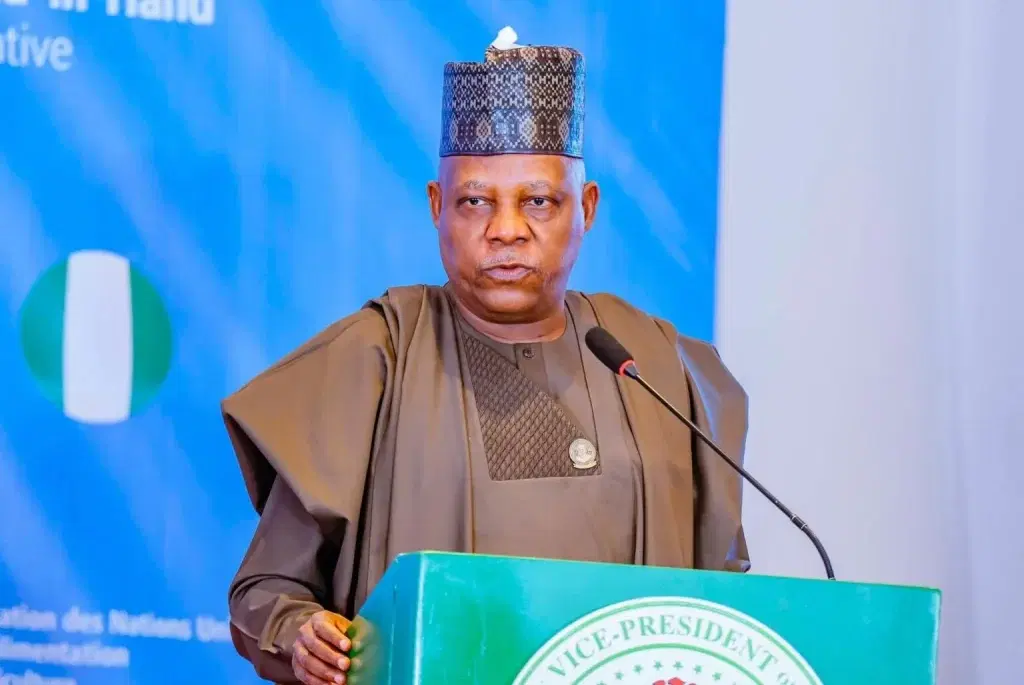
Speaking at the fifth Nigeria Employers' Summit in Abuja, Vice President Shettima, represented by his Special Adviser Aliyu Modibbo Umar, stated that the government inherited an economy plagued by unsustainable subsidies, weak revenues, and declining investor confidence. He argued that postponing difficult decisions would have been the easier path, but true leadership requires making tough choices. "The economies that flourish today did not stumble into prosperity. They summoned the foresight to imagine a different future and the courage to implement the reforms that brought that future within reach," he said.
When President Bola Tinubu assumed office, the economy carried deep structural burdens. Fuel subsidy had become fiscally unsustainable, the foreign exchange market was fragmented, government revenue was weak and investor confidence required rebuilding. The easy option at that time was to postpone difficult decisions. But leadership is tested when the right decision is also the difficult one.
Minister Oyedele highlighted that restoring macroeconomic stability was the administration's primary task, emphasizing that a stable economy is the fundamental infrastructure for business. He defended the removal of fuel subsidies and the liberalization of the foreign exchange market as central to economic recovery, noting that the subsidy had previously crowded out investment and fostered inefficiency. Both officials conceded that Nigerians and businesses continue to grapple with high inflation, elevated interest rates, and rising operating costs, but insisted the reforms are necessary for long-term prosperity and inclusive growth.
The reforms have been difficult, but their purpose is to correct the foundations so that growth becomes real, durable and inclusive. There is no doubt that restoring macroeconomic stability was our first task because a stable economy is the first infrastructure of business. Before roads, railways and ports, businesses need confidence to plan and invest.
DistantNews Editorial
Originally published by The Punch. Summarized and contextualized by our editorial team with added local perspective. Read our editorial standards.
More Stories

From Our Blog

How the Same Story Looks Different in Different Countries

What Gets Lost (and Found) When News Is Translated

The Critical Role of Diaspora Media in Global News

What Travellers Should Know About Countries with Restricted Press

A Digital Nomad's Guide to Following Local News
