


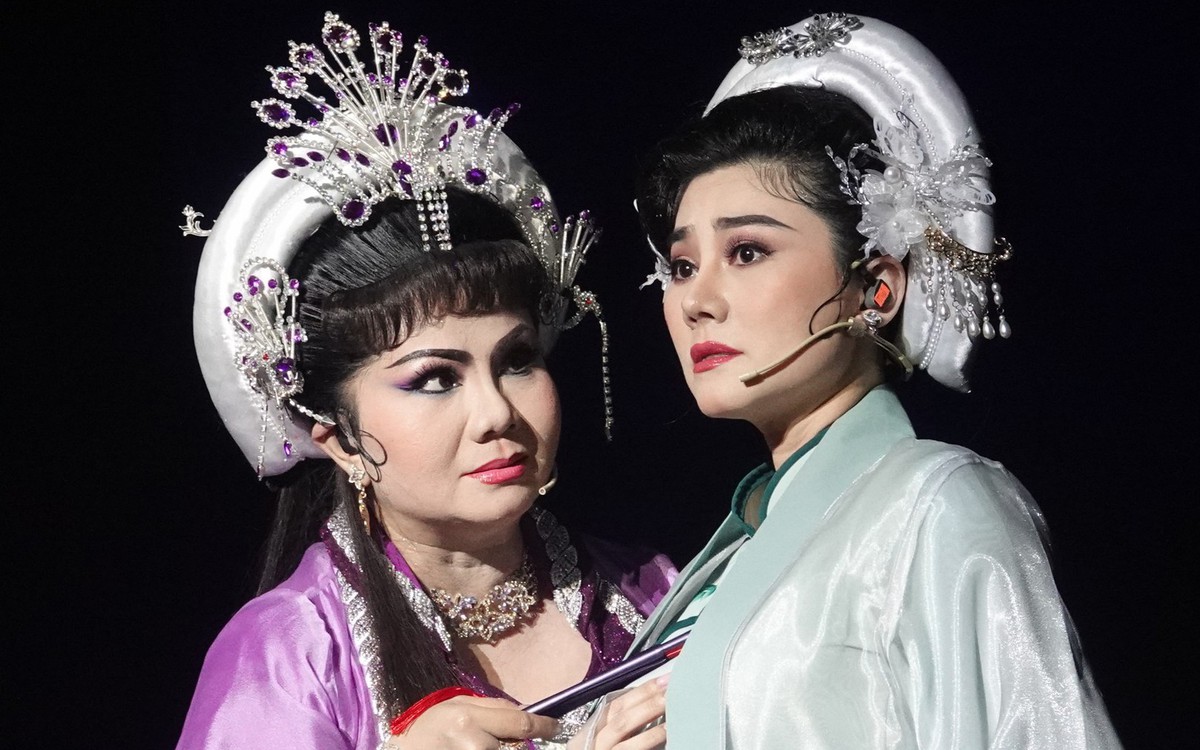
Sisters Tú Sương and Quế Trân Shine in Competing Roles in Cải Lương Play
Translated from Vietnamese, summarized and contextualized by DistantNews.
TLDR
- The article discusses the confrontation between two actresses, Tú Sương and Quế Trân, in the play "Đức Tả quân Lê Văn Duyệt - Người mang 9 án tử."
- Both actresses, descendants of a renowned cải lương family, are praised for their performances in opposing roles.
- The play features a newly written scene where their characters, representing opposing sides, engage in a dramatic confrontation.
The Vietnamese cải lương (traditional opera) scene is abuzz with the powerful performances of sisters Tú Sương and Quế Trân in the historical drama "Đức Tả quân Lê Văn Duyệt - Người mang 9 án tử." These two artists, fifth-generation descendants of the esteemed Minh Tơ - Thanh Tòng cải lương dynasty, have once again captivated audiences with their intense portrayals. In this particular production, Quế Trân embodies Bà Đỗ Thị Phẫn, the loyal wife of General Lê Văn Duyệt, while Tú Sương takes on the role of Huệ Phi, a favored consort of Emperor Minh Mạng. The narrative pits these two women against each other: Bà Phẫn, a steadfast supporter of her husband's crucial mission, and Huệ Phi, whose father's misdeeds led to his execution by the General. A newly penned scene by Võ Tử Uyên, at the request of director Hoa Hạ, allows for a direct confrontation between these two characters, a departure from the original script. This dramatic clash is where the actresses truly shine. Quế Trân masterfully conveys the anxieties and unwavering loyalty of a wife protecting her husband, while Tú Sương delivers a compelling performance as Huệ Phi, a woman torn between filial duty and the emperor's favor, exhibiting moments of both fierce pride and poignant vulnerability. Their on-stage rivalry, a testament to their deep understanding of cải lương's emotional depth, has been a highlight, drawing praise from critics and audiences alike. This confrontation is particularly resonant within the Vietnamese cultural context. Cải lương, with its emphasis on historical narratives and moral dilemmas, often explores themes of loyalty, family, and duty. The dynamic between Bà Phẫn and Huệ Phi speaks to these core values, showcasing the complexities of personal relationships against the backdrop of political intrigue. The audience's appreciation for these dueling performances underscores the enduring appeal of traditional Vietnamese theatre and the exceptional talent of artists like Tú Sương and Quế Trân, who continue to uphold and innovate within this rich artistic heritage.
DistantNews Editorial
Originally published by Tuổi Trẻ in Vietnamese. Translated, summarized, and contextualized by our editorial team with added local perspective. Read our editorial standards.
More Stories
From Our Blog

What Gets Lost (and Found) When News Is Translated

The Critical Role of Diaspora Media in Global News

What Travellers Should Know About Countries with Restricted Press

A Digital Nomad's Guide to Following Local News

How the Same Story Looks Different in Different Countries
