

/nginx/o/2026/01/14/17387854t1hf37f.jpg)
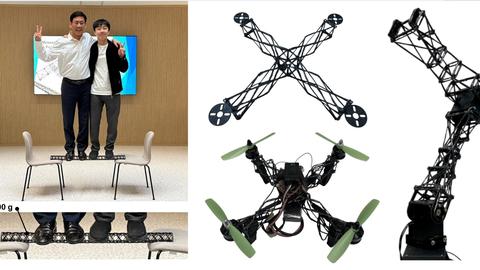
South Korea Develops Ultra-Strong, Lightweight Carbon Material with Novel Fiber Network Structure
Translated from Estonian, summarized and contextualized by DistantNews.
TLDR
- Scientists in South Korea have developed a novel method for creating ultra-strong carbon material structures that form a continuous network of fibers in space, rather than layered construction.
- This new approach results in a material that behaves as a single, cohesive unit without weak connection points, combining exceptional lightness with remarkable strength.
- Initial experiments suggest the potential for this material to significantly impact various technologies, though its full range of applications is still under exploration.
A groundbreaking development from South Korea, as reported by Postimees, promises to revolutionize material science. Researchers at Seoul National University (SNU) have pioneered a new class of ultra-light structural materials that possess the load-bearing capacity of engineering materials while maintaining a foamy lightness. This innovation sidesteps traditional layered construction methods, instead creating continuous fiber networks in three-dimensional space. The result is a material that functions as a unified whole, free from the inherent weaknesses found at connection points in conventional composites.
The implications of this breakthrough are immense. Imagine construction materials as strong as metal but weighing next to nothing. This is the potential offered by the South Korean scientists' new development. The continuous fiber network structure ensures uniform stress distribution, preventing the kind of localized failures that can plague layered materials. This inherent structural integrity, combined with its astonishingly low weight, opens up a vast array of possibilities across numerous technological fields.
While the initial findings are described as 'shockingly good,' the full scope of this material's potential is still being investigated. However, the fundamental shift in how these structures are created—moving from additive layering to a more organic, networked growth—suggests a paradigm shift. This approach could lead to lighter, stronger, and more efficient components in everything from aerospace and automotive industries to sporting goods and medical implants. The South Korean scientific community, known for its innovation in materials science, has once again demonstrated its capacity to push the boundaries of what is possible, offering a glimpse into a future where material limitations are significantly reduced.
DistantNews Editorial
Originally published by Postimees in Estonian. Translated, summarized, and contextualized by our editorial team with added local perspective. Read our editorial standards.
More Stories

/nginx/o/2026/04/21/17583842t1h5d2c.jpg)

From Our Blog

What Gets Lost (and Found) When News Is Translated

The Critical Role of Diaspora Media in Global News

What Travellers Should Know About Countries with Restricted Press

A Digital Nomad's Guide to Following Local News

How the Same Story Looks Different in Different Countries
