


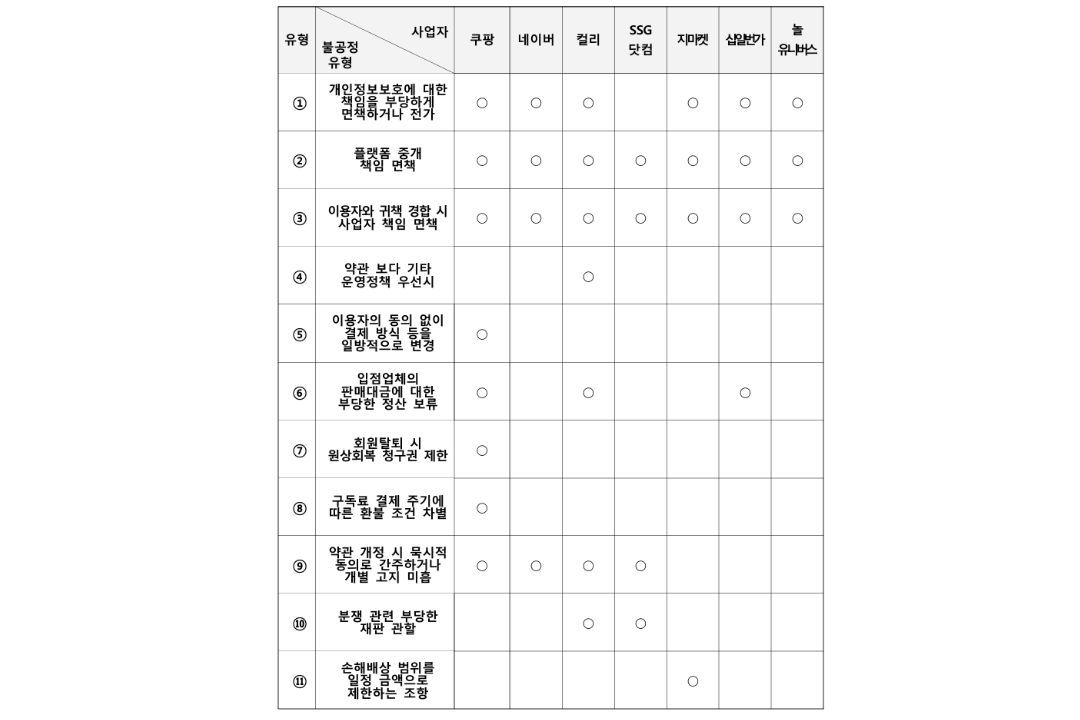
South Korea Revises Unfair Terms in Open Market Platform User Agreements
Translated from Korean, summarized and contextualized by DistantNews.
TLDR
- South Korea's Fair Trade Commission has revised unfair terms in the user agreements of seven major open market platforms, including Coupang and Naver.
- The revisions aim to prevent platforms from unfairly shifting responsibility for security breaches like hacking onto users and to protect user rights.
- The move addresses issues such as arbitrary payment method changes, delayed vendor payments, and the forfeiture of paid-for digital currency upon account cancellation.
In a significant move to protect consumers in the burgeoning e-commerce landscape, South Korea's Fair Trade Commission (FTC) has mandated revisions to the user agreements of seven prominent open market platforms. This action targets unfair clauses that previously placed undue burdens on users, particularly concerning security incidents and payment disputes. Platforms like Coupang, Naver, and Market Kurly are now required to rectify terms that allowed them to unilaterally shift responsibility for issues such as hacking onto their customers.
Over the past year, one in three companies experienced a supply chain attack.
Previously, users often bore the brunt of financial losses resulting from data breaches, regardless of the platform's culpability. The FTC's intervention ensures that platforms will now be held accountable for their negligence in such cases. Furthermore, the revised terms prohibit arbitrary changes to payment methods and the unjustified withholding of vendor payments. This is a crucial step in ensuring fair business practices within the competitive open market sector, safeguarding both consumers and smaller vendors.
85% of all respondents acknowledged the need to strengthen supply chain security, but only 15% felt their current security measures were sufficient.
Beyond security and payment issues, the FTC has also addressed concerns regarding digital currency and subscription services. Clauses that led to the forfeiture of all digital cash, including paid-for items, upon account cancellation have been removed. Only complimentary or promotional digital currency will now be subject to expiration. Subscription refund policies, which previously discriminated based on payment cycles, will also be standardized. The FTC's proactive stance underscores its commitment to fostering a more equitable and secure online marketplace for all South Koreans, reflecting a growing emphasis on consumer protection in the digital age.
The lack of skilled IT security personnel (42%) and the difficulty in prioritizing various security tasks (42%) were cited as the main reasons for failing to adequately address supply chain risks.
DistantNews Editorial
Originally published by Dong-A Ilbo in Korean. Translated, summarized, and contextualized by our editorial team with added local perspective. Read our editorial standards.
More Stories


From Our Blog

What Gets Lost (and Found) When News Is Translated

The Critical Role of Diaspora Media in Global News

What Travellers Should Know About Countries with Restricted Press

A Digital Nomad's Guide to Following Local News

How the Same Story Looks Different in Different Countries
