

Soviet Memorials in Berlin: Navigating WWII Legacy Amidst Ukraine Conflict
Translated from German, summarized and contextualized by DistantNews.
TLDR
- Berlin is debating the role and meaning of Soviet war memorials in the city 81 years after the end of World War II.
- The discussion is intensified by Russia's use of WWII memory for its propaganda regarding the invasion of Ukraine.
- Proposals from SPD and Green parties in the Berlin House of Representatives suggest new ways to handle these monuments.
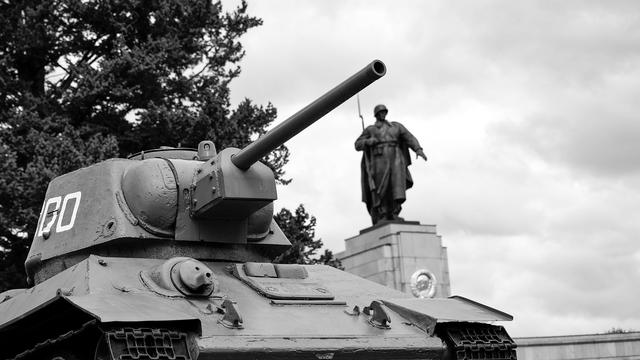
Berlin, a city deeply marked by history, is once again grappling with the complex legacy of Soviet war memorials. Eighty-one years after the end of World War II, the presence of these monuments, particularly the three prominent ones in Treptower Park, Tiergarten, and Schönholzer Heide, continues to spark debate. While they stand as reminders of the Soviet Union's victory over Nazi Germany and the sacrifices made, their significance is being re-evaluated in light of contemporary geopolitical realities.
The recent Russian invasion of Ukraine has cast a new shadow over these memorials. Critics argue that Russia is exploiting the memory of World War II to legitimize its current military actions, turning a historical victory into a tool for propaganda. This instrumentalization raises uncomfortable questions for Germany and Berlin about how to engage with these symbols of a past conflict that now intersects with present-day aggression.
Against this backdrop, political parties in the Berlin House of Representatives, specifically the SPD and the Greens, have put forward their own proposals for how the city should approach these monuments moving forward. These initiatives reflect a desire to find a way to acknowledge the historical context and the soldiers' sacrifice without endorsing current Russian policies or allowing the memorials to be co-opted for political purposes. The ongoing discussion underscores the difficulty of navigating historical memory in a way that is both respectful of the past and relevant to the present, particularly when historical narratives become entangled with ongoing international conflicts. The ZEIT's political desk editor, Anastasia Tikhomirova, provides an overview of the different viewpoints in this sensitive debate.
DistantNews Editorial
Originally published by Die Zeit in German. Translated, summarized, and contextualized by our editorial team with added local perspective. Read our editorial standards.
More Stories



From Our Blog

What Gets Lost (and Found) When News Is Translated

How the Same Story Looks Different in Different Countries

The Critical Role of Diaspora Media in Global News

What Travellers Should Know About Countries with Restricted Press

A Digital Nomad's Guide to Following Local News
