


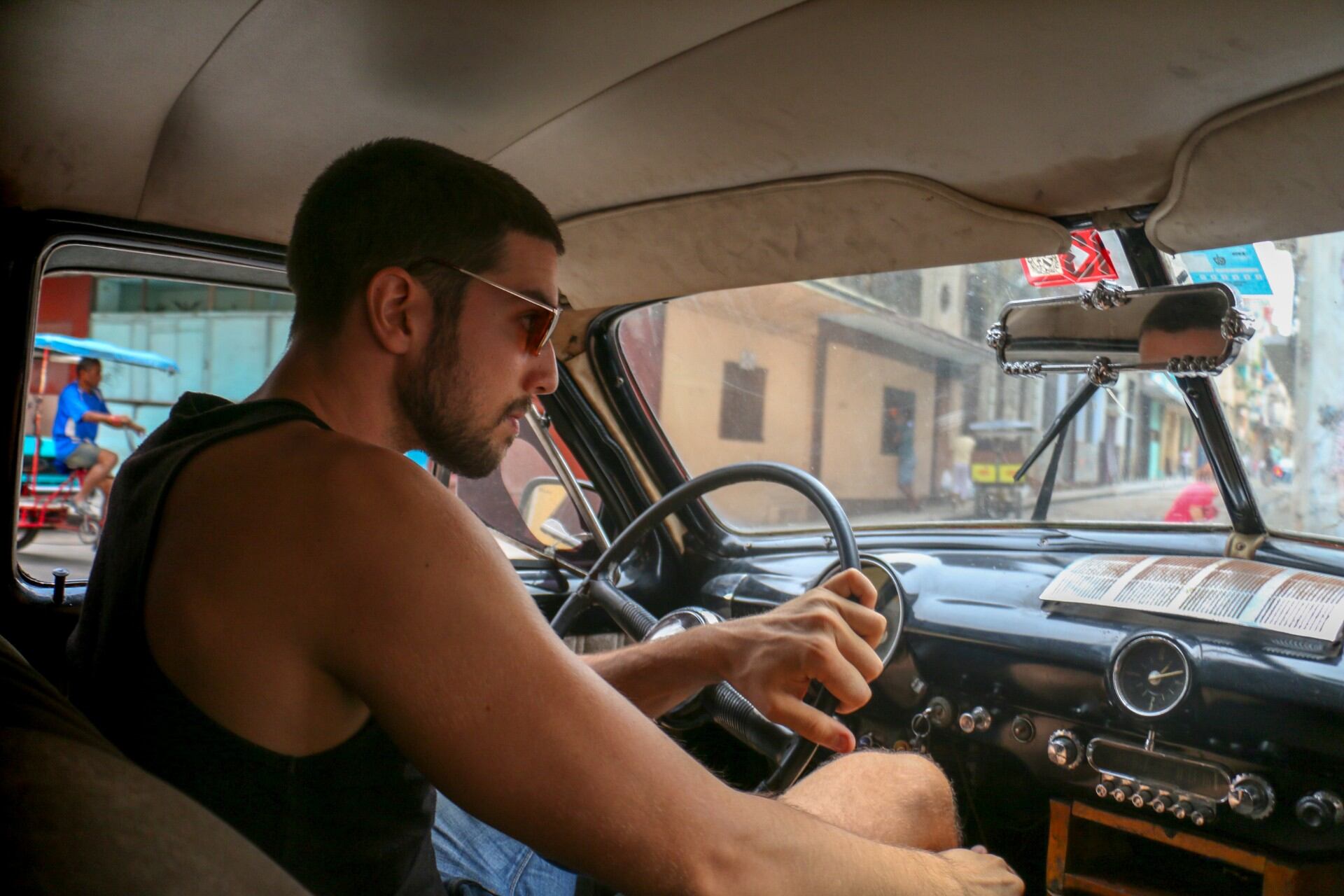
Ståle Wig: 'In Cuba, There Is Much Uncertainty and Above All Despair'
Translated from Spanish, summarized and contextualized by DistantNews.
TLDR
- Norwegian anthropologist Ståle Wig moved to Cuba to research the country's society by working as a taxi driver.
- His book, 'Havana Taxi,' details his experiences navigating the island's decaying communist system and daily life.
- Wig sought to observe and participate in Cuban society, finding it a stark contrast to his native Norway's blend of state and market.
As readers of La Nación, we are presented with a compelling ethnographic study of Cuba through the eyes of Norwegian anthropologist Ståle Wig. His decision to immerse himself in the island's daily life, not as a detached observer but as a working taxi driver, offers a raw and unfiltered perspective on a nation often romanticized or misunderstood.
En Cuba hay mucha incertidumbre y sobre todo desesperación
Wig's project, culminating in his book 'Havana Taxi,' delves into the realities of a society 'frozen in time,' characterized by dilapidated infrastructure and a 'decadent system.' His journey from a European academic environment, where he was not one to blindly admire revolutionary figures, to experiencing firsthand the complexities of Fidel Castro's legacy is particularly striking. Coming from Norway, a country that harmonizes state and market for societal well-being, Wig's nuanced stance against both 'savage capitalism' and 'failed communism' provides a critical lens through which to view Cuba's situation.
no era de los que se ponen la camiseta del Che
His firsthand account of Cuba, where hospitals lack doctors and schools lack teachers, and where dissent is met with severe punishment, paints a stark picture. The government's continued adherence to the symbols of revolution, despite the evident decay, is a central theme. Wig's experience as a taxi owner, grappling with a vehicle that constantly breaks down, serves as a powerful metaphor for the struggles of the Cuban people and the pervasive bureaucracy he encountered.
del capitalismo salvaje ni del comunismo fracasado
This narrative is particularly relevant from an Argentine perspective, given our own complex history with political and economic systems. Wig's observations about the disconnect between revolutionary ideals and lived reality in Cuba offer valuable insights. His work reminds us that understanding a nation requires more than just political analysis; it demands an intimate look at the lives of its people, their conversations, and their daily struggles for survival within a system that often seems to have lost its way. The contrast between Wig's native Norway and the Cuba he experienced underscores the diverse paths nations take and the critical importance of empirical, ground-level research.
Todos saben que en los taxis se conversa, entonces, en primer lugar, me interesaba lo que iba a pasar dentro del carro, de las conversaciones.
DistantNews Editorial
Originally published by La Nación in Spanish. Translated, summarized, and contextualized by our editorial team with added local perspective. Read our editorial standards.
More Stories



From Our Blog

What Gets Lost (and Found) When News Is Translated

The Critical Role of Diaspora Media in Global News

What Travellers Should Know About Countries with Restricted Press

A Digital Nomad's Guide to Following Local News

How the Same Story Looks Different in Different Countries
