


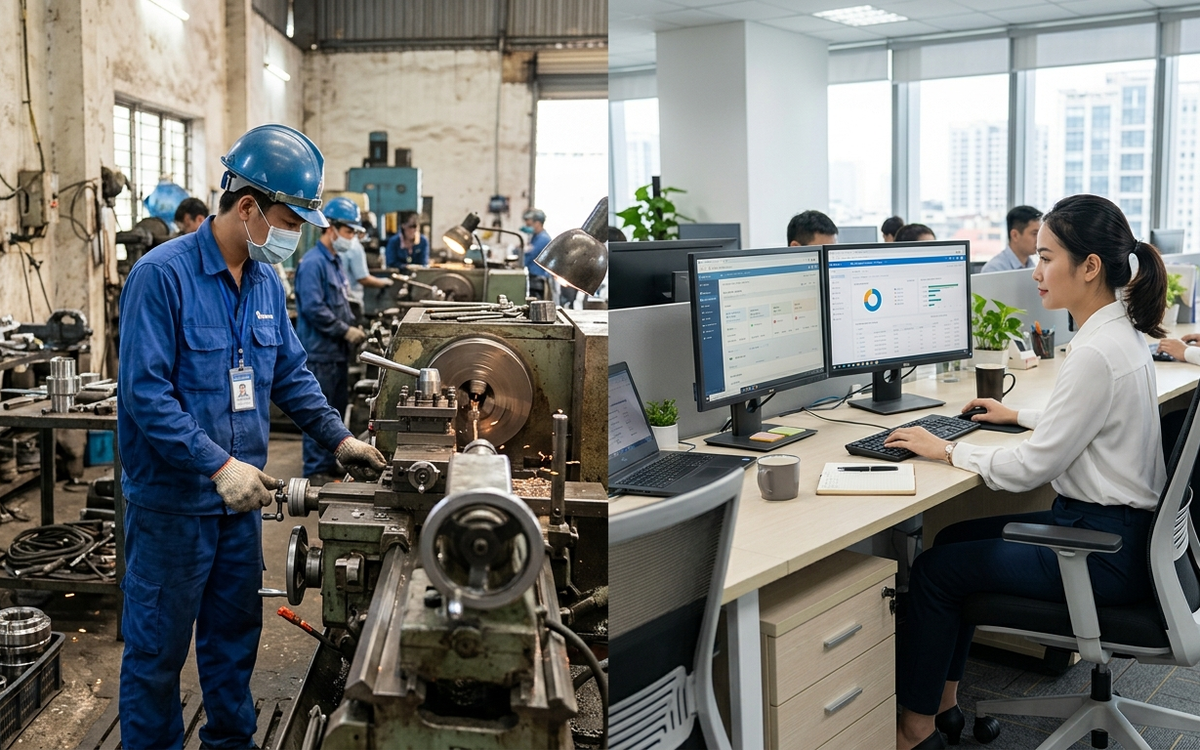
Standing vs. Sitting at Work: Constant Movement is Key to Health
Translated from Vietnamese, summarized and contextualized by DistantNews.
TLDR
- The human body functions best with constant changes in posture, not prolonged sitting or standing.
- Both prolonged sitting and standing can lead to health issues like back pain, reduced metabolism, and circulatory problems.
- The key to maintaining health in the workplace is regular movement and changing positions, rather than fixating on a single posture.
In today's modern work environments, the age-old question of whether sitting or standing is better for our health persists. However, as highlighted by recent insights, the answer is far more nuanced than a simple binary choice. The human body, a marvel of biological engineering, is fundamentally designed for movement and adaptation, not for static endurance in any single position.
Cơ thể con người hoạt động tốt nhất khi được thay đổi trạng thái liên tục.
While the adage 'sitting is the new smoking' has served as a stark warning, it's crucial to understand that prolonged sitting contributes to a host of ailments, including spinal discomfort, slowed metabolism, and increased cardiovascular risks. Yet, the alternative of standing for extended periods is not a panacea. Workers in professions requiring constant standing, such as healthcare professionals, educators, and retail staff, often suffer from leg pain, muscle fatigue, varicose veins, and chronic spinal pressure. Ergonomic studies consistently show that both prolonged sitting and prolonged standing pose significant health risks if maintained without variation.
Không có tư thế nào an toàn tuyệt đối nếu duy trì quá lâu
The common thread linking these detrimental postures is their 'static' nature. Our bodies thrive on dynamic activity. When we sit for too long, key muscle groups remain inactive, blood circulation slows, and tension builds in the neck, shoulders, and lower back. Conversely, standing for extended durations places continuous gravitational stress on the lower extremities, impacting the feet, knees, hips, and spine. Physical therapists emphasize that the primary risk factor isn't the posture itself, but the duration of immobility it entails, contributing to the prevalence of musculoskeletal disorders as occupational diseases.
Các chuyên gia về vật lý trị liệu nhấn mạnh rằng yếu tố nguy cơ lớn nhất không nằm ở việc "ngồi hay đứng", mà là thời gian duy trì tư thế và mức độ thiếu vận động đi kèm.
The most effective strategy, therefore, lies not in choosing between sitting and standing, but in embracing a dynamic approach. Recommendations from bodies like the European Agency for Safety and Health at Work advocate for reducing static posture time and incorporating regular movement. Simple adjustments, such as standing up and walking around every 30-60 minutes, alternating between sitting and standing, performing brief stretching exercises, or structuring work to allow for varied activities, can make a significant difference. Furthermore, paying attention to supportive footwear, appropriate desk and chair heights, and overall workspace ergonomics complements this active approach, fostering a healthier and more productive work life.
Giải pháp nằm ở việc thay đổi tư thế và duy trì vận động
DistantNews Editorial
Originally published by Tuổi Trẻ in Vietnamese. Translated, summarized, and contextualized by our editorial team with added local perspective. Read our editorial standards.
More Stories



From Our Blog

What Gets Lost (and Found) When News Is Translated

The Critical Role of Diaspora Media in Global News

What Travellers Should Know About Countries with Restricted Press

A Digital Nomad's Guide to Following Local News

How the Same Story Looks Different in Different Countries
