

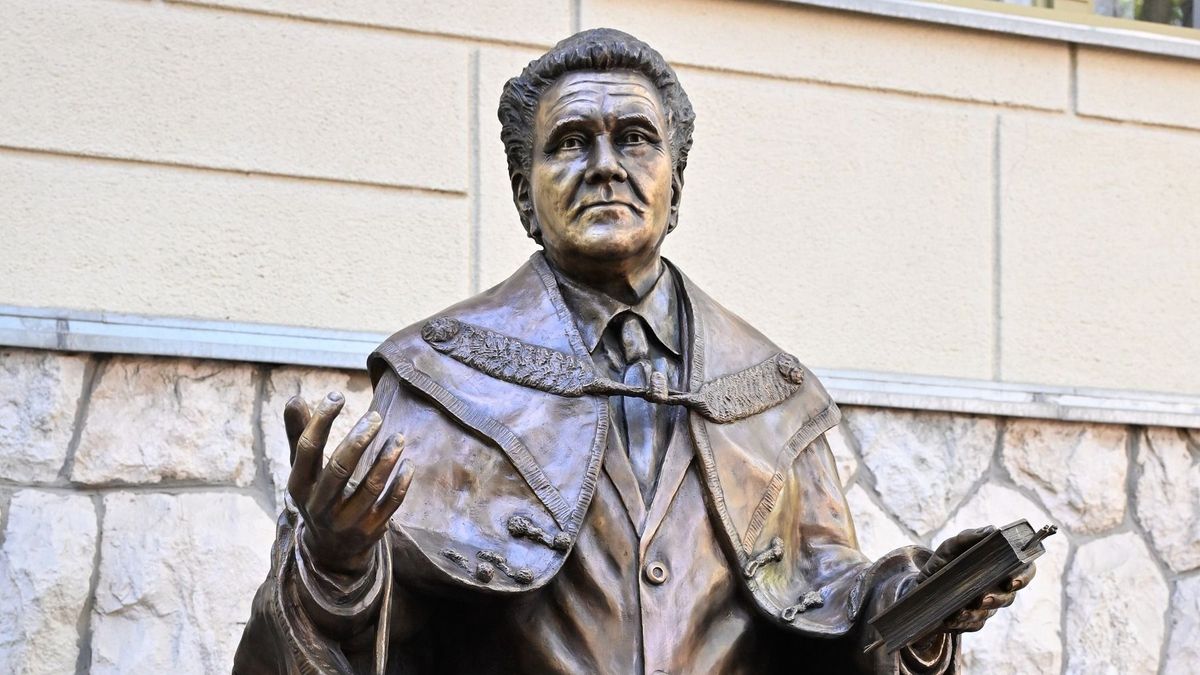
Statue of Loránt Hegedűs Unveiled in Reformed Synod Garden
Translated from Hungarian, summarized and contextualized by DistantNews.
TLDR
- A statue honoring Loránt Hegedűs was unveiled in the garden of the Reformed Synod headquarters in Budapest.
- Speakers described Hegedűs as a pivotal figure in the Hungarian Reformed Church and a key player in post-communist reconstruction.
- The ceremony highlighted his courage during the communist era and his leadership in rebuilding the church after 1989.
Magyar Nemzet reports on the unveiling of a statue dedicated to Loránt Hegedűs in Budapest, honoring a significant figure in the Hungarian Reformed Church. The event, attended by government officials like Gergely Gulyás, underscored Hegedűs's profound impact on both the church and Hungarian society during and after the communist regime.
Loránt Hegedűs's courage rooted in faith meant he knew that the truth of the gospel he proclaimed stood above the worldly power of any dictatorship.
Speakers lauded Hegedűs for his unwavering faith and courage, particularly his actions during the 1956 revolution and his subsequent service in various communities, including his long tenure as bishop in Hódmezővásárhely. His leadership in the post-1989 era was emphasized, focusing on his role in reclaiming church properties, reorganizing religious education, and founding the Károli Gáspár Reformed University, thereby playing a crucial part in the "reunification of the Reformed nation."
He saw the opportunity for service in the successive stations of exile.
From a Hungarian perspective, figures like Hegedűs represent a vital link to the nation's spiritual and historical resilience. His life story, marked by perseverance through communist oppression and dedicated service to his community, is seen as an embodiment of Hungarian Christian values. The erection of his statue is not merely an commemoration but a recognition of his enduring legacy in shaping contemporary Hungarian religious and national identity.
He fought heroically for the return of Reformed properties, reorganized church education, founded the Károli Gáspár Reformed University, and built churches and communities without regard for borders.
This event, as covered by Magyar Nemzet, reflects a national narrative that often emphasizes historical struggles against external and internal forces, celebrating those who stood firm in their beliefs and contributed to national renewal. Hegedűs's life serves as an example of faith-driven leadership and its role in rebuilding institutions and communities after periods of significant political upheaval.
The Reformed bishop's service was characterized by 'hoping with hope' even when everything seemed to contradict God's love.
DistantNews Editorial
Originally published by Magyar Nemzet in Hungarian. Translated, summarized, and contextualized by our editorial team with added local perspective. Read our editorial standards.
More Stories



From Our Blog

Countries Without a Free Press: What You Need to Know

What Press Freedom Means for the News You Read

What Gets Lost (and Found) When News Is Translated

The Critical Role of Diaspora Media in Global News

What Travellers Should Know About Countries with Restricted Press
