


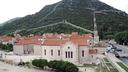
Ston Continues to Produce 'White Gold' of Dubrovnik Republic; Town's Walls Rival China's Great Wall
Translated from Croatian, summarized and contextualized by DistantNews.
At a glance
In-depth
Sources not specified
Context piece
- Ston, Croatia, continues to produce salt, historically known as the "white gold" of the Dubrovnik Republic.
- The town's defensive walls, which still stand today, are among the longest in Europe.
- These walls are often referred to as the "European Great Wall."
The historic Croatian town of Ston remains a significant producer of salt, a commodity once so valuable it was known as the "white gold" of the Dubrovnik Republic. This tradition links the town's present economic activity to its rich past, highlighting the enduring importance of its natural resources.
Beyond its salt production, Ston is renowned for its impressive defensive walls. These fortifications, which have withstood the test of time and still encircle the town, are a remarkable feat of medieval engineering. Their sheer scale has earned them the moniker "European Great Wall," drawing parallels to China's iconic structure.
The preservation of both the salt pans and the extensive walls makes Ston a unique destination. The walls not only serve as a historical monument but also as a testament to the strategic importance of the region in centuries past. Visitors can still walk along these ancient ramparts, experiencing a tangible connection to the history of the Dubrovnik Republic and its economic prowess.
The walls that enclose Ston and still exist today, few know, are the longest in Europe and are called the European Great Wall.
DistantNews Editorial
Originally published by Večernji List in Croatian. Translated, summarized, and contextualized by our editorial team with added local perspective. Read our editorial standards.
More Stories



From Our Blog

What Gets Lost (and Found) When News Is Translated

The Critical Role of Diaspora Media in Global News

What Travellers Should Know About Countries with Restricted Press

A Digital Nomad's Guide to Following Local News

How the Same Story Looks Different in Different Countries
