


Students Protest at U.S. Embassy in Seoul, Demand Withdrawal of U.S. Forces
Translated from Korean, summarized and contextualized by DistantNews.
TLDR
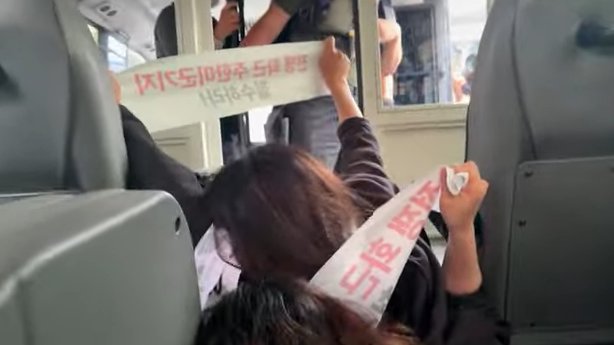
- Students from the Korean Confederation of University Student Unions staged a protest outside the U.S. Embassy in Seoul, demanding an end to the Korean Peninsula's war and the withdrawal of U.S. forces.
- The students cited remarks made by U.S. Forces Korea Commander Gen. Paul LaCamera regarding wartime operational control as a violation of South Korean sovereignty.
- Eight students were arrested by police on charges of violating assembly and protest laws after attempting to enter the embassy premises.
A group of South Korean university students, representing the Korean Confederation of University Student Unions (KUSSU), took to the streets in front of the U.S. Embassy in Seoul to voice strong opposition to the ongoing military presence and perceived infringements on national sovereignty. Their protest, demanding an end to the state of war on the Korean Peninsula and the immediate withdrawal of U.S. Forces Korea (USFK), highlights a segment of Korean society deeply concerned about the implications of the U.S.-ROK alliance and military exercises.
The students specifically targeted recent remarks by USFK Commander Gen. Paul LaCamera concerning wartime operational control (OPCON). They argue that LaCamera's statements, made during testimony before the U.S. Congress, constitute a violation of South Korea's sovereign rights. This sentiment reflects a broader national discourse in South Korea about the balance of power within the alliance and the extent to which South Korea maintains independent decision-making authority, particularly concerning military matters.
The swift police response, leading to the arrest of eight students for attempting to breach embassy grounds, underscores the sensitivity surrounding foreign military presence and diplomatic missions in Seoul. While Western media might frame this as a minor protest by a radical group, from a South Korean perspective, such actions often tap into deep-seated historical grievances and contemporary anxieties about foreign influence and national self-determination. The Hankyoreh reports on these events, recognizing the students' right to protest while also noting the legal ramifications, and situating their demands within the ongoing national conversation about peace, sovereignty, and the future of the U.S.-ROK relationship.
DistantNews Editorial
Originally published by Hankyoreh in Korean. Translated, summarized, and contextualized by our editorial team with added local perspective. Read our editorial standards.
More Stories


From Our Blog

What Gets Lost (and Found) When News Is Translated

The Critical Role of Diaspora Media in Global News

What Travellers Should Know About Countries with Restricted Press

A Digital Nomad's Guide to Following Local News

How the Same Story Looks Different in Different Countries
