


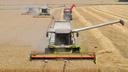
Stunning assessment by the State Audit Office: Billions for agriculture wasted
Translated from Croatian, summarized and contextualized by DistantNews.
TLDR
- Croatia's State Audit Office found that billions of euros allocated to agriculture have yielded negligible results, with funds "squandered."
- Despite a high absorption rate of EU funds (over 97%), the real value of agricultural production has declined significantly since 2010.
- Croatia's agricultural productivity per labor unit is substantially lower than the EU average, and the country relies heavily on imports for many food products.
A scathing report from Croatia's State Audit Office has revealed a deeply concerning picture of the nation's agricultural sector, concluding that billions of euros in European Union funds have been "squandered" with little tangible return. The audit, which examined the effectiveness of funding from the European Agricultural Fund for Rural Development (EAFRD) and the Rural Development Programme (RDP) for 2014-2020, paints a stark contrast between high fund absorption rates and dismal production outcomes.
Billions of euros have been 'squandered' in Croatian agriculture, and there are no tangible results.
While Croatian officials have boasted about absorbing over 97% of available EU funds – amounting to more than 3.5 billion euros – the audit's findings are alarming. The nominal value of agricultural production has grown by a mere 9% since 2010, the lowest among EU member states, where the average growth was around 52%. More critically, the real value of production has actually fallen by approximately 25%, a decline mirrored only by Romania, Malta, and Bulgaria, while the EU27 saw an average increase of about 13%.
Croatia continuously records significantly lower productivity per unit of labor in agriculture – as much as 30% lower than the EU average.
Productivity in Croatian agriculture is a major concern, lagging significantly behind the EU average by as much as 30%. For every thousand labor units, Croatia generates only 7.21 million euros, compared to the European average of 24.23 million euros. Furthermore, the structure of Croatian farms is characterized by a high proportion of small holdings – 40% are two hectares or less, and 30% are up to five hectares – which hinders efficiency and competitiveness on a larger scale.
We have a significantly higher share of agricultural holdings with small areas compared to the EU average – as much as 40% are up to two hectares, and 30% up to five hectares.
The audit also highlighted Croatia's poor self-sufficiency in key agricultural and food products. The country produces enough only for wheat, cereals, wine, and beer. For fruits, it meets just 42.3% of its needs; for vegetables and oil, 48.5%; potatoes, 46%; raw milk, 50.3%; meat, 62%; sugar, 62.1%; honey, 82.8%; eggs, 84.2%; table olives, 90%; and sugar beet, 90.6%. This reliance on imports underscores the systemic issues within the sector, despite substantial EU investment.
We produce enough only for wheat (281.3%), cereals (151.3%), wine (153.3%), and beer (100.7%), while we cover only 42.3% of our needs for fruit, 48.5% for vegetables and oil, 46% for potatoes, 50.3% for raw milk, 62% for meat, 62.1% for sugar, 82.8% for honey, 84.2% for eggs, 90% for table olives, and 90.6% for sugar beet.
DistantNews Editorial
Originally published by Večernji List in Croatian. Translated, summarized, and contextualized by our editorial team with added local perspective. Read our editorial standards.
More Stories



From Our Blog

What Gets Lost (and Found) When News Is Translated

The Critical Role of Diaspora Media in Global News

What Travellers Should Know About Countries with Restricted Press

A Digital Nomad's Guide to Following Local News

How the Same Story Looks Different in Different Countries
