

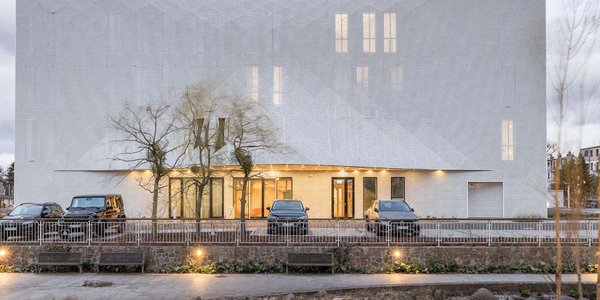

Success is our middle name. Over half of Poles are proud of their achievements
Translated from Polish, summarized and contextualized by DistantNews.
At a glance
Analysis
Documents & data
Context piece
- A study reveals that 52% of Poles feel the country has achieved success in the last decade.
- Poles attribute this success to systemic foundations, economic and political stability, and social factors like self-belief.
- While external factors like innovation and education are recognized, personal agency and self-confidence are highlighted as key drivers of national success.
A recent study indicates a strong sense of national achievement in Poland, with 52% of respondents believing the country has succeeded over the past decade. This perception of success is built on a combination of stable systemic foundations, economic and political stability, and crucially, social factors.
We wanted to check whether the development of our country translates into a sense of success among Poles and what success means to them.
Among the key drivers identified, self-belief emerged as a significant factor, cited by 31% of respondents. This internal conviction in one's own capabilities was highlighted as a primary element shaping national success, surpassing more traditional development factors. The readiness to take initiative and act, intrinsically linked to self-belief, was deemed as important as the political situation.
The results are pleasing because they show that one of the factors that drives us in everyday life is self-belief.
Respondents also pointed to the importance of education and developing future competencies (around 20%), support for innovation and technology (19%), and building social cooperation and trust (18%). However, the study also noted a shift in the definition of success, with Poles increasingly looking beyond traditional metrics to include health, relationships, and life satisfaction.
At the same time, it is clear that the very concept of success is clearly changing – Poles are increasingly looking at it more broadly, also through the prism of health, relationships, and a sense of satisfaction with life.
Generational differences emerged in the perception of success factors. Older respondents (45+) more frequently emphasized self-belief, while political stability was particularly important for men and the oldest participants. Younger women (Generation Z) highlighted education quality and a propensity for action, whereas Millennials stressed state support for innovation and technology. Interestingly, despite expectations for public institutions, their strength was ranked last among key factors for national success, suggesting Poles primarily view success through the lens of their own agency and initiative.
Poles perceive success primarily through the prism of their own agency – the conviction that it is their actions, decisions, and initiative that really influence the country's future.
DistantNews Editorial
Originally published by Rzeczpospolita in Polish. Translated, summarized, and contextualized by our editorial team with added local perspective. Read our editorial standards.
More Stories


From Our Blog

What Gets Lost (and Found) When News Is Translated

The Critical Role of Diaspora Media in Global News

What Travellers Should Know About Countries with Restricted Press

A Digital Nomad's Guide to Following Local News

How the Same Story Looks Different in Different Countries
