


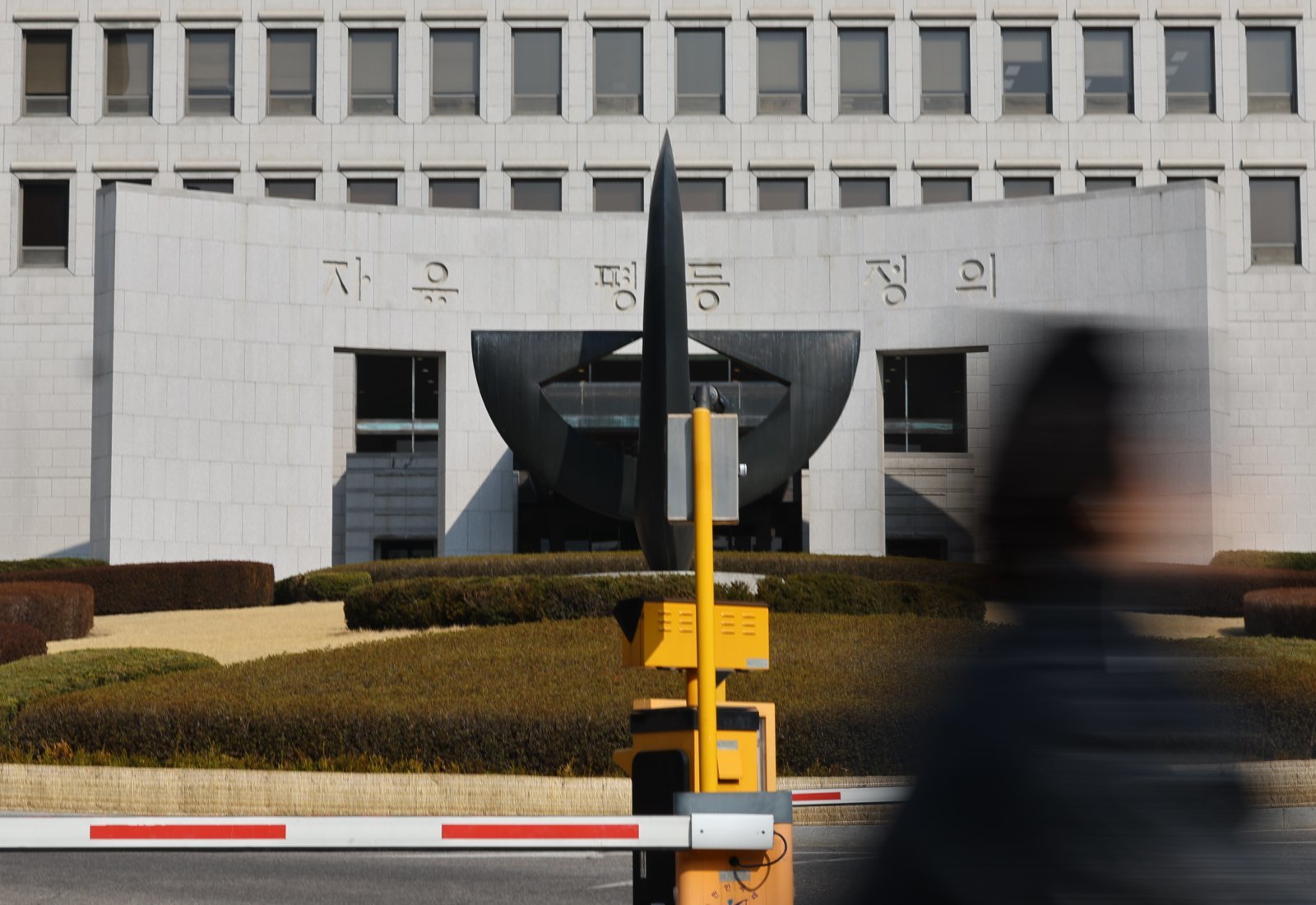
Supreme Court: Arresting voluntary attendees with warrant is illegal
Translated from Korean, summarized and contextualized by DistantNews.
TLDR
- The Supreme Court ruled that arresting a suspect who voluntarily appeared at a police station, based on an arrest warrant citing 'fear of non-compliance,' is illegal.
- The court found that police must rigorously assess the grounds for arrest, even when a warrant is validly issued.
- While the evidence obtained from the illegal arrest was excluded, the suspect's conviction for soliciting prostitution was upheld based on other admissible evidence.
In a significant ruling, South Korea's Supreme Court has declared that arresting a suspect who voluntarily presents themselves at a police station, even with an existing arrest warrant, is unlawful. The case involved an individual, identified as 'A', who was arrested on charges of soliciting prostitution. Despite voluntarily appearing at the police station as requested, officers executed an arrest warrant that cited 'fear of non-compliance' as the grounds for detention.
Even if an arrest warrant is legally issued, law enforcement must carefully examine the grounds and necessity of the arrest based on the situation at the time of execution.
The Supreme Court's decision emphasizes that the validity of an arrest warrant does not negate the requirement for law enforcement to meticulously assess the actual circumstances at the time of execution. The court pointed out that 'A' had promised to appear within two weeks and fulfilled that promise, thus negating the 'fear of non-compliance.' Furthermore, 'A' exhibited no behavior suggesting an intent to flee or destroy evidence, rendering the arrest arbitrary and unlawful.
Given that 'A' promised to appear within two weeks and fulfilled that promise, there is room to believe that the 'fear of non-compliance' did not exist.
This ruling is a crucial affirmation of individual rights and due process. It clarifies that police cannot blindly execute arrest warrants when the suspect's actions demonstrate a clear intent to cooperate. While the court excluded evidence directly obtained from the illegal arrest, 'A's conviction was ultimately upheld based on other corroborated evidence. This judgment serves as a vital reminder to law enforcement agencies about the stringent conditions that must be met before depriving an individual of their liberty, even when a warrant is in hand.
The judgment that the police considered the grounds and necessity for arrest to be met at the time of executing the warrant on 'A' is, by all accounts, conspicuously unreasonable in light of experience and common sense, thus constituting an illegal arrest.
DistantNews Editorial
Originally published by Dong-A Ilbo in Korean. Translated, summarized, and contextualized by our editorial team with added local perspective. Read our editorial standards.
More Stories


From Our Blog

What Gets Lost (and Found) When News Is Translated

The Critical Role of Diaspora Media in Global News

What Travellers Should Know About Countries with Restricted Press

A Digital Nomad's Guide to Following Local News

How the Same Story Looks Different in Different Countries
