


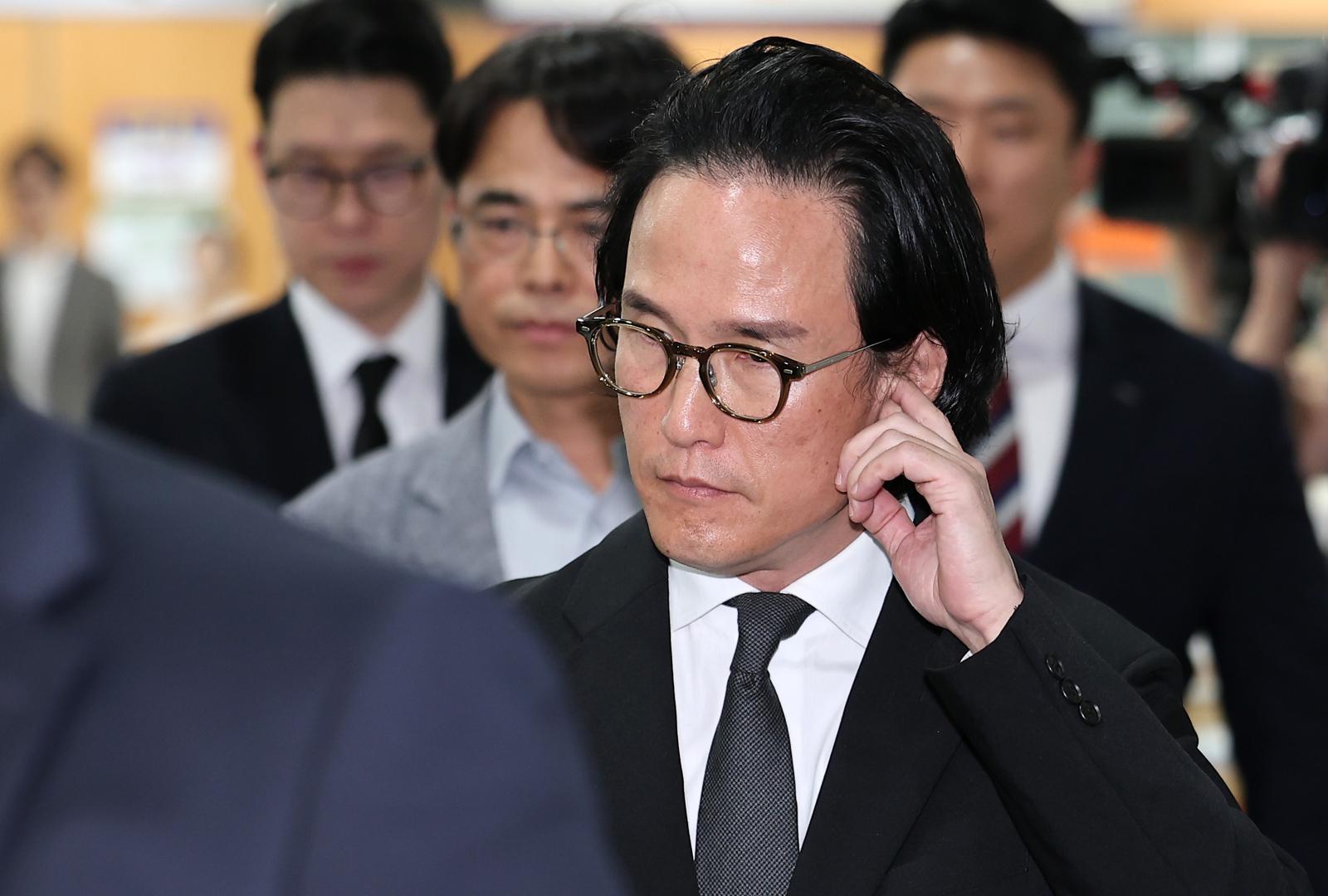
Supreme Court Upholds 2-Year Sentence for Hankore Chairman Cho Hyun-bum on Embezzlement Charges
Translated from Korean, summarized and contextualized by DistantNews.
TLDR
- The Supreme Court of South Korea has upheld a two-year prison sentence for Cho Hyun-bum, chairman of Hankore Company Limited, for embezzlement and breach of trust.
- Cho was found guilty of misappropriating approximately 2 billion won (about $1.45 million) of company funds for personal expenses, including driver's salaries and home furnishings.
- The court also convicted him of receiving bribes related to business favors and using corporate credit cards for personal and friend's expenses.
In a significant ruling that underscores accountability within corporate leadership, South Korea's Supreme Court has finalized a two-year prison sentence for Cho Hyun-bum, the chairman of Hankore Company Limited (formerly Hankook Tire & Technology). This decision brings a close to a protracted legal battle concerning charges of embezzlement and breach of trust, sending a clear message about financial misconduct at the highest levels of Korean industry.
The Supreme Court has confirmed a two-year prison sentence for Chairman Cho Hyun-bum of Hankore Company Group for embezzlement and breach of trust.
The charges, which initially involved allegations of misappropriating over 20.7 billion won, saw the court ultimately confirm approximately 2 billion won in proven financial impropriety. This included the egregious use of company funds for personal matters, such as paying for his spouse's driver and purchasing household items. Such actions, viewed as a severe betrayal of fiduciary duty, highlight a pattern of personal enrichment at the expense of corporate assets.
Furthermore, the court's verdict recognized Cho's involvement in a bribery scheme, where he allegedly facilitated business favors for an acquaintance in exchange for benefits, including the provision of an apartment. The misuse of corporate credit cards, amounting to about 580 million won for personal and third-party expenses, further cemented the charges against him. Cho, who was initially arrested in May 2023 and briefly released, was re-detained after the first-instance ruling, emphasizing the gravity with which these financial crimes are treated.
The court found some of the prosecution's core charges not guilty, but recognized approximately 2 billion won as guilty.
This case is particularly resonant in South Korea, where the influence of large family-controlled conglomerates, or 'chaebols,' is immense. While these groups are engines of economic growth, high-profile cases of executive misconduct, like this one, fuel public debate about corporate governance and the need for stricter oversight. The Supreme Court's decision serves as a critical reminder that even powerful figures are subject to the law, reinforcing the principle that personal gain should never supersede corporate integrity and shareholder trust. The finality of this sentence is a moment of reckoning for both Cho and the broader corporate landscape in Korea.
The court found the parts of private embezzlement, such as paying for the spouse's driver and purchasing furniture with company money, to be guilty.
DistantNews Editorial
Originally published by Dong-A Ilbo in Korean. Translated, summarized, and contextualized by our editorial team with added local perspective. Read our editorial standards.
More Stories


From Our Blog

What Gets Lost (and Found) When News Is Translated

The Critical Role of Diaspora Media in Global News

What Travellers Should Know About Countries with Restricted Press

A Digital Nomad's Guide to Following Local News

How the Same Story Looks Different in Different Countries
