


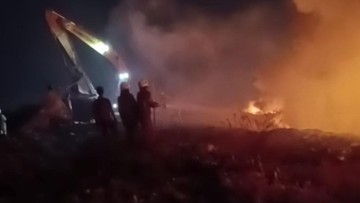
Surabaya Landfill Fire Not Ordinary Incident, Says Environmental Group
Translated from Indonesian, summarized and contextualized by DistantNews.
At a glance
News
Named sources
Context piece
- An environmental group in Surabaya, Indonesia, stated that a recent fire at the Benowo landfill was not a normal incident.
- The fire, which burned 900 square meters of waste, highlights failures in waste management and increases disaster risks, especially during heatwaves.
- The group urged local authorities to abandon the open dumping system and implement better waste reduction and handling policies, arguing that high-tech solutions alone are insufficient.
A recent fire at Surabaya's Benowo landfill, which consumed 900 square meters of waste, is far from a routine incident, according to the Indonesian Forum for the Environment (Walhi) East Java. The environmental group emphasized that the blaze, which occurred Sunday evening, underscores significant failures in the city's waste management system.
Walhi East Java stated that the Benowo landfill, a key component of a waste-to-energy project designed to process 1,000 to 1,600 tons of waste daily, is not equipped to handle the current volume. The organization pointed to the open dumping system, still in use despite being mandated against by Indonesia's Waste Management Law, as a major contributor to the problem. This system, they explained, produces flammable methane gas.
The group also drew parallels to a similar fire at the Pakusari landfill in Jember on July 4, 2026, suggesting a broader pattern of poor waste governance across East Java. They warned that these incidents heighten the risk of disasters, particularly in the context of climate change and heatwaves that can easily ignite accumulated waste.
Furthermore, Walhi argued that the presence of advanced waste-to-energy technology has not resolved the fundamental issues. The core problems, they asserted, remain the high volume of waste generated and the weak policies for waste reduction at the source. As long as the management paradigm focuses on disposal and burning, ecological disaster risks like fires will persist, they concluded.
DistantNews Editorial
Originally published by CNN Indonesia in Indonesian. Translated, summarized, and contextualized by our editorial team with added local perspective. Read our editorial standards.
More Stories


From Our Blog

What Gets Lost (and Found) When News Is Translated

The Critical Role of Diaspora Media in Global News

What Travellers Should Know About Countries with Restricted Press

A Digital Nomad's Guide to Following Local News

How the Same Story Looks Different in Different Countries
