


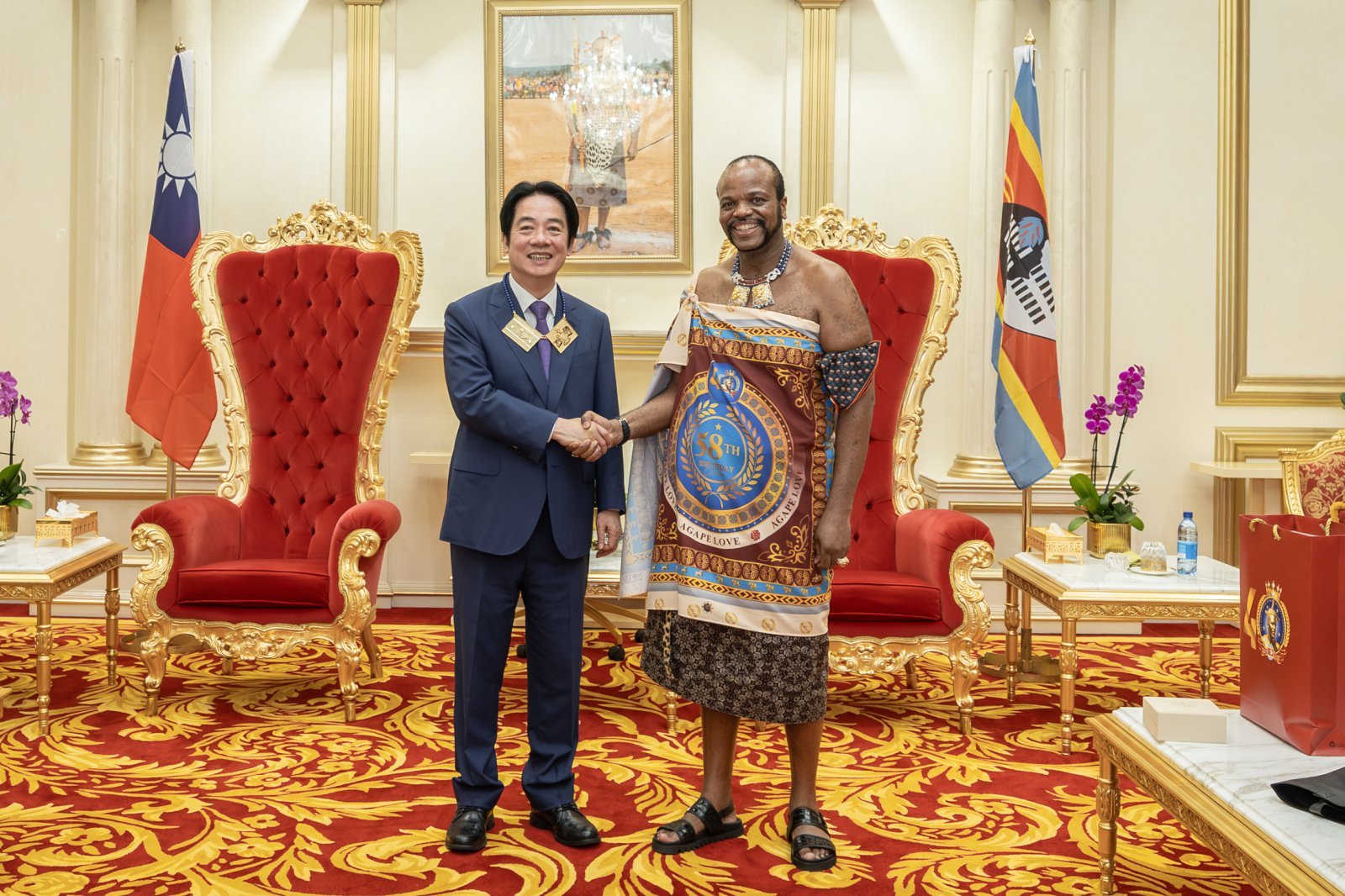
Taiwan President Lai Concludes Eswatini Visit Amidst Chinese Obstruction, Returns Home
Translated from Korean, summarized and contextualized by DistantNews.
TLDR
- Taiwan's President Lai Ching-te concluded his state visit to Eswatini, Taiwan's sole diplomatic ally in Africa.
- Lai emphasized that reciprocal visits between heads of state are a fundamental right, indirectly criticizing China's obstruction.
- The visit aimed to demonstrate Taiwan's determination to engage with the international community despite Beijing's pressure.
President Lai Ching-te has successfully concluded his state visit to Eswatini, Taiwan's last remaining diplomatic ally on the African continent. The trip, which spanned four days, saw President Lai engage with King Mswati III, reinforcing the bilateral ties between the two nations. This visit, undertaken despite significant pressure and obstruction from Beijing, serves as a powerful statement of Taiwan's commitment to maintaining its international presence and asserting its sovereign rights.
Upon his return, President Lai addressed the press at Taoyuan International Airport, directly referencing the challenges encountered during the trip. He underscored that mutual visits between heads of state are a 'very normal' and 'fundamental right' that all countries should be able to exercise freely. This assertion is a clear, albeit indirect, rebuke of China's persistent efforts to isolate Taiwan diplomatically and economically. The Taiwanese government has consistently accused Beijing of employing 'economic coercion' and political pressure to dissuade countries from engaging with Taiwan.
The visit to Eswatini is particularly symbolic. In a continent where China has exerted considerable influence, Eswatini stands as a unique partner, maintaining official diplomatic relations with Taiwan. President Lai's use of the King's private jet, which was subsequently escorted by Taiwanese F-16V fighter jets upon entering Taiwan's Air Defense Identification Zone (ADIZ), further highlighted the nation's resolve to protect its sovereignty and demonstrate its defense capabilities. This display serves not only as a security measure but also as a visual affirmation of Taiwan's independent standing on the global stage.
From Taiwan's perspective, this visit is a crucial affirmation of its diplomatic strategy and national identity. While Western media might focus on the geopolitical chess match with China, for Taiwan, these diplomatic engagements are about survival, recognition, and the fundamental right to participate in the international community. The success of this visit, despite the obstacles, reinforces President Lai's narrative of Taiwan's unwavering determination to forge its own path and connect with the world, proving that diplomatic isolation is not an inevitable outcome, even in the face of overwhelming pressure. The Dong-A Ilbo, as a prominent South Korean publication, reports this event with an understanding of the complex regional dynamics, acknowledging Taiwan's efforts to assert its autonomy in a challenging geopolitical environment.
DistantNews Editorial
Originally published by Dong-A Ilbo in Korean. Translated, summarized, and contextualized by our editorial team with added local perspective. Read our editorial standards.
More Stories


From Our Blog

What Gets Lost (and Found) When News Is Translated

The Critical Role of Diaspora Media in Global News

What Travellers Should Know About Countries with Restricted Press

A Digital Nomad's Guide to Following Local News

How the Same Story Looks Different in Different Countries
