


"Tatort" Editors Discuss Rising Production Costs and Creative Challenges
Translated from German, summarized and contextualized by DistantNews.
TLDR
- "Tatort" editors discussed the challenges of producing high-quality crime dramas with shrinking budgets.
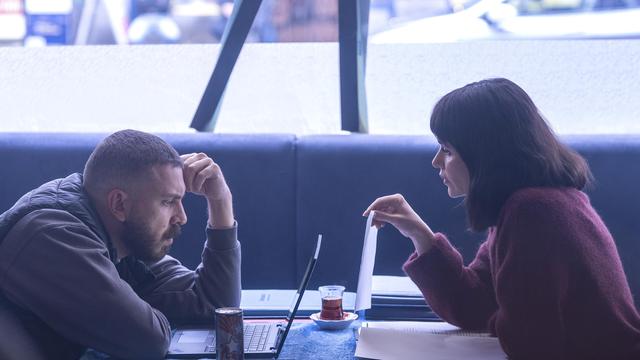
- The Frankfurt team's new investigative duo, Melika Foroutan and Edin Hasanović, has received critical acclaim and an audience following.
- Their debut film, "Dunkelheit," won the Grimme Award, highlighting the success of their approach to cold-case investigations and the impact of crime on victims' families.
The editors behind Germany's beloved crime series, "Tatort," are grappling with the increasing costs of production and tightening budgets, a challenge that threatens the quality of future installments. In an interview with Die Zeit, editors Erin Högerle and Jörg Himstedt from the Frankfurt team shed light on these difficulties, emphasizing their commitment to creating compelling narratives despite financial constraints. The Frankfurt "Tatort" has recently garnered significant attention for its innovative approach, focusing not only on solving cold cases but also on the profound emotional impact of crimes on victims and their families.
The new investigative duo, Maryam Azadi (Melika Foroutan) and Hamza Kulina (Edin Hasanović), has quickly become a favorite among viewers and critics alike. Their debut film, "Dunkelheit" (Darkness), was not only a ratings success but also earned the prestigious Grimme Award, Germany's most important television prize. This recognition validates the team's decision to delve deeper into the human consequences of criminal acts, offering a more nuanced and emotionally resonant portrayal than traditional crime procedurals.
From the perspective of a German publication like Die Zeit, the success of the Frankfurt "Tatort" is a testament to the enduring appeal of the series and its ability to adapt to contemporary storytelling trends. While international audiences might see "Tatort" as just another crime show, for Germans, it's a cultural institution. The editors' discussion about budget constraints and the use of inclusive language (gendering with a glottal stop) reflects ongoing societal conversations within Germany. The show's ability to tackle complex social issues alongside gripping plots is what makes it uniquely captivating and relevant to the German public, proving that compelling storytelling can thrive even when facing production challenges.
Das nervt dann schon sehr
DistantNews Editorial
Originally published by Die Zeit in German. Translated, summarized, and contextualized by our editorial team with added local perspective. Read our editorial standards.
More Stories
From Our Blog

What Gets Lost (and Found) When News Is Translated

How the Same Story Looks Different in Different Countries

The Critical Role of Diaspora Media in Global News

What Travellers Should Know About Countries with Restricted Press

A Digital Nomad's Guide to Following Local News
