


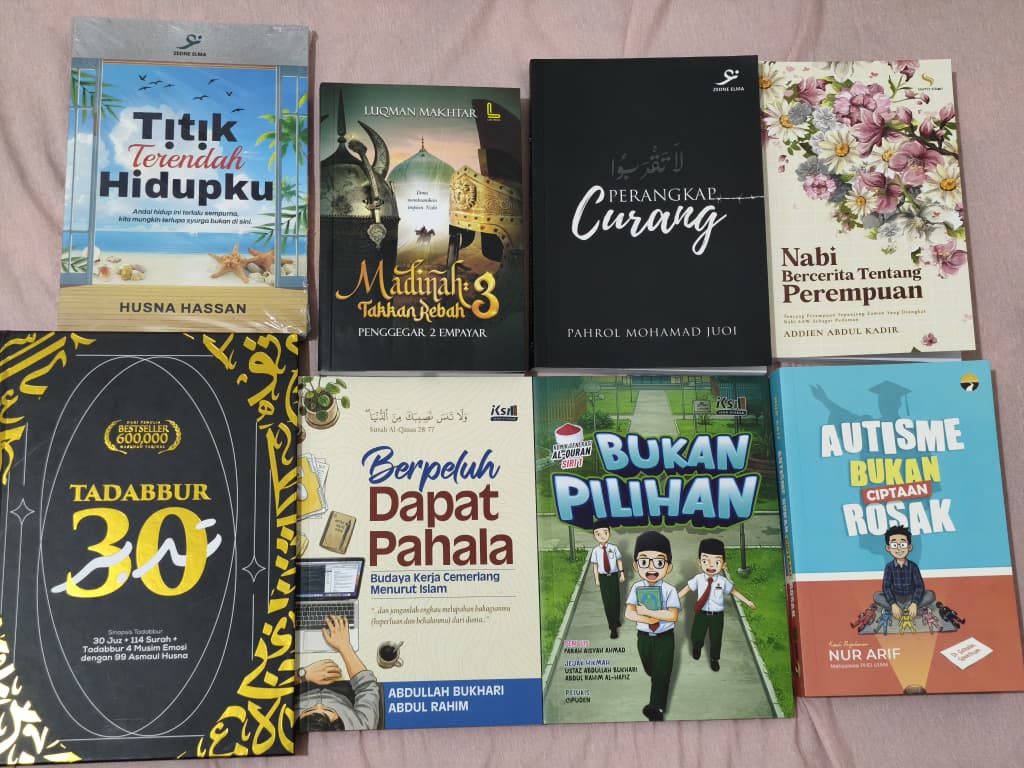
The Enduring Legacy of Knowledge: How Books and Pens Keep Us Alive
Translated from Malay, summarized and contextualized by DistantNews.
At a glance
In-depth
Sources not specified
Context piece
- The article discusses the Islamic belief that the legacy of knowledge, particularly through writing and books, allows individuals to live on long after their physical death.
- It highlights the enduring impact of scholars and imams whose works continue to benefit Muslims worldwide.
- The piece uses the Kuala Lumpur International Book Fair as an example of the continued relevance of books and pens in the digital age, emphasizing Islam's focus on knowledge.
The Islamic tradition holds that the legacy of knowledge, especially through the written word, allows individuals to transcend their mortal limitations and continue to benefit humanity long after their passing. This concept is rooted in the belief that the lifespan of Prophet Muhammad's followers is relatively short, typically between 60 and 70 years, as mentioned in the Hadith.
The lifespan of my Ummah is between 60 and 70 years. Few will exceed that.
Despite this limited earthly existence, the enduring impact of Islamic scholars and imams is profound. Their writings, thoughts, and works, preserved in books and texts, remain vital resources for Muslims globally. This intellectual inheritance ensures that their contributions continue to provide guidance and benefit across generations, demonstrating how beneficial knowledge can keep a person "alive" in collective memory and impact.
The Kuala Lumpur International Book Fair (PBAKL 2026) serves as a contemporary illustration of this enduring value. The large turnout at the event signifies that books and pens have not lost their appeal, even amidst the dominance of digital media. The tactile experience of paper and ink, the article suggests, fosters a unique thirst for knowledge that screen displays cannot fully replicate.
Read.
Islam itself is presented as a religion of knowledge, underscored by the very first revealed command to Prophet Muhammad: "Read" (Al-'Alaq 96:1-5). The article posits that the elevation of the pen and the book by Allah signifies their crucial role in the development of knowledge and human civilization. Just as a chef is essential for creating nourishing food, writers and scholars are vital for producing quality, beneficial books that educate the community.
HOW WISH MY PEOPLE KNEW –
The narrative further draws parallels with the story in Surah Yasin (verses 20-27), where a man who believed and advocated for truth was martyred. His story, however, continued even after his death, as Allah revealed his ultimate reward in Paradise, prompting a wish that his people could have known the reason for his forgiveness and honor. This narrative reinforces the idea that righteous actions and the knowledge shared can have a lasting, posthumous influence.
About the thing that has caused my Lord to forgive me, and ranked me among those honored.
DistantNews Editorial
Originally published by Utusan Malaysia in Malay. Translated, summarized, and contextualized by our editorial team with added local perspective. Read our editorial standards.
More Stories


From Our Blog

What Gets Lost (and Found) When News Is Translated

The Critical Role of Diaspora Media in Global News

What Travellers Should Know About Countries with Restricted Press

A Digital Nomad's Guide to Following Local News

How the Same Story Looks Different in Different Countries
