


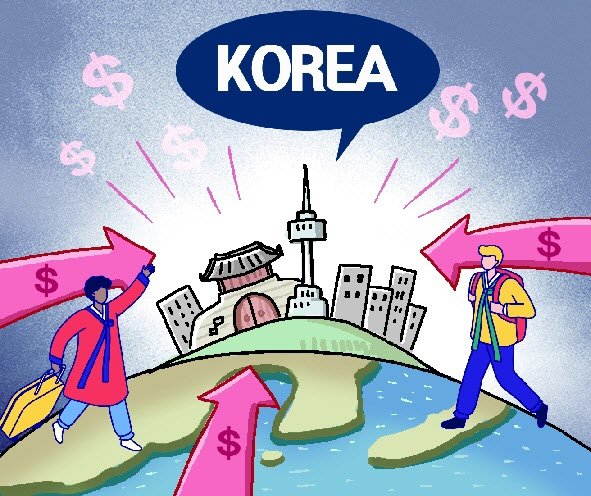
The Power of Hallyu That Reversed the 'Perennial Deficit' in Travel Balance
Translated from Korean, summarized and contextualized by DistantNews.
TLDR
- The power of the Korean Wave (Hallyu) has reversed South Korea's chronic travel deficit, leading to a surplus for the first time since November 2014.
- The surge in tourism is attributed to the popularity of K-pop and K-dramas, attracting international visitors who stay longer and spend more than previous tourist demographics.
- This cultural influence has diversified South Korea's tourism appeal beyond shopping, drawing visitors interested in food, cultural sites, and the experiences associated with Hallyu.
The global phenomenon of the Korean Wave, or Hallyu, has demonstrably transformed South Korea's economic landscape, most notably by reversing its long-standing travel deficit. For the first time in over a decade, the nation has recorded a travel surplus, a significant achievement attributed directly to the burgeoning international interest in K-pop, K-dramas, and other facets of Korean popular culture.
The economic ripple effect from BTS's three performances is estimated to reach $107.5 million.
This cultural export has proven to be a powerful economic engine. The recent surge in foreign visitors, spurred by events like BTS's performances, has led to extended stays and increased per capita spending compared to previous tourist groups. This shift signifies a move beyond traditional tourism drivers, such as shopping, towards a more immersive cultural experience, including culinary tourism and visits to locations associated with Hallyu stars and productions.
Foreign tourists who visited during BTS's comeback concert in Seoul in March stayed an average of 8.7 days and spent 3.53 million won per person.
Reflecting on the past, South Korea's tourism landscape was once dominated by Chinese shoppers, particularly during periods of favorable bilateral relations. However, the geopolitical shifts and the subsequent rise of Hallyu in the 2020s have dramatically altered this dynamic. K-pop and K-dramas have captured the imagination of audiences not only in Asia but also across North America, Europe, and the Middle East, creating a diverse and growing international visitor base.
The travel balance recorded a surplus in March for the first time since November 2014, after 136 months of chronic deficit.
What makes this current wave of Hallyu particularly compelling from a South Korean perspective is its ability to resonate universally. While previous cultural exports might have been seen as fleeting trends, the current Hallyu appears to be rooted in a deeper appreciation for Korean values, resilience, and a unique cultural identity. This growing global fascination with Korea's way of life, as observed in online discussions and visitor experiences, suggests a maturing of Korean soft power, moving beyond mere entertainment to foster a genuine connection and curiosity about the nation itself.
‘Experiencing Hallyu content’ was cited as the No. 1 reason for becoming interested in Korea, according to the 2024 Foreigners' Visit Survey.
DistantNews Editorial
Originally published by Dong-A Ilbo in Korean. Translated, summarized, and contextualized by our editorial team with added local perspective. Read our editorial standards.
More Stories

Webtoon Artist Yoon Tae-ho Reveals 'Inside Men' Casting Surprise and Rights Negotiation Strategy on …

Seventeen's Dino to Officially Debut as Alter Ego P-Chul-in with Mini-Album 'Gilboard' on August 3rd

Super Junior's Leeteuk Heartbroken Over Dog's Heart Condition Battle: "Whole Family Nursing Kung-i"
From Our Blog

What Gets Lost (and Found) When News Is Translated

The Critical Role of Diaspora Media in Global News

What Travellers Should Know About Countries with Restricted Press

A Digital Nomad's Guide to Following Local News

How the Same Story Looks Different in Different Countries
