

The Road to War
Translated from Hungarian, summarized and contextualized by DistantNews.
TLDR
- Ukraine's pursuit of statehood has a long history, marked by failed attempts during and after World War II.
- The collapse of the Soviet Union in 1991 created a real opportunity for Ukrainian state formation, but the newly independent nation inherited a diverse population with significant Russian and other ethnic minorities.
- Internal divisions, particularly linguistic and cultural, along with external interventions, have complicated Ukraine's political development and its relationship with Russia.
The path to Ukrainian statehood has been a complex and often tragic journey, marked by persistent independence movements and subsequent suppression. Even during and after World War II, the Ukrainian Insurgent Army fought for an independent state, only to be overcome by Soviet military might and harsh reprisals. The 20th century, after these two failed attempts, finally presented a realistic chance for Ukrainian statehood with the dissolution of the Soviet Union.
However, upon gaining independence in 1991, Ukraine inherited a nation with a deeply heterogeneous identity. While ethnic Ukrainians constituted about three-quarters of the population, a substantial Russian minority, comprising roughly one-fifth, resided primarily in the eastern and southern regions, as well as Crimea. Numerous smaller ethnic communities, including Hungarians, Romanians, and Jews, also contributed to this diversity. The linguistic and cultural divisions, especially the widespread use of the Russian language, would continue to be a defining factor in the country's political trajectory.
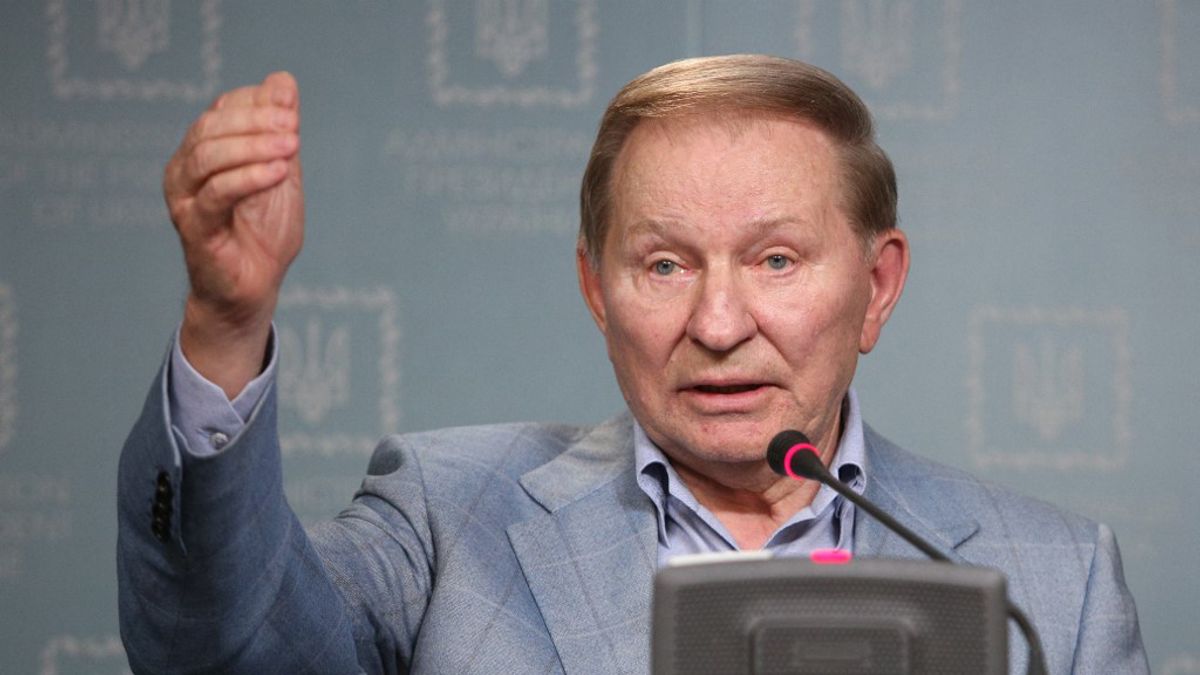
In such a context, Ukraine's fundamental interest should have been to foster inclusivity towards its national minorities and maintain good relations with Russia, given the significant Russian population and Russia's enduring status as a major power. Leonid Kuchma, Ukraine's second president who took office in 1994, articulated this perspective in his inaugural address: "Ukraine is historically part of the Eurasian cultural and economic space. Ukraine's vital national interests are now concentrated in this space of the former Soviet Union. Traditional scientific, cultural, and family ties also connect us with the former republics of the Soviet Union. I am convinced that Ukraine can play a leading role in Eurasian economic integration."
Unfortunately, this vision, which could have ensured Ukraine's peaceful development, was not fully embraced or realized by the Ukrainian leadership. This failure was partly due to their own actions and partly due to external interference. Ukraine, much like Hungary, lies in a geopolitical space coveted by great powers, where its control offers significant advantages or disadvantages to competing global players. As Zbigniew Brzezinski noted in "The Grand Chessboard," without Ukraine, Russia ceases to be a Eurasian empire. Therefore, Ukraine's alignment is of paramount importance from a Russian perspective. Western powers shared this view and actively worked to distance Ukraine from Russia. One method employed was the organization and support of "color revolutions," which culminated in the 2004 "Orange Revolution." This event led to the Ukrainian Supreme Court invalidating the election results due to alleged fraud, ultimately replacing the pro-Russian Viktor Yanukovych with the West- and NATO-friendly Viktor Yushchenko. The Guardian reported on this event in 2004, stating: "But while the victory of the Orange Revolution in Ukra..."
Ukrajna történelmileg az euroázsiai kulturális és gazdasági tér része. Ukrajna létfontosságú nemzeti érdekei most a volt Szovjetunió e területére összpontosulnak. Hagyományos tudományos, kulturális és családi kötelékek is összekötnek bennünket a Szovjetunió egykori köztársaságaival. Meggyőződésem, hogy Ukrajna az eurázsiai gazdasági integráció egyik vezető szerepét töltheti be.
DistantNews Editorial
Originally published by Magyar Nemzet in Hungarian. Translated, summarized, and contextualized by our editorial team with added local perspective. Read our editorial standards.
More Stories
From Our Blog

Countries Without a Free Press: What You Need to Know

What Press Freedom Means for the News You Read

What Gets Lost (and Found) When News Is Translated

The Critical Role of Diaspora Media in Global News

What Travellers Should Know About Countries with Restricted Press
