


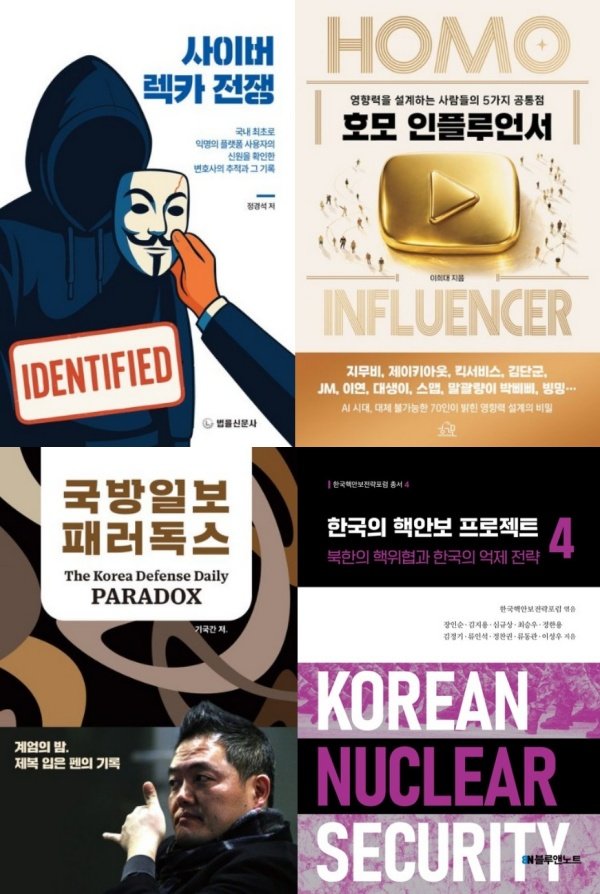
“They thought they wouldn’t be caught”… The full story of the cyber tow trucks’ downfall [Dong-A Ilbo's Book of the Week]
Translated from Korean, summarized and contextualized by DistantNews.
TLDR
- The book 'Cyber Tow Truck War' details the pursuit and exposure of anonymous online perpetrators, like the channel 'Taldeok Suyeongso,' who spread false information.
- Author Jeong Gyeong-seok utilized legal discovery processes in the US to identify operators hiding behind overseas platforms, documenting the meticulous investigation.
- The book emphasizes that freedom of expression comes with responsibility, urging a societal consideration of accountability alongside the ability to speak online.
Dong-A Ilbo's book review section highlights several new releases, offering insights into contemporary Korean society and its challenges. Among them, 'Cyber Tow Truck War' by Jeong Gyeong-seok stands out for its examination of accountability in the digital age.
Freedom of expression has expanded, and the responsibility that comes with it is now clear.
The book chronicles the legal battle to unmask anonymous online operators, often referred to as 'cyber tow trucks,' who disseminate malicious content and false information, exemplified by channels like 'Taldeok Suyeongso' targeting celebrities. Jeong, a lawyer, details his persistent efforts, including leveraging international legal mechanisms like the US 'discovery system,' to pierce the veil of anonymity afforded by overseas platforms. The narrative, as presented, is not just a recounting of legal victories but a testament to the arduous process of holding individuals accountable in the borderless digital space.
The process of identifying 'unnamed individuals' with no name or address is itself a fierce record.
Another featured book, 'Homo Influencer' by Lee Hee-dae, analyzes the evolving structure of personal influence in the digital era. It posits that in an environment where anyone can be a content creator, success hinges on strategic self-branding, relationship management, and platform utilization. The review notes the book's emphasis on 'human differentiation' as a key competitive edge, especially with the rise of user-friendly tools and generative AI. These reviews, appearing in a prominent Korean publication, reflect a national discourse grappling with the implications of online freedom, the rise of influencers, and the need for robust legal and ethical frameworks to govern the digital sphere.
In today's world, where YouTube and social media are part of daily life, we are at a point where we need to consider not just what we can say, but what responsibility we bear for those words.
DistantNews Editorial
Originally published by Dong-A Ilbo in Korean. Translated, summarized, and contextualized by our editorial team with added local perspective. Read our editorial standards.
More Stories


From Our Blog

What Gets Lost (and Found) When News Is Translated

The Critical Role of Diaspora Media in Global News

What Travellers Should Know About Countries with Restricted Press

A Digital Nomad's Guide to Following Local News

How the Same Story Looks Different in Different Countries
