


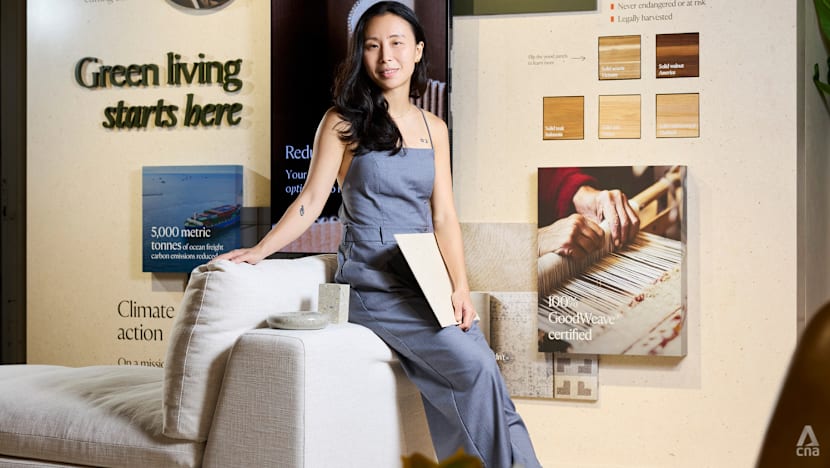
This Singapore Designer Turns Food Scraps, Glass and Textile Waste into Beautiful Objects
Translated from English, summarized and contextualized by DistantNews.
TLDR
- Singaporean designer Liu Tingzhi transforms food scraps, glass, and textile waste into aesthetically pleasing objects through her studio, Wastd.
- Wastd's work includes creating a "jammy, translucent, and marmalade-like" material from orange peels and avocado skins for a restaurant redesign.
- The studio emphasizes aesthetics, soul, and storytelling in its approach to upcycling, differentiating itself by focusing on the artistic and narrative potential of waste materials.
In Singapore, a growing movement towards sustainability is being championed by innovative designers like Liu Tingzhi, founder of the circular design studio Wastd. Her work, transforming everyday waste into beautiful, functional objects, is gaining significant attention. A recent project for The Marmalade Pantry's Ion store showcases this beautifully: walls and pendant lights are adorned with a shimmering material derived from orange peels and avocado skins, creating a unique, "jammy, translucent, and marmalade-like" aesthetic.
jammy, translucent, and marmalade-like
Liu's journey into circular design began with a deep concern for the fashion industry's textile waste. After honing her skills at prestigious fashion houses and working with a local brand, she founded Wastd in 2024. The studio's philosophy, as Liu explains, is rooted in an "unapologetic focus on aesthetics, soul, and storytelling." This approach sets Wastd apart, moving beyond mere recycling to imbue waste-based materials with narrative and artistic value. The process, described as akin to baking, involves shredding textile waste, combining it with a binder, and compressing it into durable boards, with the design eye then blending technical possibilities with aesthetic outcomes.
I won’t say I’m the only one working in this space, but I do think what sets Wastd apart is our unapologetic focus on aesthetics, soul, and storytelling.
From a Singaporean perspective, Liu's work is particularly inspiring. It demonstrates how local talent can address global environmental challenges while simultaneously creating high-value, design-led products. Her collaborations with material scientists and recyclers highlight a growing ecosystem of innovation in Singapore. The ability to turn discarded oyster shells, lemongrass stalks, and even barley husks into sculptural frames or building materials is a testament to creativity and a commitment to a circular economy. This is not just about waste reduction; it's about redefining our relationship with materials and showcasing the beauty that can emerge from what we typically discard.
The process of turning waste into objects always starts with the raw ingredient – the waste itself.
DistantNews Editorial
Originally published by CNA in English. Translated, summarized, and contextualized by our editorial team with added local perspective. Read our editorial standards.
More Stories


From Our Blog

What Gets Lost (and Found) When News Is Translated

The Critical Role of Diaspora Media in Global News

What Travellers Should Know About Countries with Restricted Press

A Digital Nomad's Guide to Following Local News

How the Same Story Looks Different in Different Countries
