

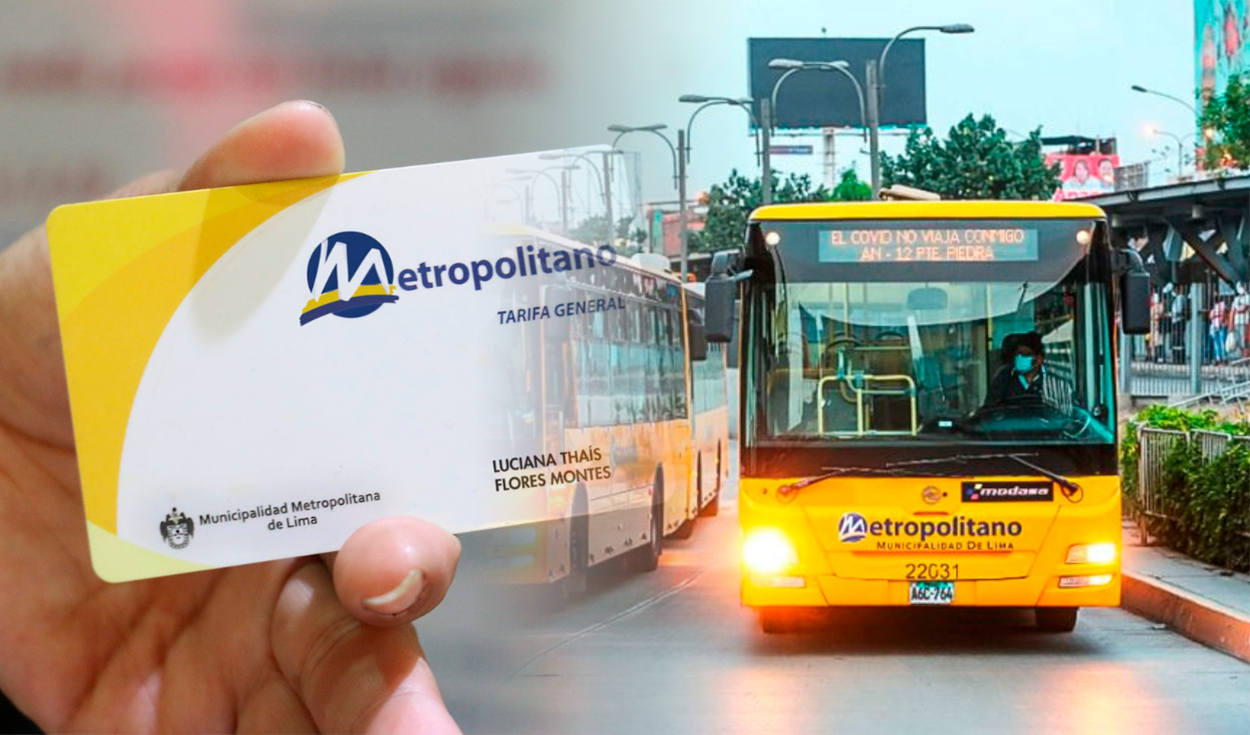
Three Metropolitano feeder lines to raise fare to S/3.50: Which ones and from when?
Translated from Spanish, summarized and contextualized by DistantNews.
TLDR
- Three feeder bus lines for Lima's Metropolitano system will increase their fare to S/3.50 starting Saturday, May 2.
- The affected routes are Los Olivos, Puno, and Naranjal, which previously had different fares depending on integration with the main line.
- The new unified fare aims to simplify payment, allowing passengers to travel from districts like Puente Piedra or Los Olivos to Villa El Salvador with a single payment within a two-hour window.
The Autoridad de Transporte Urbano (ATU) for Lima and Callao has announced a significant adjustment to the Metropolitano bus system, with three feeder lines set to implement a unified fare of S/3.50 starting May 2nd. This change affects the Los Olivos, Puno, and Naranjal feeder routes, marking a notable increase for many commuters who previously paid S/1.50 if they did not connect to the main trunk line.
While the ATU frames this as a simplification measure, eliminating the distinction between integrated and non-integrated trips, the reality for many residents in areas like Puente Piedra, Comas, and Los Olivos is a substantial price hike. The promise of a single S/3.50 ticket for a journey potentially stretching to Villa El Salvador, provided it's completed within a two-hour, two-minute window, offers some convenience but does little to offset the increased cost for those relying solely on these feeder services.
This decision comes at a time when many Limeños are already grappling with economic pressures. The ATU's justification, focusing on operational efficiency and simplified fare calculation, may not resonate with the daily budget concerns of the average commuter. The previous system, while perhaps more complex, offered a more affordable option for shorter, non-integrated trips.
From a local perspective in Peru, such fare adjustments are always contentious. While infrastructure improvements and system integration are necessary for urban development, the burden often falls disproportionately on the working class. The ATU must ensure that these changes are accompanied by demonstrable service improvements and that the increased revenue genuinely contributes to a more efficient and accessible public transportation network for all of Lima's citizens.
DistantNews Editorial
Originally published by La República in Spanish. Translated, summarized, and contextualized by our editorial team with added local perspective. Read our editorial standards.
More Stories
From Our Blog

What Gets Lost (and Found) When News Is Translated

The Critical Role of Diaspora Media in Global News

What Travellers Should Know About Countries with Restricted Press

A Digital Nomad's Guide to Following Local News

How the Same Story Looks Different in Different Countries
