


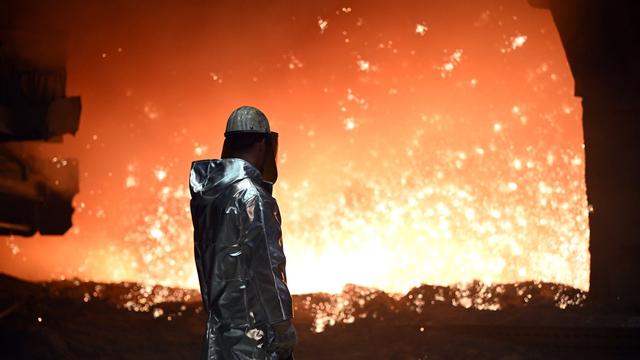
Thyssenkrupp Pauses Steel Division Sale Talks with Jindal, Eyes Internal Restructuring
Translated from German, summarized and contextualized by DistantNews.
TLDR
- Thyssenkrupp has decided to halt talks with Indian competitor Jindal regarding the sale of its steel division, opting instead to restructure the segment internally.
- The company cited improved conditions for European steel manufacturers and progress in the division's restructuring as reasons for pausing the sale.
- While a sale is off the table for now, Thyssenkrupp still aims for a medium-term separation of the steel business, potentially through a spin-off with a minority stake.
In a significant turn of events for Germany's industrial landscape, Thyssenkrupp has announced it will not proceed with the sale of its steel division to Indian conglomerate Jindal at this time. This decision, reported by dpa and covered by Die Zeit, signals a shift in strategy, prioritizing internal restructuring and leveraging a more favorable European market environment.
Steel is the future. And a future-proof business is a valuable business.
The industrial giant's move comes after months of negotiations, but the company now believes it can drive the necessary changes within its steel operations independently. This confidence is bolstered by what Thyssenkrupp describes as improved framework conditions for steel producers in Europe. The European Union's recognition of the strategic importance of domestic steel production for industrial resilience, coupled with commitments to protect against global overcapacity and dumping, provides a more stable outlook.
The European Union has recognized the great importance of steel production for the resilience of industrial value chains and has expressed its willingness to better protect the European steel industry from global overcapacities and dumping.
Furthermore, the EU's push towards climate-friendly steel production offers a pathway for modernization. Thyssenkrupp CEO Miguel López emphasized this, stating, "Steel is the future. And a future-proof business is a valuable business." The company highlights that fundamental agreements reached internally, with labor partners, and with political stakeholders in Germany and Europe have created optimal conditions for a profitable continuation of Thyssenkrupp Steel.
We have always said: Steel is the future. And a future-proof business is a valuable business.
Despite shelving the Jindal deal for now, Thyssenkrupp maintains its medium-term goal of separating the steel business, possibly via a spin-off retaining a minority stake. This approach allows the company to focus on its core strengths while still seeking a strategic realignment for its steel assets. The decision reflects a complex balancing act between immediate operational needs, long-term strategic goals, and the evolving geopolitical and economic landscape impacting the European steel industry.
We have now reached fundamental agreements within our own company, with the collective bargaining partners, and with politics in Germany and Europe, creating the best conditions for a profitable continuation of Thyssenkrupp Steel.
DistantNews Editorial
Originally published by Die Zeit in German. Translated, summarized, and contextualized by our editorial team with added local perspective. Read our editorial standards.
More Stories

From Our Blog

What Gets Lost (and Found) When News Is Translated

How the Same Story Looks Different in Different Countries

The Critical Role of Diaspora Media in Global News

What Travellers Should Know About Countries with Restricted Press

A Digital Nomad's Guide to Following Local News
