


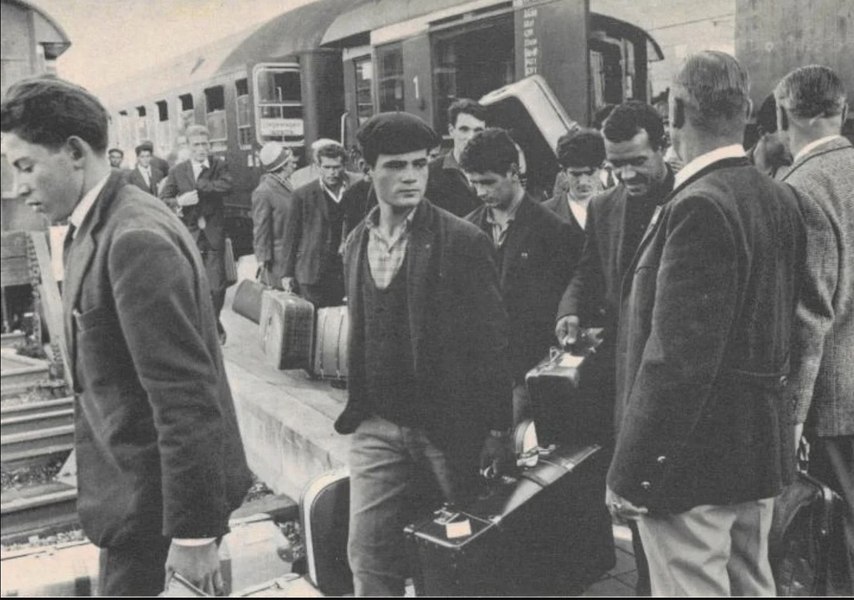
Times When Italians Came to Work on Romanian Construction Sites. 'Our Workers' Salaries Are Satisfactory and Much Higher'
Translated from Romanian, summarized and contextualized by DistantNews.
TLDR
- A historical comparison reveals a reversal in migration patterns between Italy and Romania since the late 20th century.
- While millions of Romanians migrated to Italy for work after 1990, a century prior, Italians emigrated to Romania seeking better wages.
- The article contrasts the economic conditions and migration drivers of the two periods, touching upon Italy's historical economic fragmentation and Romania's post-communist labor migration.
Bucharest, Romania – Adevărul delves into a fascinating historical parallel, contrasting contemporary Romanian migration to Italy with Italian emigration to Romania a century ago. The piece highlights the dramatic reversal of fortunes and labor flows between the two nations, offering a unique perspective rooted in Romanian historical experience.
While the post-1990 era saw millions of Romanians seeking opportunities in Italy, the article reminds readers that around the turn of the 20th century, the situation was inverted. Italians, drawn by comparatively higher salaries in construction and shipbuilding, were the emigrants, choosing the Kingdom of Romania as their destination. This historical context is crucial for understanding Romania's own journey through economic and political transformations, from periods of growth to the challenges of unification and modernization that Italy itself faced.
The article implicitly underscores how economic disparities drive migration, a phenomenon keenly felt in Romania following the 1989 revolution. The narrative touches upon Italy's own complex history of regional economic disparities, particularly the North-South divide, and the struggles of unification. For a Romanian audience, this historical comparison is not just an academic exercise; it provides a lens through which to understand their own nation's recent past and present, emphasizing the enduring search for better economic prospects and the cyclical nature of labor migration. It offers a Romanian viewpoint on how historical economic conditions shape national destinies and influence the movement of people across borders.
DistantNews Editorial
Originally published by Adevărul in Romanian. Translated, summarized, and contextualized by our editorial team with added local perspective. Read our editorial standards.
More Stories



From Our Blog

What Gets Lost (and Found) When News Is Translated

The Critical Role of Diaspora Media in Global News

What Travellers Should Know About Countries with Restricted Press

A Digital Nomad's Guide to Following Local News

How the Same Story Looks Different in Different Countries
