


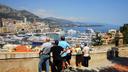
Tourists love this European destination: Black and yellow signs confuse some, but they can save your life
Translated from Croatian, summarized and contextualized by DistantNews.
At a glance
News
Sources not specified
Ongoing story
- Several French Riviera municipalities are officially preparing for tsunamis following a 2022 UNESCO assessment predicting a high probability of a major Mediterranean tsunami within 30 years.
- Experts estimate a near 100% chance of a significant tsunami in the Mediterranean within 30 years, and a 100% chance within 50 years.
- The densely populated French Riviera is particularly vulnerable due to its proximity to the Ligurian fault, a geologically active zone where tectonic plates meet.
Six municipalities on the French Riviera are now officially preparing for tsunamis, a proactive measure following a 2022 UNESCO warning. Experts from the United Nations organization assessed that there is a near 100% probability of a significant tsunami occurring in the Mediterranean within the next 30 years, with the likelihood rising to 100% over a 30 to 50-year period.
The designated municipalities include Nice, Cagnes-sur-Mer, Saint-Laurent-du-Var, Villefranche-sur-Mer, and Èze, joining Cannes, which was already prepared. The Greek island of Samos and the Italian town of Minturno are also part of this preparedness initiative. The French Riviera is considered especially at risk due to its high population density and its location near the Ligurian fault, an active undersea fault line where the African and Eurasian tectonic plates converge.
It's not an alarm, but a statistical reality. In some scenarios, there are only ten minutes until the waves reach the beaches.
Geographer Frédéric Leone from Université de Montpellier Paul-Valéry, who is part of UNESCO's expert group on Mediterranean tsunami early warning systems, emphasized that this is not alarmism but a statistical reality. "In some scenarios, there are only ten minutes until the waves reach the beaches," he stated. Leone also debunked the common misconception that tsunamis are exclusive to the Pacific Ocean, noting that the Mediterranean basin records the second-highest number of documented tsunamis globally after the Pacific.
After the Pacific Ocean, the Mediterranean basin records the highest number of documented tsunamis in the world.
Historical events underscore the region's vulnerability. An 1887 earthquake in the Ligurian Sea caused a two-meter wave to inundate beaches near Antibes and Cannes. In 1979, an underwater landslide during port construction in Nice generated a multi-meter wave that killed nine people and severely damaged Nice, Antibes, and Cannes. More recently, a 2003 earthquake in Algeria sent waves up to three meters high towards the Balearic Islands, while the French Riviera experienced strong currents and significant sea-level fluctuations.
Seismologist Alexander Rudloff from the Helmholtz Centre for Geosciences in Potsdam explained the phenomenon: "Imagine a glass of water on a table. An impact from below creates high waves that spread towards the edge." He clarified that a tsunami is not a single wave but a series of waves that release their energy upon reaching the coast. While Mediterranean tsunamis are generally smaller than those in the Pacific, their proximity to the coast means they can arrive within minutes. Models predict waves of at least one meter, which, while seemingly modest, can be dangerous due to the speed and force of the flowing water.
Imagine a glass of water on a table. An impact from below creates high waves that spread towards the edge.
DistantNews Editorial
Originally published by Večernji List in Croatian. Translated, summarized, and contextualized by our editorial team with added local perspective. Read our editorial standards.
More Stories


From Our Blog

What Gets Lost (and Found) When News Is Translated

The Critical Role of Diaspora Media in Global News

What Travellers Should Know About Countries with Restricted Press

A Digital Nomad's Guide to Following Local News

How the Same Story Looks Different in Different Countries
