

Transatlantic Relations: US President Donald Trump renews criticism of Friedrich Merz
Translated from German, summarized and contextualized by DistantNews.
TLDR
- Former US President Donald Trump renewed his criticism of German Chancellor Friedrich Merz via an online post.
- Trump urged Merz to prioritize ending the Ukraine war and addressing domestic issues in Germany, calling the country "broken."
- This follows Merz's prior criticism of US handling of the Iran nuclear issue, which Trump perceived as Merz agreeing Iran could possess nuclear weapons.
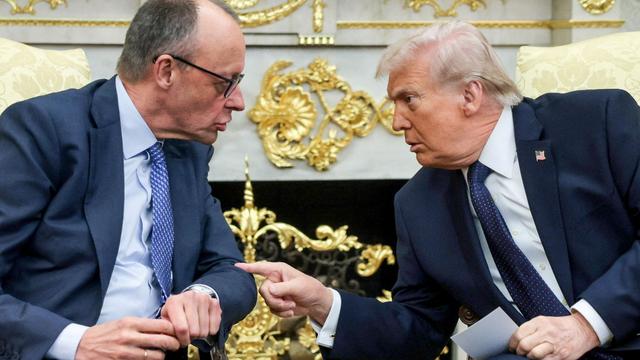
The transatlantic relationship appears to be further cooling as US President Donald Trump has once again launched a verbal assault on German Chancellor Friedrich Merz through an online post. Trump's message is stark: Merz should concentrate on ending the war between Russia and Ukraine, a conflict in which Trump asserts the Chancellor has been "completely ineffective." He further advised Merz to focus on rebuilding Germany, which Trump described as a "broken" country, particularly in the critical areas of energy and migration, rather than interfering with efforts to combat the Iranian nuclear threat.
He should rather focus on ending the war in Ukraine and less time interfering with those who are getting rid of the Nuclear Threat of Iran, thereby making the World, including Germany, a safer place!
This latest criticism stems from Merz's prior remarks questioning the US strategy in the Iran nuclear negotiations, where Merz suggested the US approach lacked clear direction and that Iran was "humiliating" the United States. Trump interpreted Merz's comments as an acceptance of Iran potentially acquiring nuclear weapons, leading to his sharp online retort. The situation is further complicated by Trump's earlier threats to reduce US troop presence in Germany, a move that would significantly impact Europe's security architecture and the economic vitality of regions hosting US bases, such as Ramstein Air Base.
Chancellor Merz, however, has maintained a composed demeanor in response to Trump's attacks. He continues to describe his personal relationship with the US President as "unchanged and good," emphasizing that "conversations are ongoing." Merz also stressed the importance of the transatlantic partnership during a recent visit to the Bundeswehr in Munster. From the perspective of Die Zeit, this exchange underscores the volatile nature of US-German relations under Trump's influence and highlights the differing priorities and communication styles between the two leaders. While Trump employs direct, often confrontational online rhetoric, Merz attempts to navigate the situation through traditional diplomatic channels and a focus on the enduring strategic alliance, even as he faces criticism for his stance on international security issues.
He has no idea what he is talking about!
This narrative is particularly significant for German readers, as it directly addresses concerns about national security, economic stability tied to US military presence, and the country's role in global affairs. The stark contrast between Trump's blunt pronouncements and Merz's measured diplomacy reflects a broader debate within Germany and Europe about how to engage with a sometimes unpredictable US administration while upholding European interests and values. The coverage by Die Zeit aims to provide a factual account while also contextualizing the political and strategic implications for Germany and its allies.
The personal relationship between the American President and me is – at least from my perspective – unchanged and good. We are still in good conversations with each other.
DistantNews Editorial
Originally published by Die Zeit in German. Translated, summarized, and contextualized by our editorial team with added local perspective. Read our editorial standards.
More Stories


From Our Blog

What Gets Lost (and Found) When News Is Translated

How the Same Story Looks Different in Different Countries

The Critical Role of Diaspora Media in Global News

What Travellers Should Know About Countries with Restricted Press

A Digital Nomad's Guide to Following Local News
