

Trees' carbon storage capacity may be lower than expected
Translated from Turkish, summarized and contextualized by DistantNews.
At a glance
News
Documents & data
Context piece
- A new study suggests trees may store less carbon than previously believed, particularly during hot and dry periods.
- Researchers found that trees can continue photosynthesis even after growth stops, diverting carbon to processes other than wood storage.
- This decoupling of photosynthesis and growth could impact climate models, potentially reducing forests' long-term carbon sequestration capacity.
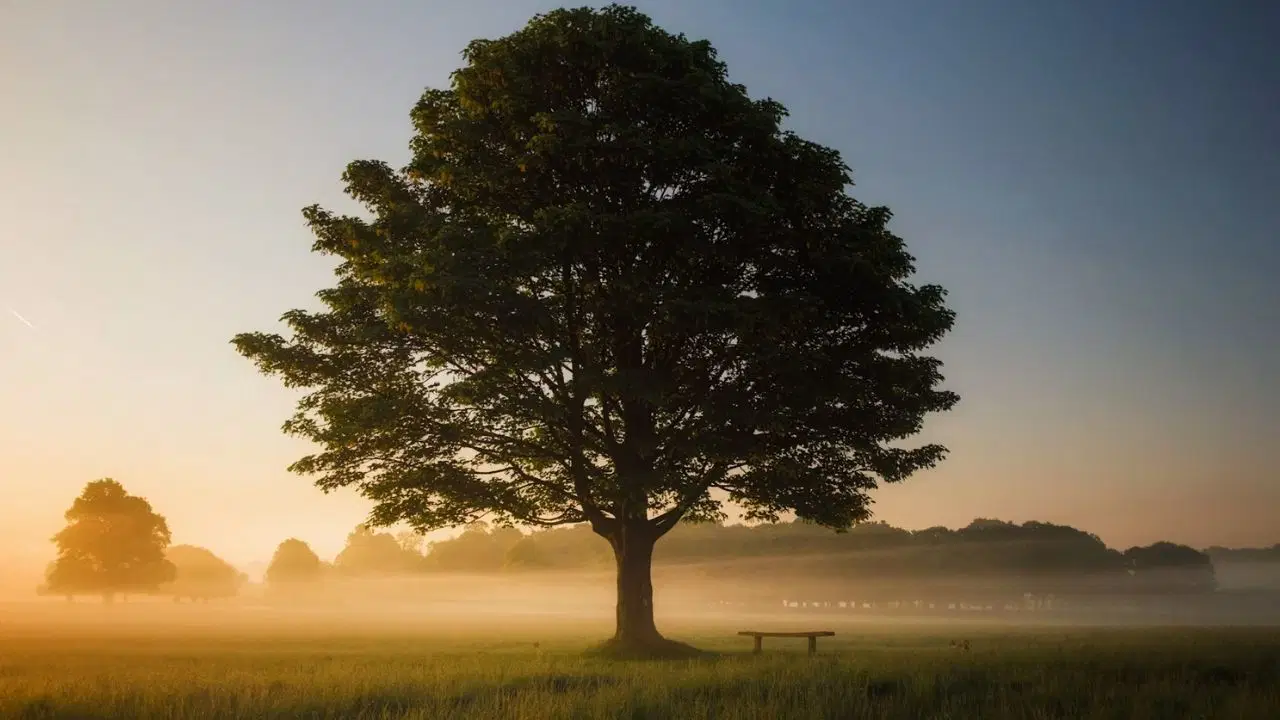
Forests might not be the robust carbon sinks they are widely assumed to be, according to new research from Columbia University's Lamont-Doherty Earth Observatory. A study analyzing satellite imagery, carbon dioxide measurements, and tree ring data from 137 sites across the eastern U.S. and California revealed that the relationship between photosynthesis and growth in trees is more complex than current climate models suggest.
The research found that trees, like oak trees, can continue photosynthesizing well into the later parts of the year, even after their growth has ceased by mid-summer. During hot and dry conditions, this separation becomes more pronounced. While growth halts, photosynthesis persists at a reduced rate. The carbon absorbed during this period is often utilized for leaf and root development, short-lived biological processes, or released back into the atmosphere, rather than being stored in wood tissues.
The findings show that it is not always true that if there is photosynthesis, there is growth.
This finding challenges the assumption that photosynthesis directly equates to growth and long-term carbon storage. "The findings show that it is not always true that if there is photosynthesis, there is growth," said Mukund Palat Rao, the study's lead author. He explained that under hot and dry conditions, growth stops rapidly, but photosynthesis can continue at a lower rate. This implies that forests' capacity to sequester carbon long-term may be diminished, especially if this decoupling intensifies due to climate change.
The study, published in "Science Advances," suggests that existing climate models, which often operate on the "photosynthesis equals growth" premise, may need revision. If forests cannot reliably store carbon in long-lived tissues like wood, their role in mitigating climate change could be less significant than anticipated, particularly as global temperatures continue to rise.
Under hot and dry conditions, growth stops rapidly, but photosynthesis can continue at a lower rate.
DistantNews Editorial
Originally published by Cumhuriyet in Turkish. Translated, summarized, and contextualized by our editorial team with added local perspective. Read our editorial standards.
More Stories

From Our Blog

What Gets Lost (and Found) When News Is Translated

The Critical Role of Diaspora Media in Global News

What Travellers Should Know About Countries with Restricted Press

A Digital Nomad's Guide to Following Local News

How the Same Story Looks Different in Different Countries
