


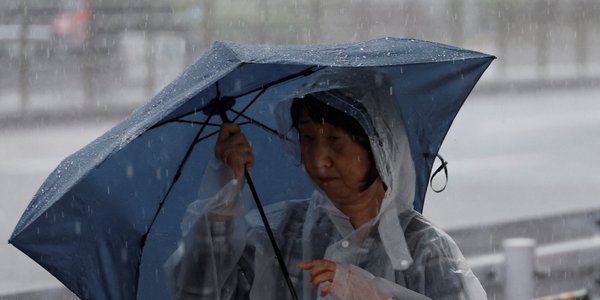
Tropical storm Jangmi hits Japan, leaving thousands without power and flights canceled
Translated from Polish, summarized and contextualized by DistantNews.
At a glance
News
Named sources
Ongoing story
- Tropical Storm Jangmi made landfall in Japan, bringing strong winds and heavy rainfall.
- At least 60,000 households are without power, and hundreds of thousands of residents have been advised to evacuate.
- Major airlines have canceled nearly 900 flights, and high-speed rail services have experienced delays due to the storm.
Tropical Storm Jangmi struck Japan on the morning of June 3, unleashing powerful gusts of wind and torrential rains. The storm's impact has disrupted transportation networks across the country and left tens of thousands of people without electricity.
The storm made landfall near Tanabe city in Wakayama Prefecture, located in the southern Kansai region of Honshu island. It then began moving northeastward towards the Tokyo metropolitan area. The Japan Meteorological Agency reported wind speeds reaching up to 126 kilometers per hour, with the storm progressing at a speed of 40 km/h.
Authorities issued a level 5 flood warning, the highest possible, for the Koza River in southern Wakayama Prefecture, urging residents in nearby areas to exercise extreme caution as the river could potentially overflow its banks. Government spokesperson Minoru Kihara reported that at least 60,000 households were left without power. He advised citizens, "If you notice any danger, do not hesitate and take the quickest action to save lives."
Evacuation advisories were recommended for hundreds of thousands of residents across eight prefectures in southwestern, central, and eastern Japan. In response to the storm's severity, major airlines, including Japan Airlines and All Nippon Airways, canceled nearly 900 domestic and international flights. High-speed rail services on the island of Kyushu and in western Japan also experienced delays, and some services within the Tokyo metropolitan area were suspended.
If you notice any danger, do not hesitate and take the quickest action to save lives.
DistantNews Editorial
Originally published by Rzeczpospolita in Polish. Translated, summarized, and contextualized by our editorial team with added local perspective. Read our editorial standards.
More Stories


From Our Blog

What Gets Lost (and Found) When News Is Translated

The Critical Role of Diaspora Media in Global News

What Travellers Should Know About Countries with Restricted Press

A Digital Nomad's Guide to Following Local News

How the Same Story Looks Different in Different Countries
