


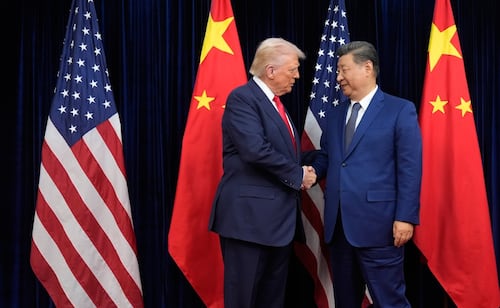
Trump and Xi Jinping Prepare for Beijing Meeting; Taiwan Among Key Topics
Translated from Spanish, summarized and contextualized by DistantNews.
TLDR
- U.S. President Donald Trump and Chinese President Xi Jinping are scheduled to meet in Beijing on November 13.
- Taiwan is expected to be a central topic of discussion during the meeting.
- Both leaders aim to manage potential destabilizing events in the Indo-Pacific region, particularly concerning Taiwan.
The upcoming visit of U.S. President Donald Trump to Beijing on November 13, where he will meet with Chinese President Xi Jinping, carries significant weight, particularly given the persistent tensions surrounding Taiwan. Secretary of State Marco Rubio confirmed that Taiwan will undoubtedly be a key subject, emphasizing that both nations understand each other's positions and the mutual interest in avoiding destabilizing actions in the region.
I am sure that Taiwan will be a topic of conversation. It always is.
Rubio's remarks highlight a delicate balancing act. While the U.S. maintains its commitment to Taiwan's self-defense, it also seeks to prevent any escalation that could disrupt the Indo-Pacific. This approach underscores Washington's desire for stability, even as it navigates complex geopolitical issues like arms sales to Taipei and China's assertion of sovereignty over the island. The "first red line" China has drawn regarding Taiwan indicates the high stakes involved.
We understand that the Chinese understand our position, we understand theirs. And I believe that both sides, I insist, without anticipating what will happen in the conversations, understand that it is not in the interest of either of them that any destabilizing event occur in that part of the world.
The context of this meeting is crucial. It follows a postponement possibly linked to U.S. actions concerning Iran, and occurs amidst China's calls for the U.S. to "preserve stability" in bilateral relations. The U.S. stance, as articulated by officials like Raymond Greene of the American Institute in Taiwan, remains one of unwavering commitment to Taiwan's security, advocating for peaceful resolution of differences.
It does not help anyone for destabilizing events to occur in relation to Taiwan, or anywhere else in the Indo-Pacific, and I believe this redounds to the mutual benefit of both the United States and China.
From a Mexican perspective, this U.S.-China summit is a critical event that could have ripple effects across the global economy and international relations. Mexico, as a neighbor and major trading partner to the U.S., is particularly attuned to shifts in U.S.-China dynamics. The focus on Taiwan, while a long-standing issue, remains a potential flashpoint. The emphasis on avoiding "destabilizing events" is a sentiment that resonates globally, as disruptions in major economic powers invariably impact smaller economies. El Universal will closely monitor how these discussions unfold and what implications they hold for regional and global trade, security, and diplomatic relations.
You have been very kind regarding the war against Tehran and the consequent closure of the Strait of Hormuz, which seriously affects the energy needs of the Asian giant.
DistantNews Editorial
Originally published by El Universal in Spanish. Translated, summarized, and contextualized by our editorial team with added local perspective. Read our editorial standards.
More Stories
From Our Blog

What Press Freedom Means for the News You Read

What Gets Lost (and Found) When News Is Translated

The Critical Role of Diaspora Media in Global News

What Travellers Should Know About Countries with Restricted Press

A Digital Nomad's Guide to Following Local News
