


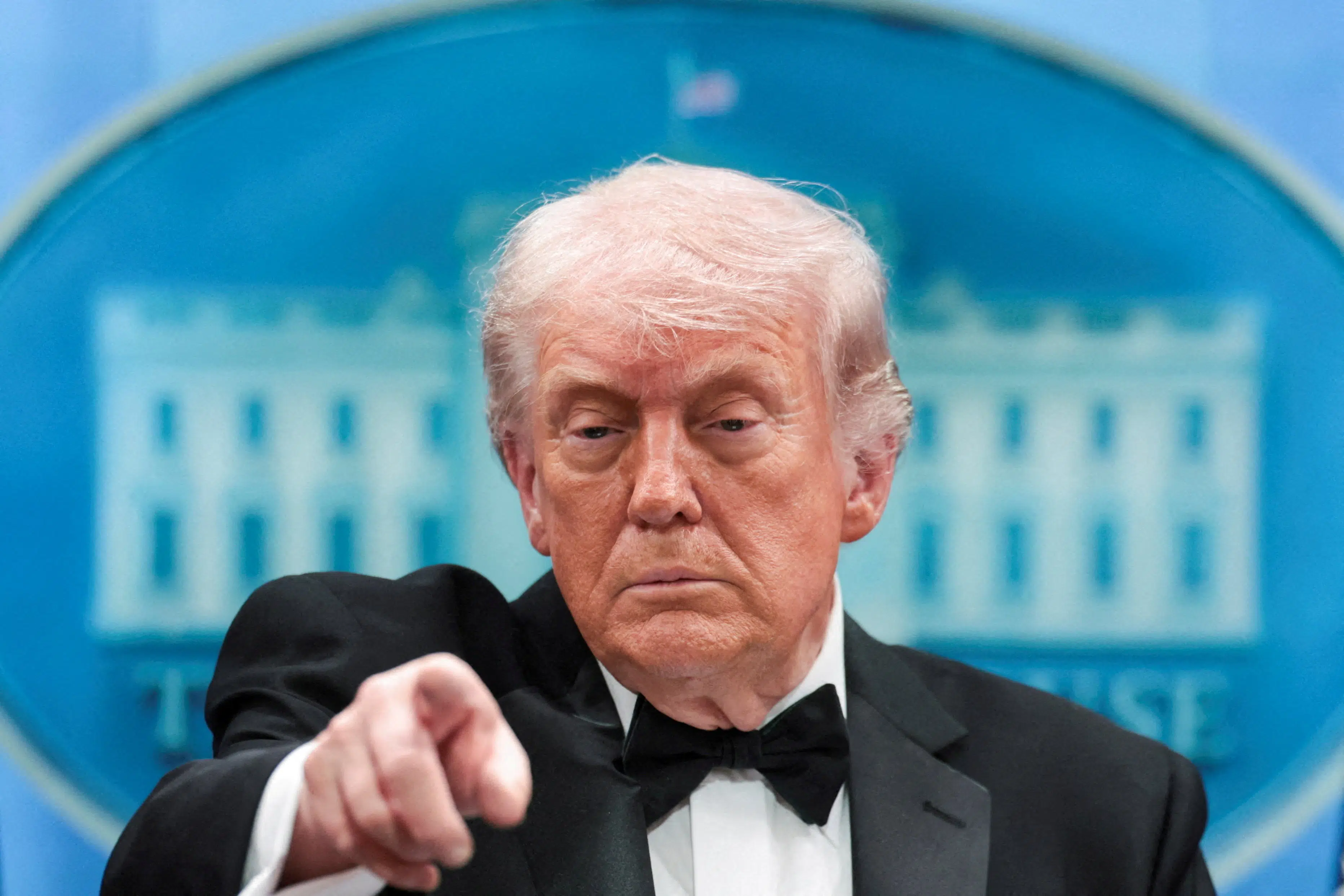
Trump Blames Left-Wing Rhetoric for Assassination Attempt, But Is It That Simple?
Translated from Danish, summarized and contextualized by DistantNews.
TLDR
- Following an assassination attempt, President Trump blamed the "hard rhetoric" of Democrats for radicalizing the perpetrator.
- While statistics may suggest a link between left-wing criticism of Trump and such incidents, the situation is complex.
- The article questions whether Trump's framing of the event, focusing on political blame, will ultimately benefit him.
In the aftermath of the assassination attempt on President Trump, a familiar pattern has emerged: the immediate pivot to political blame, specifically targeting the left-wing opposition.
President Trump, after an initial call for national unity, quickly shifted his focus, asserting that the "hard rhetoric" of Democrats against him had radicalized the assailant. This narrative, while potentially resonating with his base, attempts to deflect from any broader societal issues and instead frames the event as a direct consequence of political opposition. The article acknowledges that statistical analyses might offer some support for a correlation between intense criticism of Trump and the radicalization of individuals, suggesting that the president's point may hold some statistical weight.
However, the piece rightly cautions against oversimplification. The complex interplay of individual psychology, societal factors, and political polarization means that attributing such violence solely to one side's rhetoric is a reductionist approach. The core question remains: will Trump's strategic use of this incident as a political weapon, leveraging the attack to condemn his opponents, ultimately serve his electoral interests? The framing suggests a calculated move, turning a moment of national vulnerability into an opportunity for political gain, a tactic characteristic of his political style.
DistantNews Editorial
Originally published by Berlingske in Danish. Translated, summarized, and contextualized by our editorial team with added local perspective. Read our editorial standards.
More Stories



From Our Blog

What Gets Lost (and Found) When News Is Translated

The Critical Role of Diaspora Media in Global News

What Travellers Should Know About Countries with Restricted Press

A Digital Nomad's Guide to Following Local News

How the Same Story Looks Different in Different Countries
