

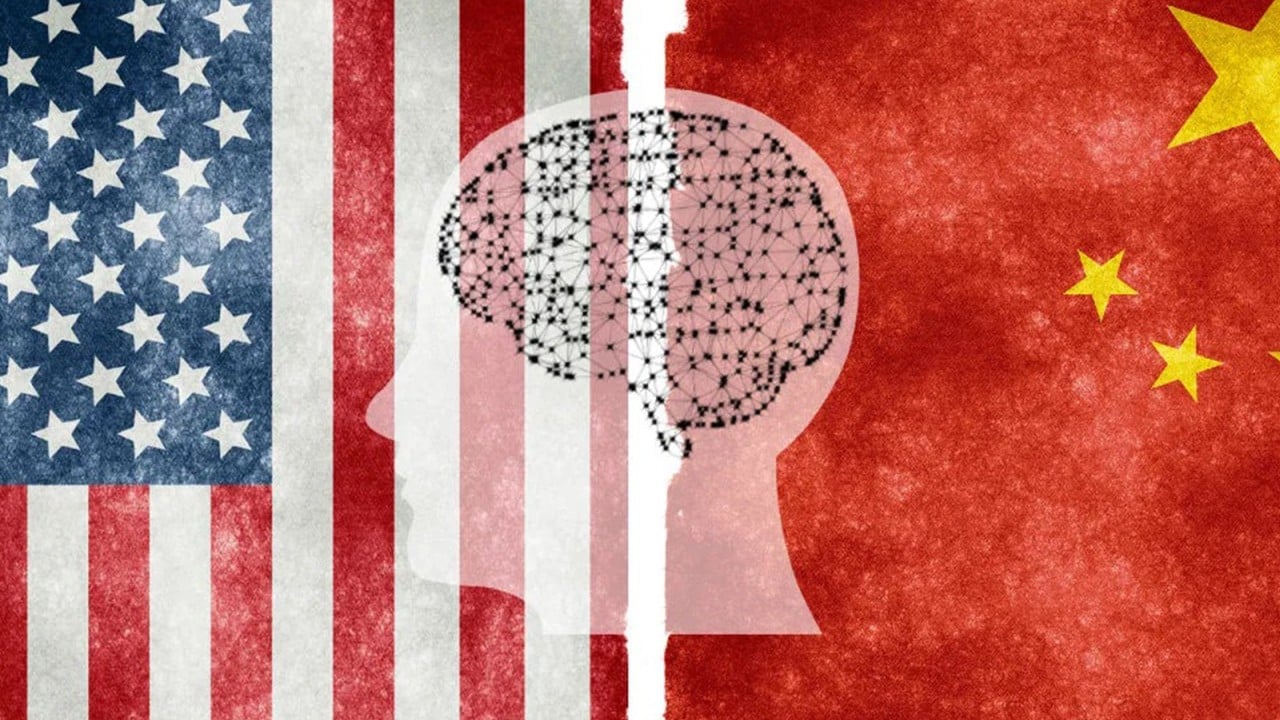

Trump's Top Science Adviser, Nvidia CEO Visit Beijing Amid AI Focus
Translated from English and summarized by DistantNews. Read the original for the full story.
At a glance
News
Named sources
Context piece
- Top U.S. science adviser and Nvidia CEO Jensen Huang were part of a delegation to Beijing.
- Their presence raised questions about whether Artificial Intelligence (AI) was discussed during talks between President Trump and Chinese President Xi Jinping.
- China advocates for open and beneficial AI development, while the U.S. and China face shared challenges in AI governance, including bias and misuse.
The recent visit of President Donald Trump's top science adviser and Nvidia CEO Jensen Huang to Beijing has ignited discussions about the potential role of Artificial Intelligence (AI) in U.S.-China relations. Their inclusion in the U.S. delegation signals a growing recognition of AI's strategic importance on the global stage.
When pressed for details on AI collaboration following the talks with President Xi Jinping, Chinese foreign ministry spokesman Guo Jiakun offered a general statement, emphasizing China's advocacy for "open, inclusive, beneficial and good-for-all" AI development. This response, delivered after Air Force One departed Beijing Capital International Airport, suggests that while AI is a topic of discussion, concrete outcomes related to collaboration remain undisclosed.
China has always advocated that all parties jointly promote the development of artificial intelligence in an open, inclusive, beneficial and good-for-all direction.
From a Chinese perspective, as articulated by Professor Xiao Junyong of Beijing Institute of Technology's law school in Beijing Review, the international community hopes for a consensus on AI governance and strategic stability between the two AI powerhouses. The article highlights that both the U.S. and China lead in AI capabilities but share common hurdles, such as AI hallucinations, bias, misuse, and cyberattacks. Cooperation on safety, ethics, and deepfake governance for high-impact AI systems is seen as a potential area for mutual benefit.
This engagement is particularly noteworthy given recent developments, such as American AI giant Anthropic barring users in China from accessing its new Mythos model for cybersecurity. The U.S. delegation's visit, including key figures in the AI industry, underscores the complex interplay between technological advancement, economic competition, and geopolitical considerations that define the U.S.-China relationship in the critical field of artificial intelligence.
Both the US and China lead in AI models, computing power, and ecosystems, yet share challenges like hallucinations, bias, misuse and cyberattacks. For high-impact AI systems, they can cooperate on safety, ethics, and deepfake governance.
About this summary
Originally published by South China Morning Post in English. Translated, summarized, and contextualized automatically by DistantNews, with a note on how the source frames the story. Not individually reviewed before publishing. How this works.
More Stories
From Our Blog

Countries Without a Free Press: The 2026 List and What It Means for Readers

What Press Freedom Means for the News You Read

News in Translation: What Gets Lost, and How We Keep the Framing

Diaspora Media: How Communities Abroad Follow Home

Traveling Where the Press Is Not Free: How to Read the News There
