

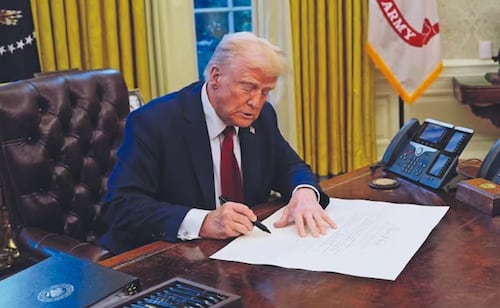
Trump signs AI executive order prioritizing national security
Translated from Spanish, summarized and contextualized by DistantNews.
At a glance
News
Named sources
New plan
- U.S. President Trump signed an executive order on artificial intelligence (AI) to ensure national security.
- The order allows the government to test and potentially block new AI models before public release.
- The move aims to balance AI's benefits with potential security risks, particularly concerning critical infrastructure.
President Donald Trump has signed an executive order focused on artificial intelligence (AI), aiming to bolster national security by enabling the U.S. government to preemptively test and potentially veto new AI language models. This directive allows federal agencies to evaluate the safety implications of advanced AI systems before they become widely accessible.
The order acknowledges AI's potential to strengthen the nation while introducing new security considerations that necessitate coordinated action across executive departments. Initially planned for signing on May 21, Trump reportedly delayed the decision, expressing concern that premature regulation could undermine the leadership of American AI companies.
Key agencies, including the Office of the Director of National Cybersecurity, are expected to enhance national cybersecurity defenses for critical infrastructure. The order also mandates the development of a process for pre-evaluating the security aspects of emerging AI models. While specific details of the revised order remain undisclosed, it is anticipated to be more lenient towards major AI firms like Anthropic, Google, and OpenAI compared to earlier drafts.
This initiative reflects a broader effort to navigate the complex landscape of AI development, seeking to harness its advantages while mitigating potential risks to national security and critical infrastructure. The administration aims to strike a balance between fostering innovation and ensuring robust safety protocols.
DistantNews Editorial
Originally published by El Universal in Spanish. Translated, summarized, and contextualized by our editorial team with added local perspective. Read our editorial standards.
More Stories
From Our Blog

What Press Freedom Means for the News You Read

What Gets Lost (and Found) When News Is Translated

The Critical Role of Diaspora Media in Global News

What Travellers Should Know About Countries with Restricted Press

A Digital Nomad's Guide to Following Local News
