


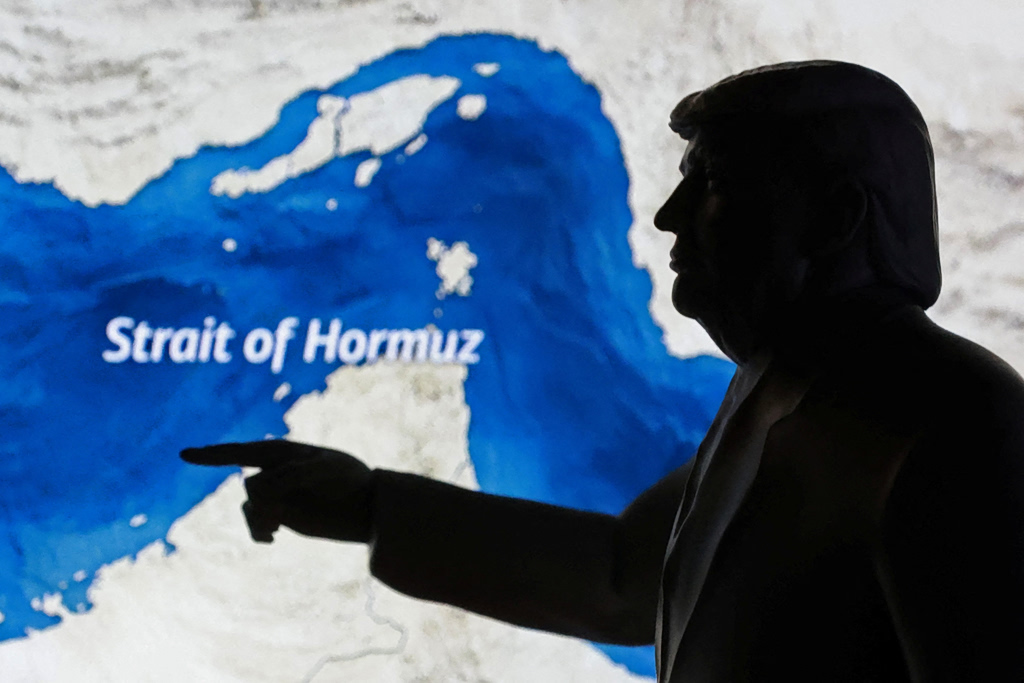
Trump to impose 20% tariff on Strait of Hormuz cargo, citing U.S. compensation
Translated from Greek, summarized and contextualized by DistantNews.
At a glance
News
Sources not specified
Context piece
- The United States will impose a 20% tariff on cargo passing through the Strait of Hormuz, following the collapse of a truce with Iran.
- This move comes amid disputes over Tehran's control of the strategic waterway, a key route for global oil supplies.
- The decision highlights differing stances between Washington and Tehran and potential global impacts, with legal questions surrounding the U.S. claim.
President Donald Trump announced Monday that the United States will impose a 20% tariff on cargo transiting the Strait of Hormuz, a move that follows the collapse of a truce with Iran. This development arises amid disagreements over Tehran's efforts to maintain control of the strategic 34-kilometer-wide strait, a primary conduit for roughly one-fifth of global oil supplies and other critical goods. Iran had previously closed the strait, triggering a global energy shock.
The U.S. decision underscores the significance of the issue, the divergence between Washington and Tehran's positions, and the potential global ramifications. Previously, on June 25, U.S. Secretary of State Marco Rubio stated that "no state on Earth has the right to impose a charge for the use of international waterways." However, Trump had already left open the possibility of the U.S. imposing tolls if a deal with Iran failed. In a June 20 post, he wrote, "There will be no tolls on the Strait of Hormuz for 60 days during the truce period, unless imposed by the United States for compensation for services."
The United States will be known as the ‘Guardian of the Strait of Hormuz’ and, for reasons of justice, will be compensated with 20% of all cargo transiting.
Following the truce's dissolution, the U.S. president appears to be reverting to this stance. In a new post, he stated, "The United States will be known as the 'Guardian of the Strait of Hormuz' and, for reasons of justice, will be compensated with 20% of all cargo transiting." To date, Trump has not clarified how these charges would be implemented or what legal basis could support such a demand.
Iran considers control of the strait, which it shares with Oman, its primary strategic advantage and a security guarantee against future attacks. Tehran argues that Washington had accepted this role in the wording of last month's interim agreement, which stated that Tehran "will make every effort for the safe passage of commercial ships without charge for 60 days." The U.S., however, interpreted this wording differently, believing Iran merely needed to facilitate safe passage without imposing restrictions through military means. During the war, Tehran established the Persian Gulf Strait Authority, requiring every passing ship to coordinate with it and move close to Iranian shores. Ships attempting to pass on Oman's side without permission were attacked, and Iran has stated it may impose transit fees in the future, though the amount has not yet been determined.
no state on Earth has the right to impose a charge for the use of international waterways.
DistantNews Editorial
Originally published by Ta Nea in Greek. Translated, summarized, and contextualized by our editorial team with added local perspective. Read our editorial standards.
More Stories
From Our Blog

What Gets Lost (and Found) When News Is Translated

The Critical Role of Diaspora Media in Global News

What Travellers Should Know About Countries with Restricted Press

A Digital Nomad's Guide to Following Local News

How the Same Story Looks Different in Different Countries
