


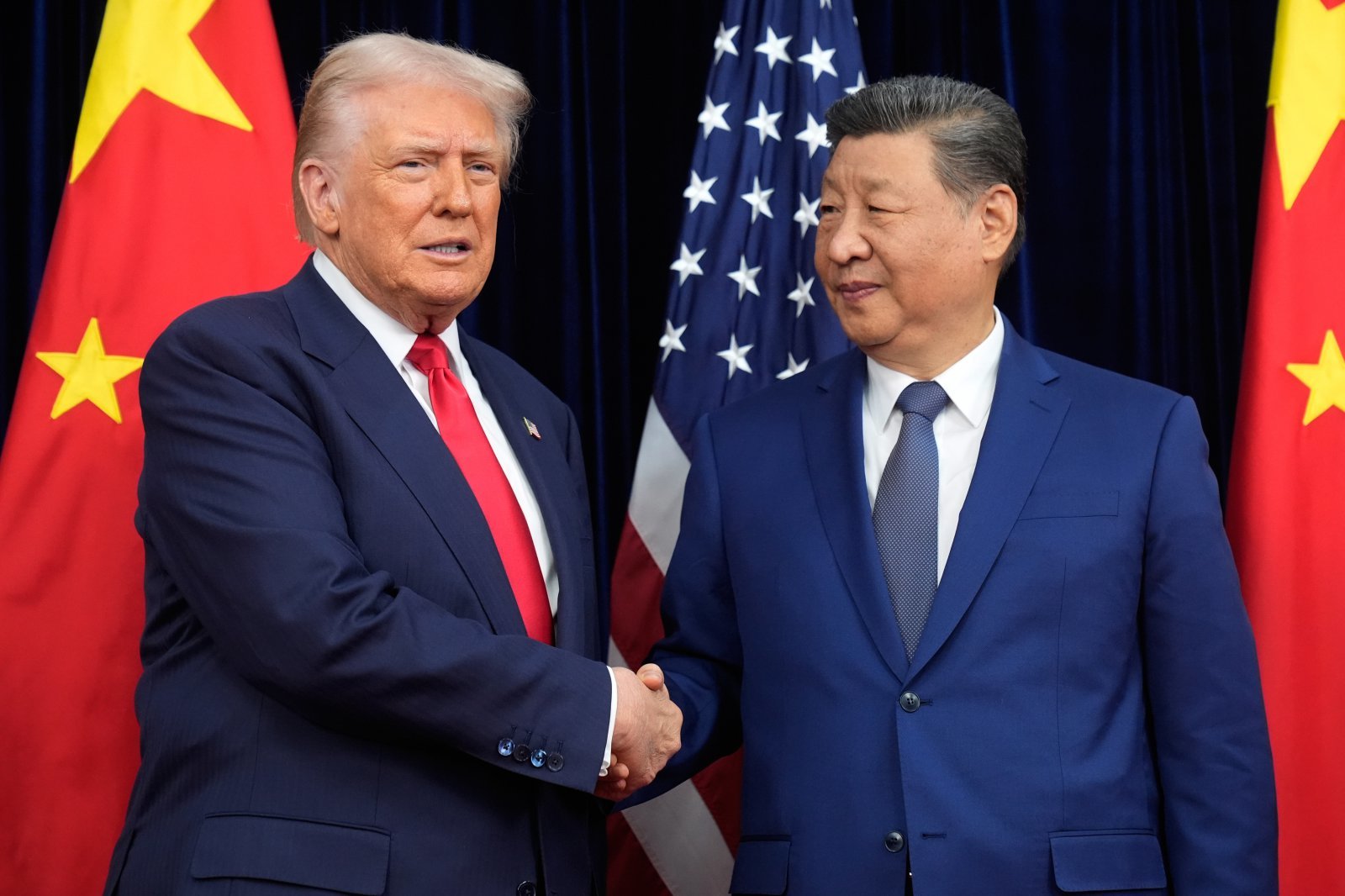
Trump to Visit China Nov. 14-15; Trade, Iran War Resolution on Agenda
Translated from Korean, summarized and contextualized by DistantNews.
TLDR
- U.S. President Donald Trump is scheduled to visit China on November 14-15 for a summit with President Xi Jinping.
- Key agenda items are expected to include trade disputes, Taiwan, and potential solutions for ending the war in Iran.
- Significant differences between the U.S. and China on these issues raise doubts about achieving satisfactory agreements.
The upcoming visit of U.S. President Donald Trump to China on November 14-15 is poised to be a critical juncture in Sino-American relations. President Xi Jinping will host Trump for a summit where discussions are anticipated to heavily focus on the escalating trade war, the complex issue of Taiwan, and diplomatic pathways to de-escalate the ongoing conflict in Iran. However, the deep-seated disagreements between the two global powers on these core issues cast a shadow of uncertainty over the potential for any substantial breakthroughs.
This visit, initially planned for earlier in the year, was postponed due to the complexities arising from the Iran conflict. The U.S. is reportedly preparing to pressure China on purchasing American goods like Boeing aircraft, beef, and soybeans, and is pushing for the establishment of joint economic and trade committees – the so-called '5B' agenda. Conversely, China is expected to counter with its own '3T' agenda, demanding the removal of U.S. tariffs, easing of restrictions on technology like semiconductors, and addressing concerns regarding Taiwan.
Adding another layer of complexity, U.S. Treasury Secretary Scott Pessen is making diplomatic stops in Tokyo and Seoul just before the summit, meeting with Chinese Vice Premier He Lifeng in Seoul. This pre-summit engagement signals the high stakes involved. Furthermore, the U.S. recently sanctioned Chinese and Hong Kong entities involved in supporting Iran's weapons program, a move interpreted as a demand for Beijing to use its influence to end the conflict. Meanwhile, China maintains its assertive stance on Taiwan, deeming its military activities in the strait as 'completely justified' and blaming 'Taiwan independence' for peace disruptions. From our perspective, this summit is not just about bilateral trade; it's a delicate balancing act where regional stability and global economic health hang in the balance, with China seeking leverage on Taiwan amidst the international focus on Iran.
Completely justified. 'Taiwan independence' is the root cause of peace disruption in the Taiwan Strait
DistantNews Editorial
Originally published by Dong-A Ilbo in Korean. Translated, summarized, and contextualized by our editorial team with added local perspective. Read our editorial standards.
More Stories


From Our Blog

What Gets Lost (and Found) When News Is Translated

The Critical Role of Diaspora Media in Global News

What Travellers Should Know About Countries with Restricted Press

A Digital Nomad's Guide to Following Local News

How the Same Story Looks Different in Different Countries
