


Turkmenistan's 'Door to Hell' Crater Shows Signs of Extinguishing After 50 Years
Translated from Spanish, summarized and contextualized by DistantNews.
TLDR
- The "Darvaza Gas Crater," also known as the "Door to Hell," in Turkmenistan is showing signs of extinguishing after burning for over 50 years.
- The crater, ignited by geologists in the 1960s to prevent toxic gas release, became an accidental, long-lasting phenomenon and a unique tourist attraction.
- Concerns are now shifting to potential environmental impacts, as methane could be released directly into the atmosphere if the fire completely dies out.
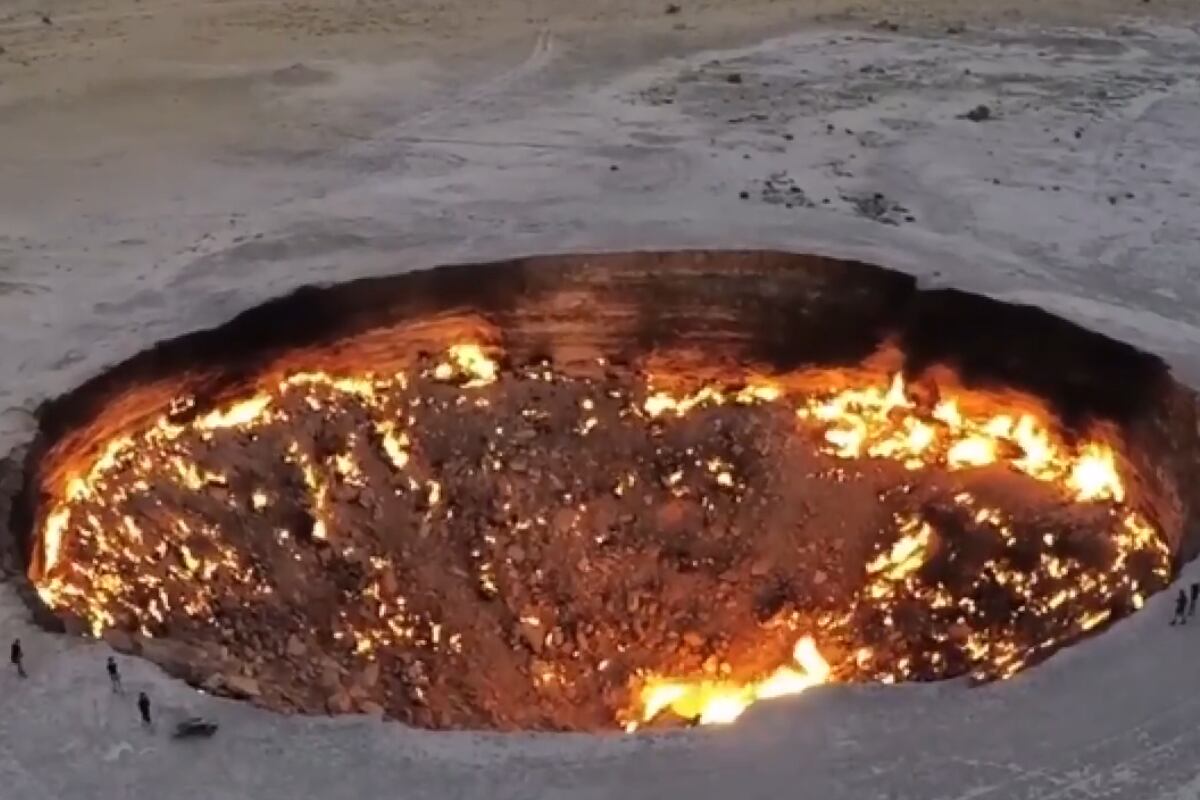
For over half a century, the fiery maw of the Darvaza Gas Crater, colloquially known as the "Door to Hell," has been an indelible, albeit eerie, fixture in Turkmenistan's Karakum Desert. This self-ignited phenomenon, a consequence of a 1960s geological survey gone awry, was intended as a temporary measure to cap a natural gas leak. The plan was for the flames to consume the escaping methane for a few weeks; instead, they have roared continuously for more than fifty years, transforming a potential environmental hazard into a bizarre, mesmerizing spectacle.
The door to hell is turning off
Now, this enduring inferno appears to be waning. Recent observations reveal a noticeable decrease in the flames, sparking a new set of questions, this time centered on environmental consequences. While the burning crater has long been a symbol of Turkmenistan's vast natural resources and a unique, albeit remote, tourist draw, its potential extinguishment raises concerns about the direct release of methane—a potent greenhouse gas—into the atmosphere. This shift from a visual spectacle to an environmental concern marks a new chapter for the "Door to Hell."
The decision to set fire to the deposit had a concrete objective: to prevent the gases from dispersing into the environment. The initial idea was that the flames would last only a few weeks, but the result was very different.
From our perspective in Turkmenistan, the "Door to Hell" has always been more than just a tourist curiosity or a geological anomaly. It represents the raw, untamed power of the natural gas reserves beneath our soil. Its enduring flame was a testament to the sheer scale of these resources. While international media might focus on the novelty or the potential climate impact, for us, it's a symbol deeply intertwined with our national identity and our economic future. The fact that it is now closing, or 'turning off,' is a profound moment, prompting reflection on the legacy of our natural wealth and the evolving relationship between our nation and its environment.
If the flames are completely extinguished, the methane gas would stop burning and pass directly into the atmosphere, which could contribute to the increase of greenhouse gases.
DistantNews Editorial
Originally published by La Nación in Spanish. Translated, summarized, and contextualized by our editorial team with added local perspective. Read our editorial standards.
More Stories


From Our Blog

What Gets Lost (and Found) When News Is Translated

The Critical Role of Diaspora Media in Global News

What Travellers Should Know About Countries with Restricted Press

A Digital Nomad's Guide to Following Local News

How the Same Story Looks Different in Different Countries
