


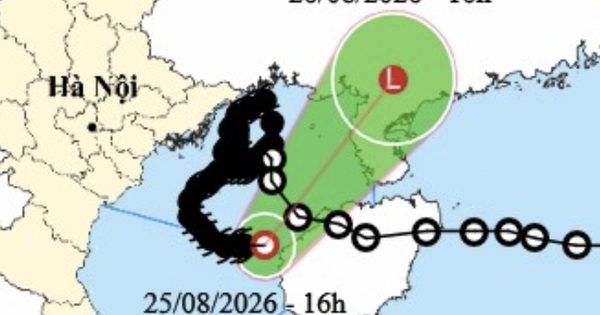
Typhoon Narra shows rare 'knot-like' path over Gulf of Tonkin
Translated from Vietnamese, summarized and contextualized by DistantNews.
At a glance
News
Named sources
Outcome reported
- Typhoon Narra, the fourth typhoon to hit Vietnam this year, exhibited an unusual and rare "knot-like" trajectory over the Gulf of Tonkin.
- The storm moved slowly, averaging 3-5 km/h, and persisted for 5-6 days, causing prolonged rainfall and flooding in northeastern and north-central regions.
- Meteorologists attribute the storm's erratic path to weak and complex steering environments, with the typhoon eventually weakening into a tropical depression.
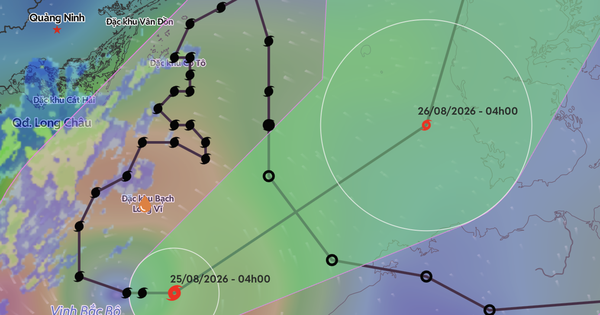
Typhoon Narra, locally known as the fourth typhoon of the year, has captivated meteorologists with its highly unusual and rarely observed "knot-like" path over the Gulf of Tonkin. The storm, which lingered for five to six days, continuously changed direction, creating a complex and slow-moving trajectory.
abnormal, very rarely seen
Mai Văn Khiêm, Director of the National Center for Hydro-Meteorological Forecasting, described the storm's behavior as "abnormal" and "very rarely seen." Narra moved at a sluggish pace, averaging only 3 to 5 kilometers per hour, and frequently altered its course. At times, it appeared to loop back towards the outer parts of the gulf. This extended duration over the Gulf of Tonkin, with its circulation remaining strong for days and reaching intensities of level 8-9 with gusts up to level 11, significantly prolonged the impact on coastal areas and the mainland compared to typical typhoons.
Khiêm explained that this peculiar movement is linked to a weak and complex steering environment in the region. The typhoon was operating within a tropical convergence zone, while large-scale steering currents failed to establish a stable direction. The storm's path was further influenced by a combination of surrounding atmospheric systems and its own internal dynamics. As these influences shifted over time, the typhoon's direction and speed varied, resulting in its curved, looping, or sharply changing trajectory.
The knot-like trajectory of typhoon No. 4 in the Gulf of Tonkin is an abnormal and very rarely seen phenomenon.
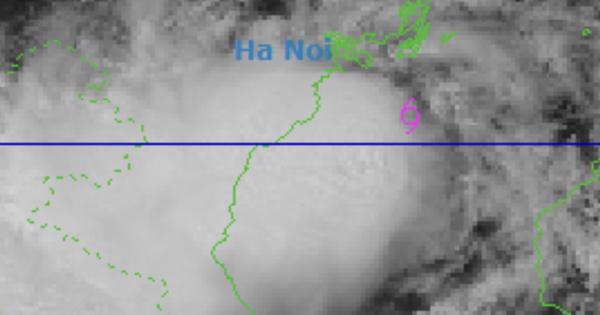
Unlike most typhoons that either make landfall or weaken rapidly after entering the Gulf of Tonkin, Narra meandered within the gulf for an extended period before eventually weakening into a tropical depression on August 25. This prolonged presence caused several days of continuous rain, leading to floods in the northeastern and north-central regions of Vietnam. While complex typhoon paths have occurred in August historically, Narra's specific knot-like trajectory within the Gulf of Tonkin is considered a unique event.
Normally, a typhoon crossing or existing over the narrow space of the Gulf of Tonkin only lasts about 1-2 days before making landfall, even some storms only about 12 hours. But typhoon Narra maintained its storm structure for many consecutive days in the gulf, which is a very rare phenomenon.
DistantNews Editorial
Originally published by Thanh Niên in Vietnamese. Translated, summarized, and contextualized by our editorial team with added local perspective. Read our editorial standards.
More Stories

From Our Blog

What Gets Lost (and Found) When News Is Translated

The Critical Role of Diaspora Media in Global News

What Travellers Should Know About Countries with Restricted Press

A Digital Nomad's Guide to Following Local News

How the Same Story Looks Different in Different Countries
