


U.S. Air War Against Iran Reaches Limits; Nuclear Bunker in Trump's Sights
Translated from Romanian, summarized and contextualized by DistantNews.
At a glance
Analysis
Named sources
Context piece
- The U.S. air campaign against Iran is showing its limitations, failing to achieve strategic victory after five months.
- Iran continues to control the Strait of Hormuz and maintain its missile and drone capabilities.
- Experts suggest that limited force escalation risks prolonging conflict without changing Iran's behavior, while targeting civilian infrastructure is unlikely to alter the regime's stance.
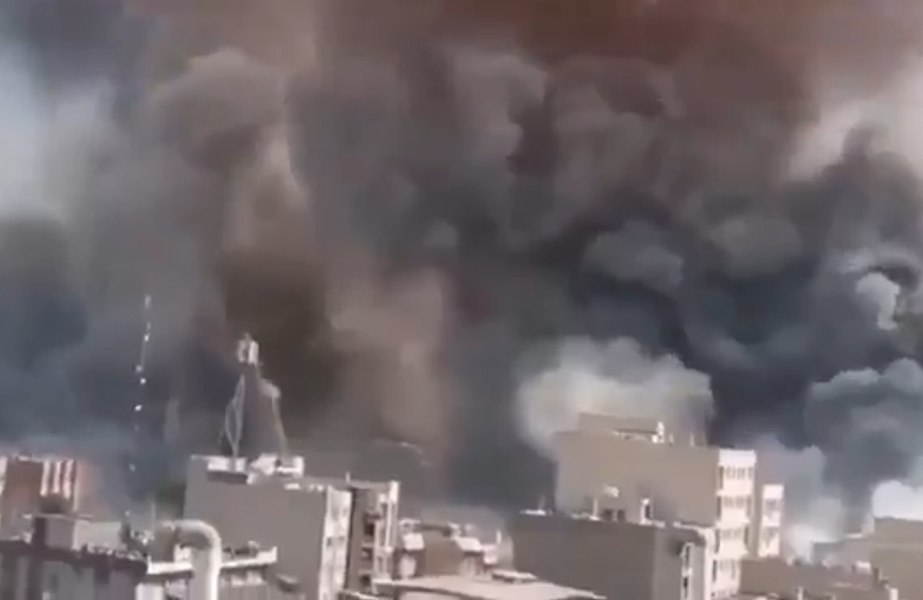
The United States' air campaign against Iran is encountering significant limitations, failing to yield a decisive strategic victory despite five months of intense operations. The strategy, which includes direct threats against Iranian civilian infrastructure, appears unlikely to intimidate Tehran's leadership, highlighting a potential impasse.
The gradual use of force can prolong conflicts instead of making the adversary change its behavior.
Despite extensive U.S. airstrikes, Iran has maintained its control over the vital Strait of Hormuz, a critical global energy supply route. Furthermore, the Pentagon has been unable to neutralize Iran's capacity to launch missiles and drones. The conflict has seen a cycle of attacks and retaliations, with three U.S. service members recently killed in attacks attributed to Iran or its allied groups, intensifying pressure on the Trump administration for a stronger response.
Military experts and officials, speaking anonymously or in Senate hearings, suggest that the exclusive reliance on air power has its limits. General Dan Caine, Chairman of the Joint Chiefs of Staff, acknowledged these limitations in achieving decisive military victories. Experts like Rachel VanLandingham, a former Air Force legal counsel, argue that expanding attacks to civilian infrastructure, even those with potential military uses, may not compel the Iranian regime to alter its strategic position. The gradual application of force, without significant escalation such as ground troop deployment, risks prolonging the conflict rather than forcing behavioral change.
air strikes have limits when the objective is to achieve a decisive military victory.
There are currently no indications of the United States preparing for a ground operation in Iran, with no additional troops deployed for such a purpose. The current strategy appears to be reaching its boundaries, raising questions about the long-term effectiveness and potential outcomes of the ongoing aerial campaign.
expanding attacks on civilian infrastructure would not necessarily cause the Iranian leadership to change its position, even if some such targets could also have military uses.
DistantNews Editorial
Originally published by Adevărul in Romanian. Translated, summarized, and contextualized by our editorial team with added local perspective. Read our editorial standards.
More Stories


From Our Blog

What Gets Lost (and Found) When News Is Translated

The Critical Role of Diaspora Media in Global News

What Travellers Should Know About Countries with Restricted Press

A Digital Nomad's Guide to Following Local News

How the Same Story Looks Different in Different Countries
