

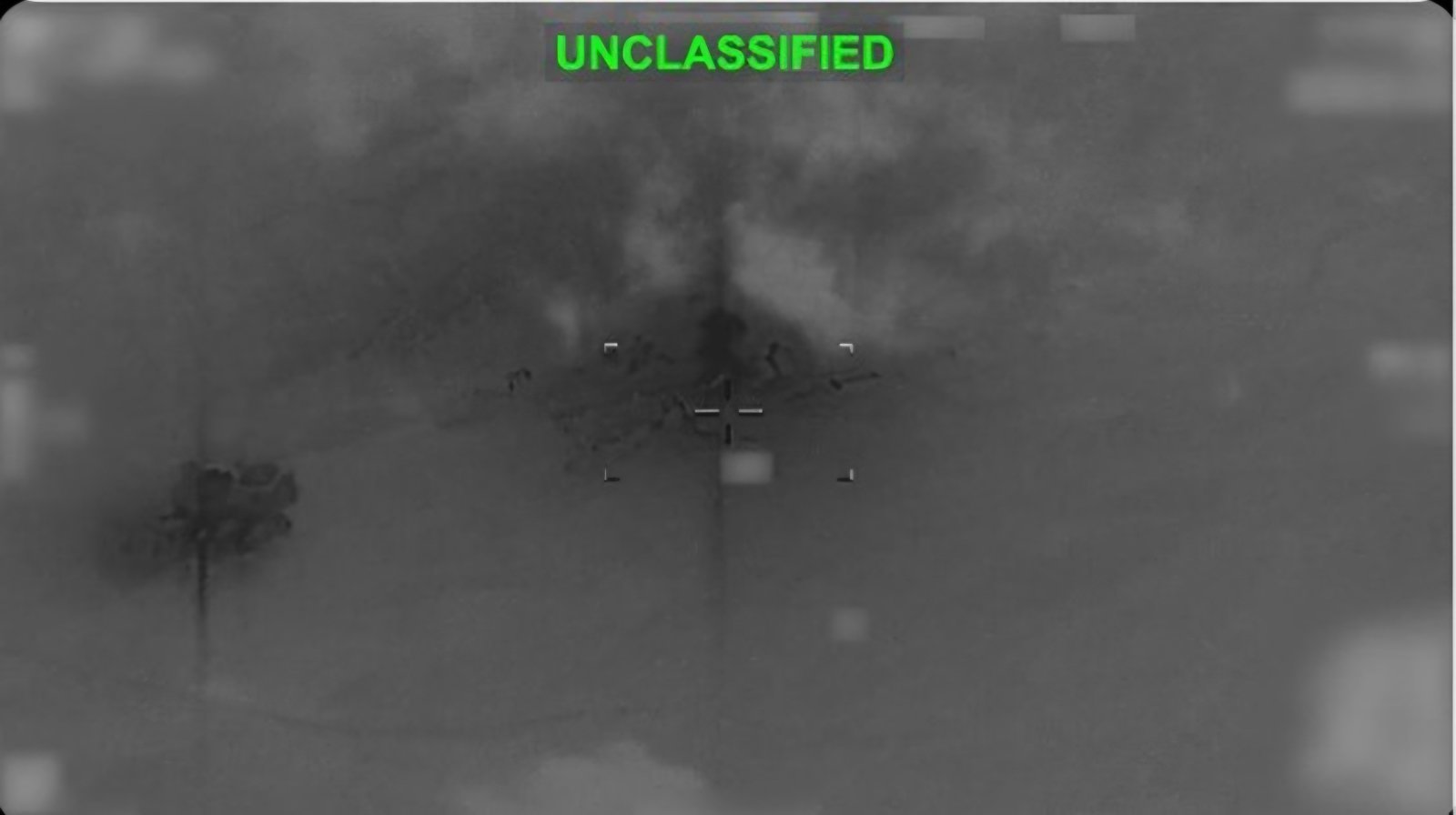

U.S. deploys B-1 bombers in strikes against Iran, escalating regional tensions
Translated from Korean, summarized and contextualized by DistantNews.
At a glance
News
Named sources
Ongoing story
- The U.S. military deployed B-1 bombers in its latest strikes against Iran, escalating military actions in the region.
- Iran has vowed retaliation, threatening to attack energy infrastructure and bridges linked to the U.S.
- Tensions rise as Houthi rebels in Yemen attack oil tankers, expanding the conflict's reach.
The United States has intensified its military operations against Iran, deploying B-1 strategic bombers for the first time since resuming hostilities earlier this month. This escalation comes as Iran threatens to retaliate against U.S.-linked energy infrastructure and bridges if attacked.
U.S. Central Command confirmed further airstrikes on Iran on July 22, though it did not explicitly mention the use of B-1 bombers. Axios reported, citing U.S. officials, that these bombers targeted Iranian Revolutionary Guard Corps (IRGC) positions. The B-1, capable of carrying numerous bombs or cruise missiles and flying at supersonic speeds at low altitudes, represents a significant increase in U.S. operational capacity in the region.
The force buildup itself does not necessarily lead to a large-scale military operation. It provides maximum flexibility and various options to the President and the Secretary of Defense.
Meanwhile, the U.S. military is bolstering its presence with the redeployment of special operations units from U.S. bases to the Middle East. Additionally, F-16 and F-35 fighter jet squadrons from European bases have been moved to forward positions in the Middle East, potentially in Jordan and Israel, according to The Wall Street Journal.
Every time Iran attacks a ship in the Strait of Hormuz, we will destroy a bridge or a power plant in Iran. Tehran itself will be included in the targets.
Former CENTCOM commander Gen. Joseph Votel noted that such force buildups offer flexibility and options to leadership, rather than necessarily signaling an imminent large-scale operation. However, former President Donald Trump warned Iran on social media, threatening to destroy Iranian bridges or power plants for every attack on shipping in the Strait of Hormuz, even suggesting Tehran itself could be a target.
Iran has responded by targeting U.S. military facilities in the region, with the IRGC claiming attacks on a Kuwaiti base and a communications tower. Iranian officials have reiterated their stance, with Parliament Speaker Mohammad Bagher Ghalibaf stating, "The equation of this war is clear: all or nothing." Foreign Minister Abbas Araghchi echoed this sentiment, asserting, "Our defense doctrine is clear: an eye for an eye."
The equation of this war is clear: all or nothing.
Adding to the regional instability, Houthi rebels in Yemen, supported by Iran, attacked two oil tankers in the Red Sea. The Houthis claimed responsibility for targeting Saudi-owned vessels, naming them "Encelia" and "Laila." This marks the first reported attack on shipping in the Red Sea since the Houthis declared a blockade of the vital waterway.
Our defense doctrine is clear: an eye for an eye.
DistantNews Editorial
Originally published by Hankyoreh in Korean. Translated, summarized, and contextualized by our editorial team with added local perspective. Read our editorial standards.
More Stories


From Our Blog

What Gets Lost (and Found) When News Is Translated

The Critical Role of Diaspora Media in Global News

What Travellers Should Know About Countries with Restricted Press

A Digital Nomad's Guide to Following Local News

How the Same Story Looks Different in Different Countries
