

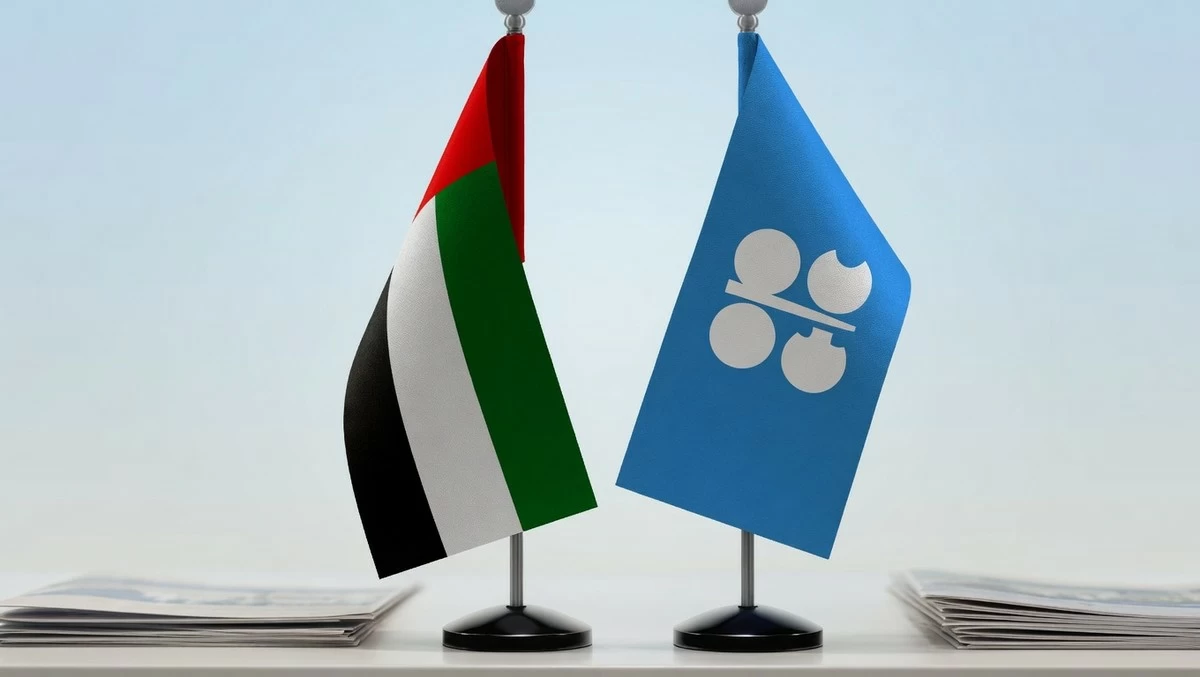
UAE Quits OPEC, Citing Production Freedom
Translated from English, summarized and contextualized by DistantNews.
TLDR
- The United Arab Emirates has quit OPEC, citing a desire to be free from production restrictions.
- The UAE believes it can produce over 3 million barrels per day, with spare capacity near 4.8 million, but this is not yet physically proven.
- The departure could lead to a decrease in global oil prices as more oil enters the market, though the full impact depends on factors like the opening of the Strait of Hormuz.
The United Arab Emirates' decision to leave OPEC marks a significant shift in the global oil landscape. As reported by Arab Times, the UAE's primary motivation appears to be the desire to escape production quotas and freely exploit its own oil reserves. The country asserts its capacity to produce over three million barrels daily, with potential to reach 4.8 million. However, the actual physical realization of this capacity remains a point of discussion.
This move is poised to disrupt the oil market. With the UAE potentially flooding the market with over a million extra barrels per day, a global price decrease seems inevitable. This could compel OPEC+ to reconvene and adjust production levels to accommodate the new supply. The article also highlights the strategic importance of the Strait of Hormuz, noting that its full reopening for trade could further influence oil prices, potentially leading to higher costs for consumers if shipping becomes more expensive.
The question that needs to be asked or answered is what will happen to oil prices with over one million barrels of new oil hitting the market, which will certainly lead to a decrease in oil prices globally.
The UAE is not the first member to depart OPEC; several nations have left for various reasons, including depleted reserves or a strategic pivot, such as Qatar's focus on natural gas. Gabon's temporary departure and Indonesia's frozen membership illustrate the fluid nature of OPEC's composition. The departure leaves only five members in the organization, underscoring the shifting dynamics within the global oil cartel.
Certainly, we anticipate that oil prices will come down soonest once the Strait of Hormuz is open again and free for the trading and movement of crude oil, finished products, and gas, amounting to more than 20 million barrels per day.
DistantNews Editorial
Originally published by Arab Times in English. Translated, summarized, and contextualized by our editorial team with added local perspective. Read our editorial standards.
More Stories

From Our Blog

What Gets Lost (and Found) When News Is Translated

The Critical Role of Diaspora Media in Global News

What Travellers Should Know About Countries with Restricted Press

A Digital Nomad's Guide to Following Local News

How the Same Story Looks Different in Different Countries
