


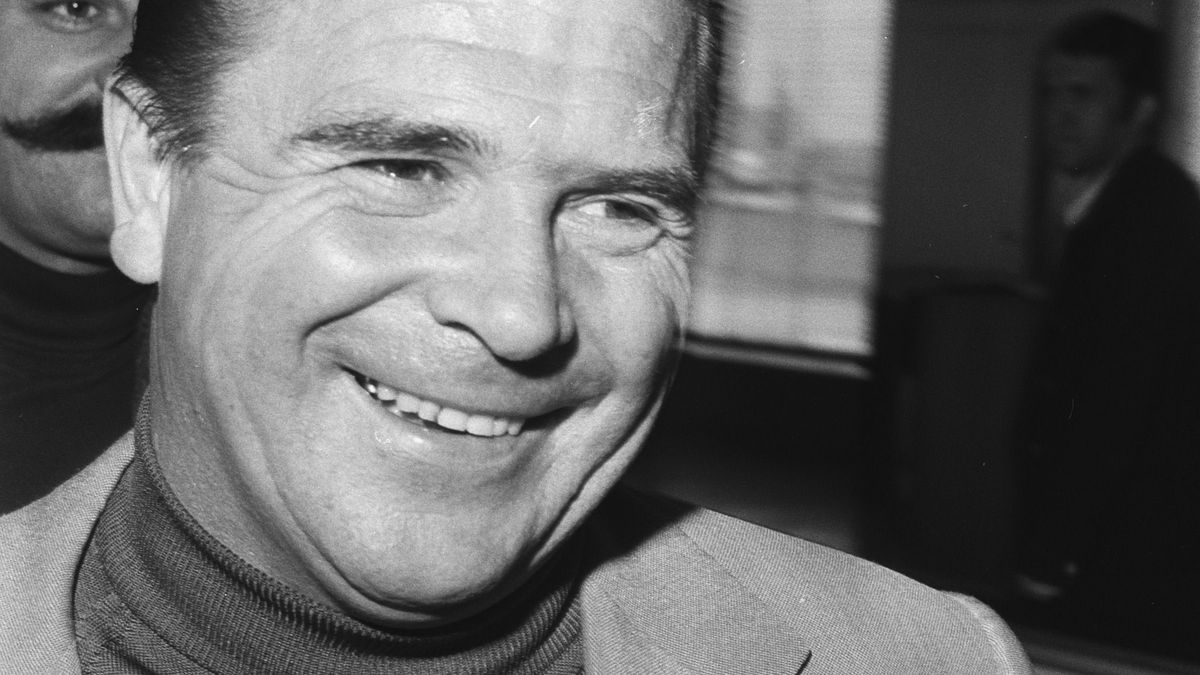
Unknown Acquaintances
Translated from Hungarian, summarized and contextualized by DistantNews.
TLDR
- The article discusses the legacy of Ferenc Puskás, one of the world's most famous Hungarian footballers.
- It touches upon his birth name, Ferenc Purczeld, and his iconic nickname, Puskás.
- Magyar Nemzet positions itself as a conservative, national daily newspaper focused on factual reporting across various societal domains.
Magyar Nemzet, a conservative and national daily newspaper, presents a brief reflection on the enduring legacy of Ferenc Puskás, arguably the most celebrated Hungarian footballer of all time. The piece, presented as part of its 'Mozaik' section, poses a trivia question about Puskás's birth name, revealing it to be Ferenc Purczeld before he adopted the more widely known name and the iconic nickname 'Pancho'. This seemingly small detail serves as a gateway to discussing the enduring impact and recognition Puskás commands, not just in Hungary but globally.
The article emphasizes Magyar Nemzet's editorial stance: providing information based on facts from a conservative and national perspective, covering key social, political, economic, cultural, and sports topics. While this particular piece is light, it taps into a deep well of national pride associated with Puskás, a figure who transcends mere sporting achievement to become a symbol of Hungarian excellence and resilience on the international stage.
From a Hungarian perspective, Puskás is more than just a legendary player; he represents a golden era of Hungarian football and a source of national identity. The fact that his story, including his birth name, is still a point of interest underscores his lasting significance. Magyar Nemzet, by posing this question, engages its readership in a shared cultural memory, reinforcing the paper's role as a purveyor of national heritage and current affairs through a distinctly Hungarian lens. The brief mention of American soldiers in Germany post-WWII, offering Coca-Cola instead of ideological indoctrination, seems to be a tangential thought, perhaps contrasting different forms of post-war influence or presence, but its direct connection to Puskás is unclear within this snippet.
DistantNews Editorial
Originally published by Magyar Nemzet in Hungarian. Translated, summarized, and contextualized by our editorial team with added local perspective. Read our editorial standards.
More Stories



From Our Blog

Countries Without a Free Press: What You Need to Know

What Press Freedom Means for the News You Read

What Gets Lost (and Found) When News Is Translated

The Critical Role of Diaspora Media in Global News

What Travellers Should Know About Countries with Restricted Press
