


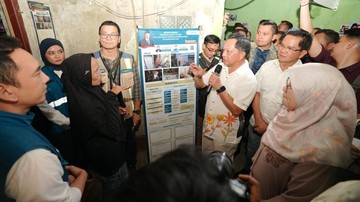

UPNVJ and UNJA turn orange peels into kombucha to add value to Jujun farmers’ harvests
Translated from Indonesian and summarized by DistantNews. Read the original for the full story.
At a glance
News
Named sources
Context piece
- UPNVJ and UNJA trained women farmers in Jambi’s Jujun village to make fermented kombucha from orange peels.
- The program presented orange peels as a source of fiber and a potential functional-food ingredient rather than agricultural waste.
- Participants learned about prebiotics, probiotics, gut microbiomes, fermentation and hygiene during hands-on training.
Orange peels that are often treated as agricultural waste are being developed into kombucha in Jujun village, Kerinci regency, Jambi. The initiative brings together Jakarta’s Universitas Pembangunan Nasional “Veteran” Jakarta and Jambi University to promote local commodities and reduce organic waste.
The community program took place on Wednesday at the Jujun village head’s office and focused on women farmers belonging to the village’s Family Welfare Empowerment Team. Participants learned how food waste can become a functional-food ingredient, with particular attention to fiber and the processing required to make a safe fermented drink.
We want to help people understand that materials usually considered waste, such as orange peels, still have the potential to be used.
UPNVJ lecturer M. Nur Hasan Syah said the program aimed to broaden the community’s view of the economic value of local crops. “We want to help people understand that materials usually considered waste, such as orange peels, still have the potential to be used,” he said. He pointed to kombucha as one possible application.
What we are promoting is for people to see local commodities more broadly. It is not only the oranges that have economic value, but other parts, such as the peel, can also be developed into processed products.
The training also introduced prebiotics, probiotics and their relationship to the gut microbiome. Participants then worked through the preparation of orange peels and the fermentation process. Lecturer A’immatul Fauziyah said the practical session covered each stage, including the importance of keeping ingredients and equipment clean.
The organizers said the knowledge could give residents a basis for developing processed products more independently. The program also emphasized that the value of oranges extends beyond the fruit itself, with the peel offering another possible source of income and local economic activity.
We introduced the process of making kombucha from preparing the ingredients through fermentation. Participants did not merely watch the process, but also gained direct experience in turning orange peels into a beverage product.
About this summary
Originally published by Republika in Indonesian. Translated, summarized, and contextualized automatically by DistantNews, with a note on how the source frames the story. Not individually reviewed before publishing. How this works.
More Stories


From Our Blog

News in Translation: What Gets Lost, and How We Keep the Framing

Diaspora Media: How Communities Follow News From Home

Traveling Where the Press Is Not Free: How to Read the News There

The Digital Nomad's Guide to Local News

The Same Story, Different Countries: How Coverage Changes at the Border
