

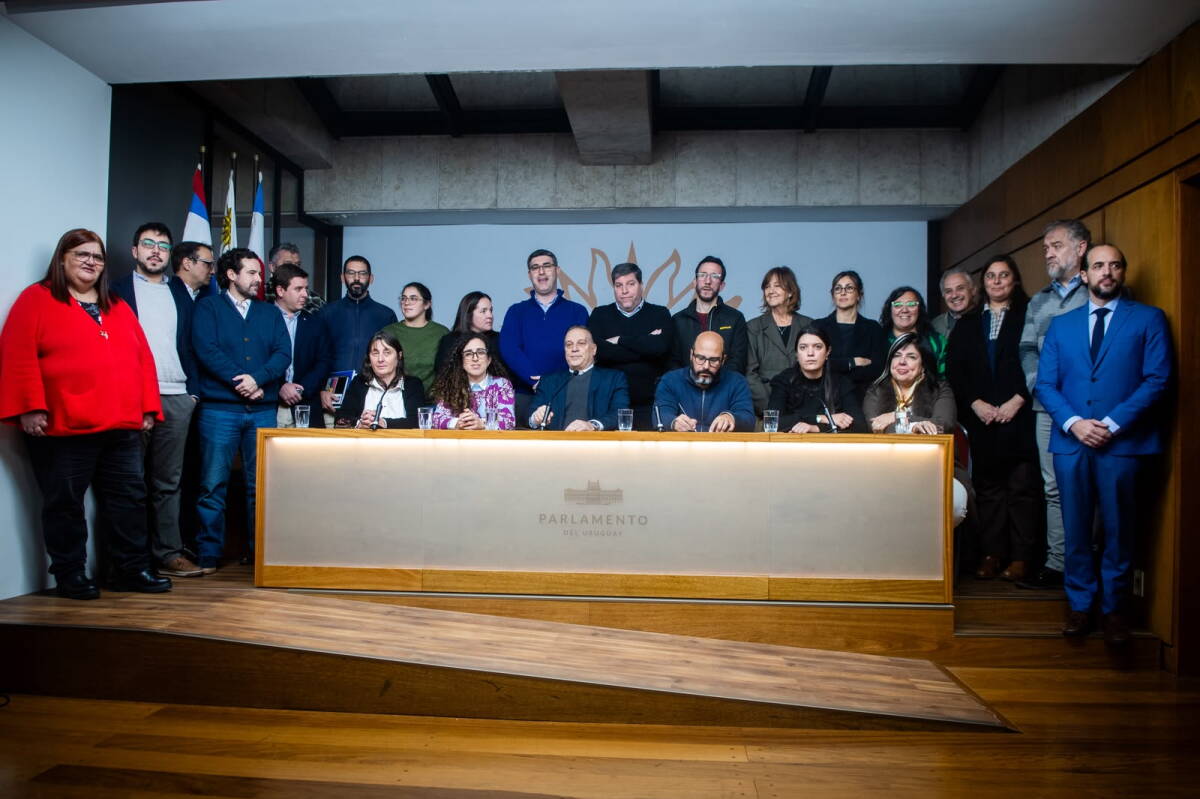

Uruguay merges human rights secretariats, appoints new leader
Translated from Spanish, summarized and contextualized by DistantNews.
At a glance
News
Sources not specified
New plan
- Uruguay's Presidency has unified two human rights secretariats into a single entity to improve efficiency and management.
- Iliana Da Silva will lead the new unified Secretariat of Human Rights, while previous heads Collette Spinetti and Alejandra Casablanca will transition to new roles or have been dismissed.
- The unification was prompted by a redundancy of competencies and a desire to rationalize resources, following controversies involving the former leaders.
Uruguay's Presidency has merged two distinct human rights secretariats into a single, streamlined body aimed at enhancing service delivery and management efficiency. The Secretariat of Human Rights and the Secretariat of Human Rights for the Recent Past have been unified under a new structure.
The Executive Branch resolved to unify two secretariats (Human Rights and Human Rights for the Recent Past). They motivated this decision by reasons of better service and the search for better management.
Iliana Da Silva, formerly the deputy director of Communication, has been appointed as the head of the newly formed Secretariat of Human Rights. This move follows the dismissal of Collette Spinetti, who previously led the Secretariat of Human Rights. Alejandra Casablanca, who headed the Secretariat of Human Rights for the Recent Past, will assume a different role within the administration.
Pro-secretary of the Presidency, Jorge Díaz, explained that the decision to unify the secretariats was driven by a need for better service and management. He noted that many responsibilities of the Secretariat for the Recent Past had already been transferred to the National Institute of Human Rights (INDDHH), making the maintenance of two separate structures inefficient. The merger is expected to rationalize human and material resources.
Most of the competencies of the Secretariat of Human Rights for the Recent Past had already been assigned to the National Institute of Human Rights (INDDHH), so it was unreasonable to maintain two structures.
Both Spinetti and Casablanca had faced scrutiny over their tenures. Spinetti was expelled from her political sector within the Broad Front due to management disagreements and later removed a trusted aide who was a prominent figure in that sector. Casablanca was accused of workplace violence against several employees. These controversies, alongside the perceived redundancy of functions, contributed to the decision to consolidate the secretariats.
I just received and signed my dismissal. Proud of my work, nothing to say about that. Thanks to the team
DistantNews Editorial
Originally published by El País in Spanish. Translated, summarized, and contextualized by our editorial team with added local perspective. Read our editorial standards.
More Stories
From Our Blog

What Gets Lost (and Found) When News Is Translated

The Critical Role of Diaspora Media in Global News

What Travellers Should Know About Countries with Restricted Press

A Digital Nomad's Guide to Following Local News

How the Same Story Looks Different in Different Countries
