


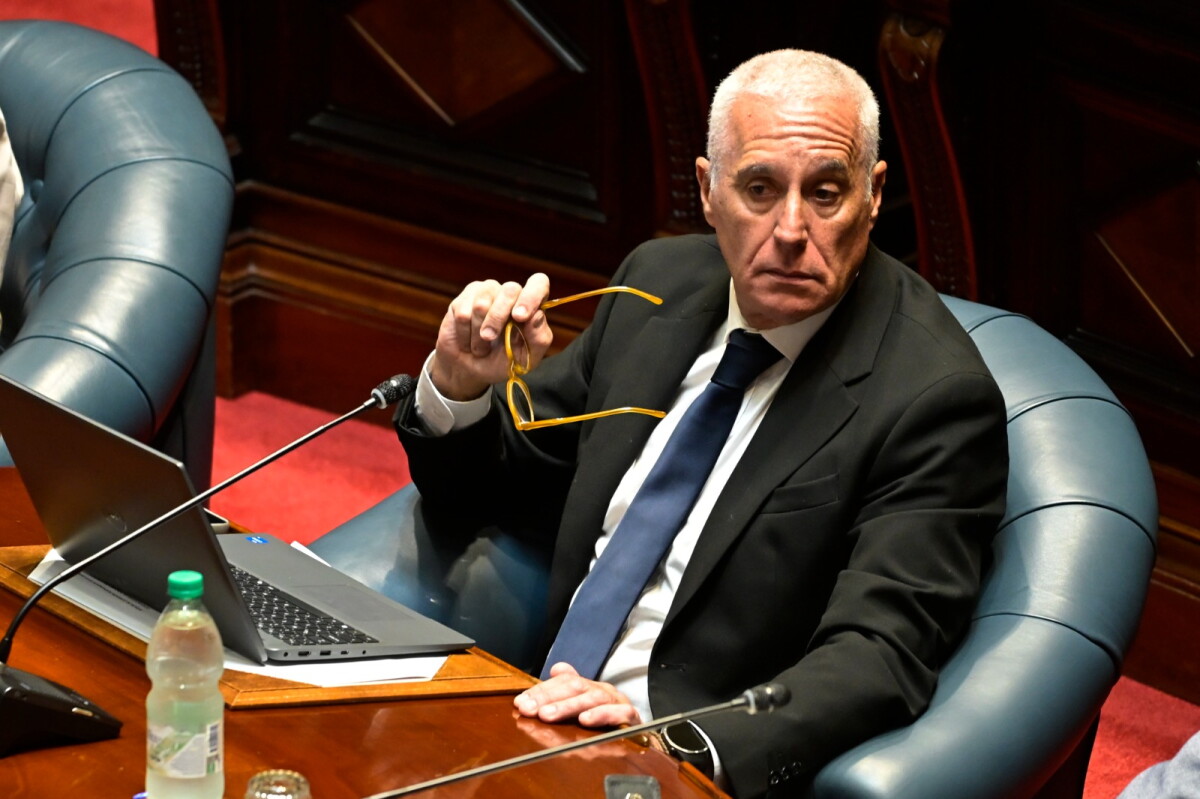
Uruguay to Deploy Armored Vehicles Amidst Opposition Criticism on Police Vacancies
Translated from Spanish, summarized and contextualized by DistantNews.
At a glance
News
Sources not specified
New plan
- Uruguay's Interior Minister Carlos Negro announced that armored vehicle patrols will begin in high-insecurity neighborhoods next Friday, July 24.
- Negro defended the incorporation of 300 new police officers, stating that the ministry plans to increase mobility with 110 new patrol cars and 220 motorcycles.
- Opposition lawmakers criticized the government, citing nearly 2,000 unfilled police vacancies and questioning the urgency of the announced measures.
Uruguay's Interior Minister Carlos Negro has announced the imminent deployment of armored vehicles for neighborhood patrols, aiming to bolster security in areas experiencing high crime rates. The initiative, set to commence on Friday, July 24, will see the use of four RPZ Cóndor armored vehicles, with plans to acquire five additional, smaller armored units.
Minister Negro defended the government's security strategy, emphasizing the planned incorporation of 300 new police officers and increased mobility through 110 new patrol cars and 220 motorcycles. The ministry also intends to integrate technological resources such as biometrics, artificial intelligence, and surveillance cameras. Negro affirmed his confidence in the support of President Yamandú Orsi, stating that his resignation is always on the table, dependent on the president's decision.
However, the announcement has drawn criticism from the opposition. Colorado party deputy Gabriel Gurméndez pointed out a discrepancy between President Orsi's promise of 2,000 new police positions and the reality of nearly 2,000 existing vacancies. He expressed concern that the creation of 300 new positions will be a lengthy process, questioning the government's sense of urgency. Blanco party deputy Pablo Abdala highlighted a contradiction between Negro's statements and those of Defense Minister Sandra Lazo regarding the potential need for legislation if military personnel were to participate in police operations.
DistantNews Editorial
Originally published by El País in Spanish. Translated, summarized, and contextualized by our editorial team with added local perspective. Read our editorial standards.
More Stories


From Our Blog

What Gets Lost (and Found) When News Is Translated

The Critical Role of Diaspora Media in Global News

What Travellers Should Know About Countries with Restricted Press

A Digital Nomad's Guide to Following Local News

How the Same Story Looks Different in Different Countries
