

US, Allies Urge OAS Meeting on Nicaragua's Election Exclusion Plan
Translated from Spanish, summarized and contextualized by DistantNews.
At a glance
News
From a news agency
Context piece
- The U.S. and allied countries proposed an extraordinary meeting of OAS foreign ministers to discuss potential measures against Nicaragua.
- The proposal aims to address Nicaragua's government plan to exclude the opposition from upcoming elections.
- Nicaragua, which withdrew from the OAS in 2023, faces diplomatic isolation as the U.S. pushes for a formal, institutional response.
The United States, alongside allied nations, has formally requested an extraordinary meeting of the Organization of American States (OAS) foreign ministers to address Nicaragua's political situation. The proposal, put forth at an OAS Permanent Council meeting, seeks to analyze potential measures against the Nicaraguan government's move to exclude the opposition from upcoming elections.
The time for declarations without actions is over. Now is the time for a formal, institutional, and collective response.
Michael Kozak, the U.S. State Department's top official for Latin America, urged the meeting to occur before September, when Nicaragua's government intends to approve a constitutional reform that would extend presidential terms to seven years, renewable. Washington's call emphasizes the need for a concrete, collective response, stating, "The time for declarations without actions is over. Now is the time for a formal, institutional, and collective response."
The text explicitly states that it does not authorize the use of armed force.
The proposed resolution calls for a consultation meeting of foreign ministers to determine an appropriate collective response, explicitly ruling out the use of armed force. Kozak stressed that the council should define the ministers' agenda, which should examine "the entire spectrum of lawful options available in the diplomatic, institutional, economic, and collective security arenas."
What we ask this council is to define what the ministers should decide.
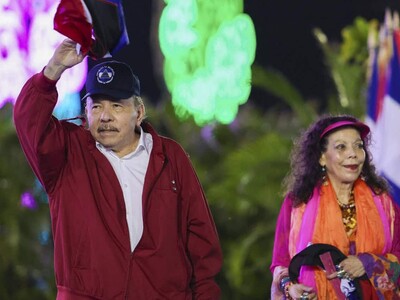
Nicaragua, which officially withdrew from the OAS in November 2023, remains diplomatically isolated in the region. President Daniel Ortega has recently asserted that his country will do away with elections, accusing the opposition of serving U.S. interests. He has labeled opponents as "coup plotters" and "traitors to the homeland." Ortega and his wife, Vice President Rosario Murillo, have governed with absolute power since 2018, a period marked by the repression of protests that resulted in over 300 deaths, according to UN figures.
In our opinion, the ministers should meet before September 1.
DistantNews Editorial
Originally published by Diario Libre in Spanish. Translated, summarized, and contextualized by our editorial team with added local perspective. Read our editorial standards.
More Stories
From Our Blog

What Gets Lost (and Found) When News Is Translated

The Critical Role of Diaspora Media in Global News

What Travellers Should Know About Countries with Restricted Press

A Digital Nomad's Guide to Following Local News

How the Same Story Looks Different in Different Countries
