


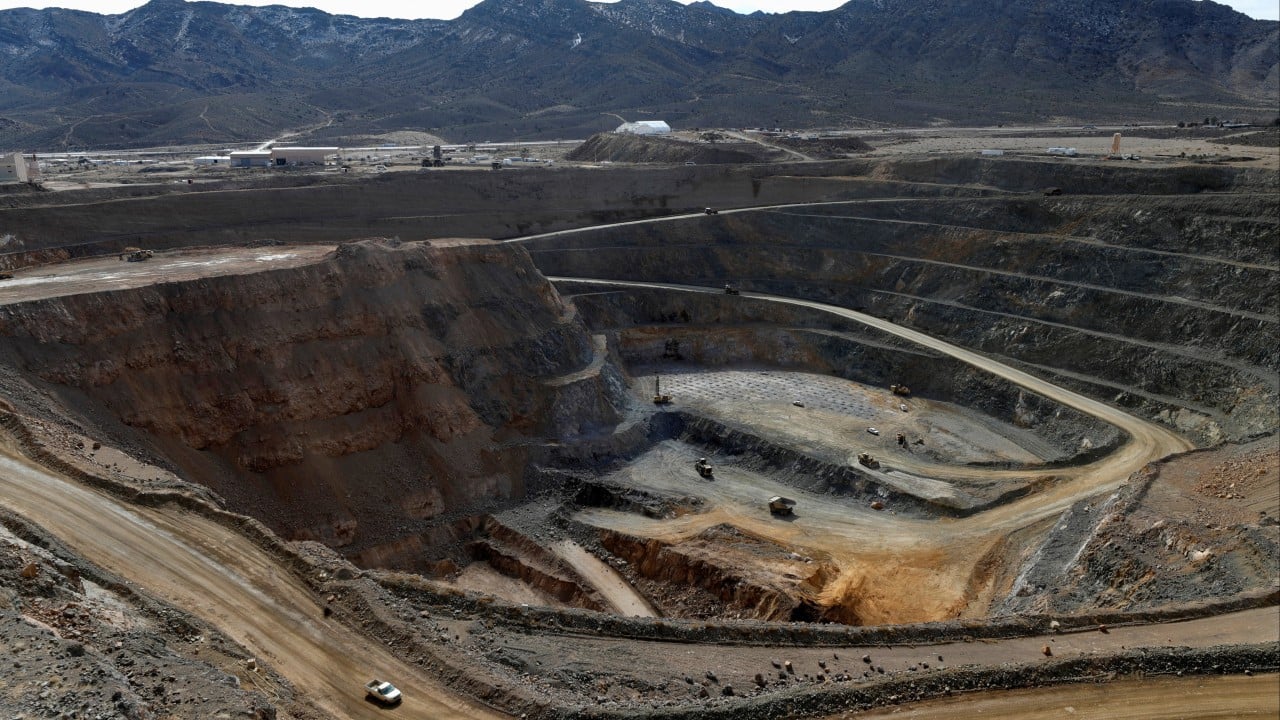
US-China rare earth clash 2.0? Fragile truce tested as tit-for-tat moves return
Summarized and contextualized by DistantNews.
At a glance
News
Named sources
Ongoing story
- China has imposed new export controls on 10 U.S. entities, including rare earth companies MP Materials and USA Rare Earth.
- These measures are retaliation for the Pentagon's recent designation of Chinese firms as military-linked entities.
- The move tests a fragile truce between the U.S. and China, which was reaffirmed during recent high-level meetings.
China's imposition of new export controls on ten U.S. entities, notably including key rare earth companies MP Materials and USA Rare Earth, signals a significant escalation in trade tensions. Analysts suggest these measures, enacted in response to the Pentagon's recent designation of leading Chinese firms as military-linked, are testing the durability of a fragile truce between Washington and Beijing.
The export controls mark one of the most substantial escalations since the U.S. and China reached a temporary understanding last October in Busan. This truce was subsequently reaffirmed during the recent summit between U.S. President Donald Trump and Chinese leader Xi Jinping in Beijing.
"Beijing's new critical mineral export restrictions underscore how fragile the bilateral truce is," Wendy Cutler, senior vice-president at the Asia Society Policy Institute, told the South China Morning Post. The restrictions bar exporters from supplying dual-use goods to the targeted companies and prohibit any organization or individual from transferring China-origin dual-use items to them, demonstrating the extraterritorial reach of the policy.
Beijing’s new critical mineral export restrictions underscore how fragile the bilateral truce is.
In retaliation for the Pentagon's move, China's Ministry of Commerce stated that the measures were taken in response to "malicious actions" by the U.S. government. Beijing aims to safeguard its national security and fulfill "international non-proliferation obligations." The inclusion of eight other American firms on the export control list, along with barring 46 U.S. firms from government procurement, indicates a broad retaliatory strategy.
This tit-for-tat approach highlights the ongoing strategic competition between the two global powers, particularly concerning critical minerals essential for advanced technologies. The durability of the current truce remains uncertain as both nations continue to employ measures that challenge the established understanding.
measures were taken in response to “malicious actions” by the US government and to safeguard national security and fulfil “international non-proliferation obligations”.
DistantNews Editorial
Originally published by South China Morning Post. Summarized and contextualized by our editorial team with added local perspective. Read our editorial standards.
More Stories


From Our Blog

Countries Without a Free Press: What You Need to Know

What Press Freedom Means for the News You Read

What Gets Lost (and Found) When News Is Translated

The Critical Role of Diaspora Media in Global News

What Travellers Should Know About Countries with Restricted Press
