

US-Iran Peace Talks Uncertain as Iranian Delegation Delays Departure
Translated from Polish, summarized and contextualized by DistantNews.
TLDR
- The peace talks between the USA and Iran, mediated by Pakistan, are in doubt as the Iranian delegation has not yet departed for Islamabad.
- The ceasefire, initially set to expire on April 22, has reportedly been extended to April 23 by Pakistani mediators.
- Reports indicate that Iran's Islamic Revolutionary Guard Corps may be blocking the talks, demanding a harder negotiating stance and the lifting of U.S. sanctions on the Strait of Hormuz.
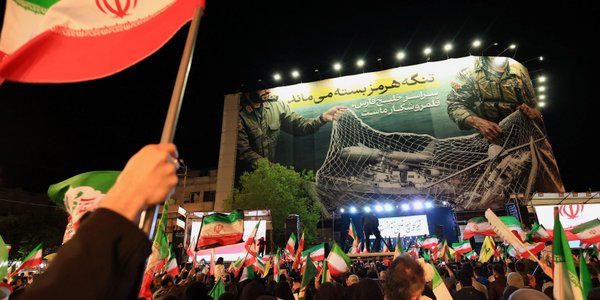
The fragile peace process between the United States and Iran faces significant uncertainty as the crucial second round of talks in Islamabad hangs in the balance. While Pakistani mediators have reportedly extended the ceasefire until April 23, a key development is the apparent delay in the Iranian delegation's departure. Iranian state television has denied reports of the delegation leaving Tehran, casting a shadow of doubt over the continuation of these sensitive negotiations.
Iranian state television reported that no Iranian delegation had left for Islamabad 'so far'.
This uncertainty appears to stem from internal divisions within Iran regarding the negotiating strategy. Reports suggest that the Islamic Revolutionary Guard Corps (IRGC) is exerting pressure, demanding a more assertive stance from Tehran and conditioning participation in the talks on the U.S. lifting its blockade of the Strait of Hormuz. This blockade, imposed since April 13, restricts maritime traffic in and out of Iranian ports, a move Iran views as a significant escalation.
The Islamic Revolutionary Guard Corps is demanding that Tehran adopt a tougher negotiating position and that participation in the talks be conditional on the U.S. lifting the blockade of the Strait of Hormuz.
Adding to the complexity, Iran has reiterated its position, stated on April 19, that it will not engage in talks conducted under duress. Tehran insists on a change in the U.S. behavior and stance before its delegation can participate. Meanwhile, U.S. Vice President J.D. Vance was reportedly en route to Islamabad to lead the American negotiating team, accompanied by special envoy Steve Witkoff and Jared Kushner, both of whom participated in the first round of talks. The identity of Iran's lead negotiator for this round remains unconfirmed, unlike the first round where Parliament Speaker Mohammad Bagher Ghalibaf headed the delegation.
Tehran will not accept talks conducted under pressure, and the participation of the Iranian delegation in negotiations will depend on 'a change in the behavior and stance of the United States'.
From Iran's perspective, as reported by Rzeczpospolita, the situation is fraught with internal considerations and external pressures. The stance taken by the IRGC reflects a powerful faction within the Iranian establishment that views concessions to the U.S. with deep skepticism. The demand for the lifting of the Strait of Hormuz blockade is a critical point, symbolizing Iranian sovereignty and economic interests. While the U.S. may see these talks as a diplomatic opportunity, Iran views them through the lens of national pride and strategic necessity. The world watches closely, but from Tehran, the focus is on ensuring any engagement serves national interests without succumbing to external pressure, making the current impasse a significant test of diplomatic resolve.
U.S. Vice President J.D. Vance was reportedly heading to Islamabad, leading the American negotiating team.
DistantNews Editorial
Originally published by Rzeczpospolita in Polish. Translated, summarized, and contextualized by our editorial team with added local perspective. Read our editorial standards.
More Stories

From Our Blog

What Gets Lost (and Found) When News Is Translated

The Critical Role of Diaspora Media in Global News

What Travellers Should Know About Countries with Restricted Press

A Digital Nomad's Guide to Following Local News

How the Same Story Looks Different in Different Countries
